
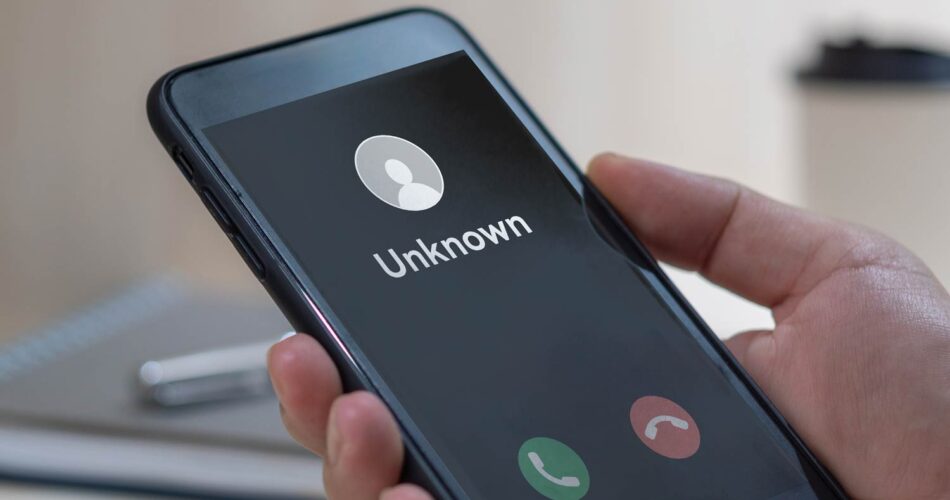
Your phone rings. This is an unknown number. You look at the screen, let it ring and wait to see if a WhatsApp message comes through. Sound familiar? You're not alone – and you're part of a growing problem for South Africa's mobile operators.
The trend to reject or ignore unfamiliar callers has become so ingrained that it is now reshaping the way millions of South Africans use their phones. And while the root cause – the epidemic of spam and scam calls – is well documented, the effects on operator revenues are only now coming increasingly into focus.
At an event organized by Truecaller in Johannesburg last week, mamathebe zvobvoThe company's director for market development in South Africa said that the sheer volume of spam and scam interactions has led to a dismissive attitude among South Africans, with many choosing not to respond to calls from unknown numbers, preferring to wait for a follow-up e-mail or text if it is important.
“Taking the right call is important because, by default, people don't answer their phones. So, if a call comes in, unless it's your spouse, child, friend or mother, people are not eager to answer their phone. But on the other hand, it could be a recruiter or talent manager trying to reach you,” Zvobvo said.
South Africans are inundated with spam calls and the rate at which they are bombarded is increasing. Truecaller data shows that South Africans received more than 30 billion spam calls in 2025. The first three months of 2026 have seen a 20% year-on-year increase in spam and scam calls.
The problem is equally serious globally, with Truecaller announcing this week that it has breached the 500 million user milestone as a testament to the scale of the issue.
source of revenue
If people are responding to this by refusing to take calls, mobile operators are losing potential revenue. South African mobile operators questioned by TechCentral agree. However, the impact is not as severe as one might expect, primarily because traditional voice revenues have already been in decline for several years.
The largest source of voice revenue has been low-cost, data-driven voice and video calling, enabled by applications such as the now-discontinued Skype. Nowadays, WhatsApp Calling dominates the consumer sector, while apps like Teams and Zoom cater to the business market.
Reading: Truecaller Info is cooperating with regulator's Popiya investigation
“The rise in spam and scam calls has changed the way consumers engage with voice calls across the industry, with many becoming more cautious about answering unknown numbers. While this influences call behavior, voice usage trends are shaped by many factors, including the broader shift to data-based and OTT (over the top) communications, and it would not be appropriate to isolate or quantify the impact of spam calls on operator revenue in simple terms.” Brian O'DonovanChief Data and Analytics Officer cell c.
Operators have a responsibility to limit the amount of spam and scam calls on their networks. According to O'Donovan, Cell C “implements a layered, industry-aligned approach” to reduce spam traffic on its network. “Suspicious calling patterns are measured on a case-by-case basis,” he said.

MTN South Africa has observed similar patterns in relation to changes in data services and the impact of spam calls on user behaviour.
“There has been a significant change in the way customers engage with voice calls, including a reluctance to answer calls from unknown numbers. This shift can be attributed to a number of factors, including availability, changing communication habits and industry-wide concerns around spam calls. Although spam is not the primary driver of declining voice traffic and revenue, the main factor remains the migration towards data-based messaging platforms,” MTN South Africa. Said.
Reading: Spam calls on the rise in South Africa despite apps, laws and tech improvements
MTN said it works closely with regulators and industry bodies to “create a secure communications environment for all South Africans”. In addition to its efforts to prevent spam traffic on the network, it encourages its users to be cautious when sharing personal information, such as their contact number, online or through surveys. Cell C's O'Donovan also shared similar sentiments and said customer awareness remains an important part of solving the spam call problem.
AI call screening is one of the most effective methods of controlling spam available today. Truecaller recently added this feature to its paid subscription tier. This includes an AI-powered voice assistant that asks the caller for their name and the reason for calling. The response is captured on the receiver's screen in real time, giving them the option to answer or ignore the call.
Apple has Native AI call screening feature Which was released with iOS 26 update last September. For users with multiple devices in the Apple ecosystem, a live transcription of an incoming call also appears on their iPad, MacBook, and iMac, provided these devices are connected to the Internet at the time. – © 2026 NewsCentral Media
Get breaking news from TechCentral on WhatsApp. Sign up here.