
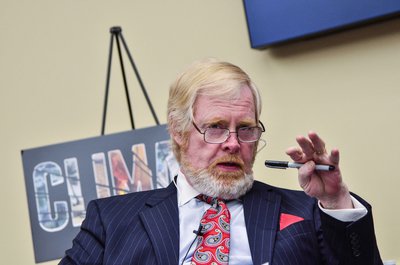
Bozell was speaking to the media on the sidelines of a credentialing ceremony at the Sefako Makgatho Presidential guesthouse in Pretoria, where President Cyril Ramaphosa on Wednesday received letters of credentialing from heads of missions representing 20 countries, including the United States, Cuba, Lebanon and Ukraine.
The ambassador struck a measured but candid tone on relations between Pretoria and Washington, acknowledging that although there are differences, there is also significant potential for deepening cooperation.
“The United States is ready to put money into investment in South Africa. And it's not just the private sector that is doing that, but the government is also doing that. There are billions of dollars that we want to invest in this country. But we have some issues, and the primary issue is respect for private property. It is very difficult for a major corporation to come here and be told it has to give up 30 percent of its ownership or something like that.”
Despite raising concerns, Bozell recognized South Africa's unique historical context, particularly the legacy of inequality under apartheid. He suggested that companies investing in the country should go beyond profit and contribute meaningfully to social and economic development.
At the same time, the ambassador stressed that the United States respects South Africa's sovereignty, but will speak out where its national interests or security concerns are affected.
“South Africa can do whatever it wants to do. However, we will say, as any country on the planet says, that if any policy ever goes against our national interests or goes against our national security concerns, that's when we speak up.”
Bozell also addressed recent diplomatic tensions, including criticism over earlier comments, which drew a response from South Africa's Department of International Relations and Cooperation.
He defended his comments, saying that they were largely positive and that they were misunderstood in some quarters.
“As I've said, it was 95% positive, 5% hopeful. It was presented that way…some people chose to say things afterward. I've read in your media…some of the most extraordinary things I've ever said, and some of the most extraordinary beliefs I've ever held.”
On broader geopolitical issues, Bozel, while welcoming recent ceasefire efforts, expressed concern about instability in the Middle East, particularly the role of Iran and its proxies.
“The concern will always be about its representatives and what they might do. I hope that will not happen. I hope that in the coming days, they will find a final solution to this conflict.”
Looking to the future, the ambassador expressed optimism about improving and strengthening relations between the two countries, which have at times been described as tense. He said his task was to build a “new partnership” based on shared values and mutual respect.
Bozell said, “If I hadn't done that, I wouldn't be here. If I hadn't done that, I wouldn't have accepted the assignment… We can change our position, and not only that, but build a new partnership based on shared values, based on the common interests of our two countries.”
He said that although engagement may be “bumpy” at times, discussions with South African officials have already been constructive and are moving faster than expected.
Bozell also indicated his willingness to engage broadly across the South African political scene, including the African National Congress, provided there is a shared commitment to strengthening bilateral relations.
The Ambassador's remarks come at a critical time for US-South Africa relations, with ongoing discussions around trade frameworks such as the African Growth and Opportunity Act (AGOA), investment flows, and geopolitical alignment.