
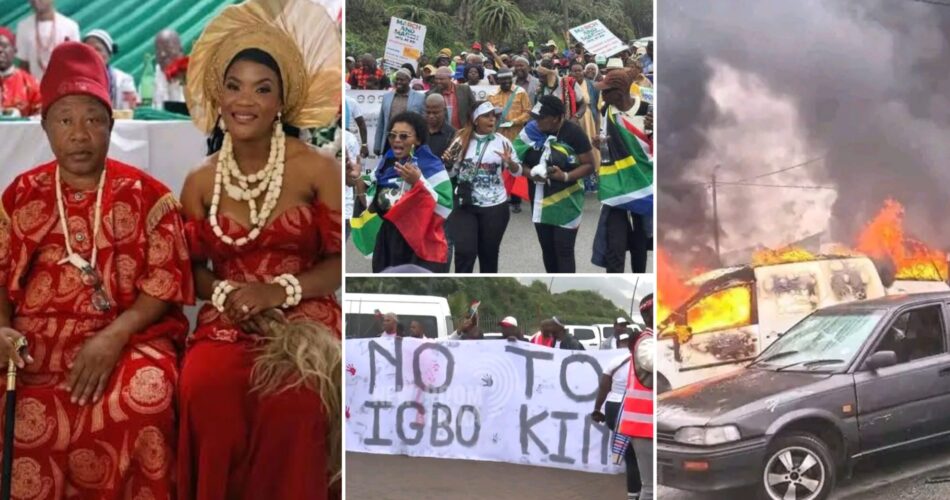
A wave of unrest has swept through South Africa's Eastern Cape following the coronation of Chief Solomon Ogbonna Eziko as “Igwe Ndigbo”, an event that has sparked debate, outrage and confusion online and on the ground. Videos and photographs of the ceremony circulated widely from mid-March 2026, attracting the attention of civic groups, political bodies, and ordinary residents. The coronation was presented by some community members as the installation of a traditional Igbo leader to the local Igbo diaspora in the town of Kugompo, formerly known as East London, yet the legality of the event quickly became a point of controversy.
Observers and officials questioned whether the ceremony followed South African laws and traditional leadership protocols, while social media prompted public scrutiny. The tensions that followed highlighted the intertwining of cultural identity, legal frameworks and social dynamics within South Africa, creating a complex narrative that continues to unfold.
coronation timeline
The first visible signs of unrest appeared around March 14–20, 2026, when videos of the coronation began circulating online. During this period, Chief Solomon Ogbonna Eziko was reportedly crowned as “Igwe Ndigbo” by a group of community elders and supporters, and footage of the celebration showed a crowd gathered to watch the event. Sharing of these images on social media immediately attracted attention beyond the community, leading to questions among civic groups and local residents about the legality of the ceremony. Reports suggest that while some members of the Igbo diaspora embraced the coronation as a meaningful assertion of cultural identity, others questioned its adherence to South African law and local customs. The viral nature of the footage heightened public discussion, causing the coronation to become a national topic of discussion within days of being posted online.
As of March 20, 2026, the Eastern Cape Department of Co-operative Governance and Traditional Affairs (COGTA) formally rejected the coronation. The department issued a public statement condemning the installation as unauthorized and illegal, and emphasizing that it undermined South Africa's democratic and legal framework governing traditional leadership. CoGTA appointed the Department of International Relations and Cooperation (DIRCO) to include the Nigerian High Commission, reflecting the international dimensions of the dispute. Government officials stressed that although the Igbo diaspora holds cultural significance, the coronation could not circumvent South African law or existing local leadership structures. This official disapproval set the stage for increased tensions, turning the debate into a legal and cultural matter.
protests erupted
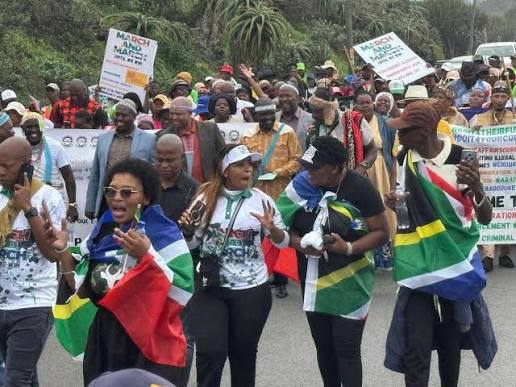
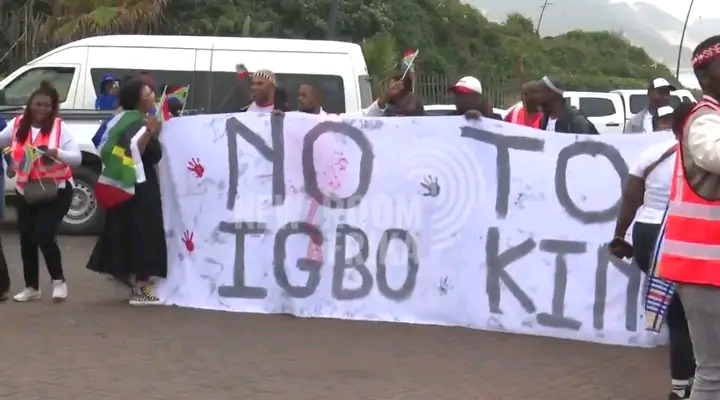
The situation escalated dramatically on March 30, 2026, when mass protests broke out in the city of Kugompo. Civic groups, political parties and traditional authorities united, including organizations such as ActionSA, ISANCO and the March and March movements. The protesters initially marched peacefully through the streets of the city demanding government action, saying they considered it an illegal establishment that disrespects local leadership systems. Banners and placards reflected both political and cultural grievances, while speeches and chants stressed the need for adherence to South African law and recognition of indigenous governance structures. This early phase of the protests was characterized by organized messaging and appeals for accountability, reflecting the community's willingness to engage authorities through visible civic action.
As the march progressed, tensions increased and the situation turned violent. Protesters reportedly set at least twelve vehicles on fire, damaged several buildings and set fire to structures in public areas. Police forces fired rubber bullets and tear gas shells to disperse the crowd, while emergency services including firefighters and paramedics responded to control the chaos. Eyewitnesses described a tense atmosphere in which spectators, protesters and officers all faced immediate danger, underscoring the instability of the situation.

Amid the unrest, one man was stabbed, although reports differed on whether he was a demonstrator or bystander, highlighting the unpredictable nature of the rapidly escalating civil demonstrations. These incidents emphasized both the intensity of public anger and the challenges authorities face in balancing law enforcement with the protection of human life.
Constant reaction and national discourse
Following the initial violence on March 30–31, 2026, media coverage and online commentary intensified, drawing national attention to the protests and coronation controversy. Civic and political leaders are engaged in heated debates about the role of foreign cultural practices, the limits of diaspora representation, and the importance of respecting traditional leadership systems. Many observers described the protests as reflecting broader social tensions, including frustration over illegal immigration, economic hardship, and perceptions of inequality in local governance. Social media fueled these debates, with hashtags and posts rapidly circulating video footage and commentary of the protests.
Discussions focused not only on the legitimacy of Chief Eziko's coronation but also on the implications for social cohesion and intercultural relations within South Africa. The narrative quickly evolved beyond the immediate events, becoming a lens through which many South Africans examined questions of identity, governance and cultural legitimacy.
What caused the crisis
Several factors combined to cause widespread unrest following the coronation of Chief Eziko. First was the viral spread of the coronation, which attracted the attention of supporters and critics alike. Online amplification created a sense of urgency and public scrutiny that would not have existed if the event had remained limited to local observers. The second factor involved perceived violations of local traditions and laws. Critics argued that the ceremony did not comply with the Traditional and Khoi-San Leadership Act, nor did it follow long-standing protocols governing the appointment of traditional leaders in South Africa. Third, civic groups and political organizations expressed outrage over what they considered a violation of local authority, calling the coronation illegal, externally imposed, and disrespectful to indigenous rule.
Socio-economic conditions such as high unemployment, widespread crime, and tensions around foreign-owned businesses also created an inflammatory environment, increasing public sensitivity to any perceived crime.
Cultural and legal dimensions
The condemnation of the Eastern Cape government highlighted the complex interrelationship of culture, law and governance. The legal system of South Africa recognizes traditional leadership through codified statutes, which require clear adherence to procedures when appointing chiefs. Any deviation from these procedures is viewed not only as illegal but also as an affront to established social structures.
In the case of Chief Ejiko, scrutiny of the coronation's alignment with diaspora interests rather than local protocol intensified.
Legal experts said such actions could set a precedent for other migrant communities, raising questions about the balance between cultural protection and the rule of law. These legal concerns, combined with visible social tensions, contributed to the protests becoming sites of contestation, both symbolic and material.
socio-economic context
The unrest must also be understood within the broader socio-economic context of South Africa in 2026. The city of Kugompo and surrounding areas face persistent challenges, including unemployment, strained public services, and immigration-related pressures. Many residents interpret perceived outside interference in traditional leadership as an extension of these frustrations, linking cultural disputes to economic concerns.
Protests are often a way for communities to express widespread discontent, and in this instance, the coronation became a flashpoint of long-standing grievances. Analysts said that while the immediate issue concerns the legitimacy of the leadership, the unrest reflects underlying weaknesses in social cohesion and governance effectiveness, demonstrating how cultural, legal and economic factors can combine to create public turmoil.
Key findings from the protests
The events of March 2026 yield several observations. First, coronation demonstrates how diaspora communities can influence local cultural narratives, raising questions about the limits of international cultural authority. Second, the protests underscore the importance of following legal processes when addressing traditional leadership matters, with consequences for both community cohesion and public safety. Third, the role of social media in promoting events highlights the speed with which local events can become national or even international news, influencing perceptions and reactions in real time.
Finally, the unrest emphasizes the interplay between cultural identity, civic activism, and socio-economic conditions, suggesting that events such as Chief Eziko's coronation can serve as catalysts for broader reflection on social challenges.
final thoughts
The coronation of Chief Solomon Ogbonna Eziko as “Igwe Ndigbo” in the town of Kugompo has evolved from a symbolic cultural event into a focal point of national debate, public protest and social reflection. The timeline, from March 14 to March 31, 2026, reveals a sequence of events shaped by cultural pride, legal considerations, civic mobilization and socio-economic pressures. The protests and reactions demonstrate how intentions to celebrate cultural heritage can unexpectedly intersect with laws, local governance and social sentiment to create unrest.
The broader lesson emerging from this episode is the need for dialogue, understanding and adherence to frameworks that respect both cultural expression and social order. While the coronation has sparked controversy, it also presents an opportunity for communities, government and migrant groups to engage in meaningful discussions about identity, rights and multicultural futures. South Africa.
The events surrounding the installation of Chief Eziko are likely to be studied as an important case in understanding how cultural claims, legal frameworks and civic responses intersect in contemporary African societies, leaving a lasting impression on conversations about governance, tradition and social harmony.