

South African Economic In an effort to make the country competitive, modern and investment ready, narratives are increasingly being built around renewables.
The recent investment momentum, coupled with the government's emphasis on so-called “3D” digitalisation, decarbonization and diversification – signaling a clear ambition to reshape the economy for the changing global landscape.
Yet behind this optimism lies a more complex and uncomfortable reality.
South Africa is not simply pursuing change on the one hand and trying to attract trade and investment on the other; It is facing a multiple crisis in disguise.
While digitalization, decarbonization and diversification are often framed as solutions, they may equally constitute a web of interconnected risks that, if poorly managed, can reinforce each other and undermine the benefits the country seeks to achieve.
3Ds and their interface with trading and investing
There are no 3D independent columns. They are deeply interconnected, each with both opportunities and risks. Their success depends not only on implementation, but also on coordination, flexibility and the state's ability to manage systemic vulnerabilities.
digitalizationFor example, South Africa's modernization is central to its agenda.
It promises better productivity, streamlined public services and a more attractive investment climate.
Digital systems can reduce bureaucratic inefficiencies, expand access to services, especially in deprived and remote areas, and open up new economic sectors. For investors, a digitalized economy signals efficiency, transparency and scalability.
But digitalization also presents systemic risks that South Africa has already begun to experience. In recent years, cyber attacks have disrupted major sectors ranging from finance and healthcare to logistics and government services.
These events are not isolated technological failures, they are economic shocks.
When ports, payment systems or public institutions are compromised, it results in disruption to business, revenue flows and investor confidence.
A country that cannot secure its digital infrastructure cannot guarantee reliable trade or safe investment.
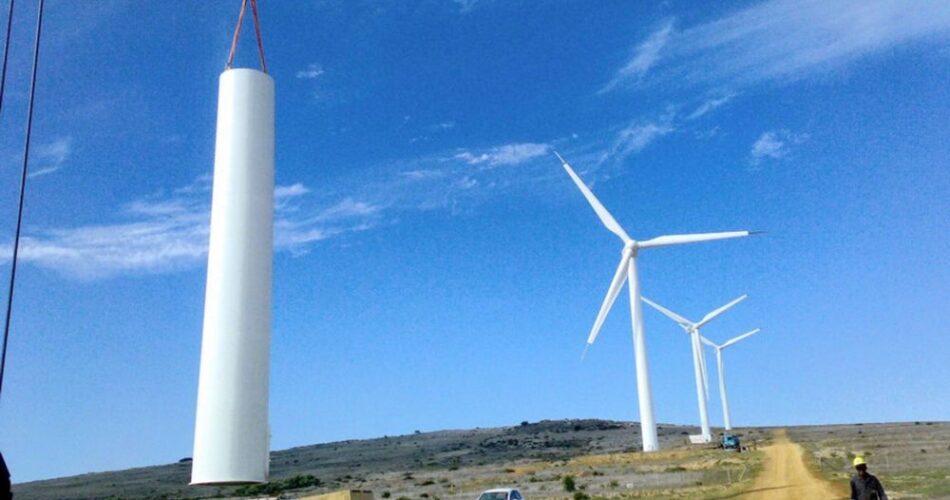
decarbonization Presents a similar dilemma. As global markets move towards low-carbon production, South Africa just energy transition Provides a pathway to attract green finance, expand export markets and align with international climate commitments. Investments in renewable energy, green hydrogen and sustainable industries hold significant potential.
However, this transition is fraught with challenges. Persistent energy instability, infrastructure shortages and financing gaps threaten to slow progress.
More importantly, the shift to green energy is itself dependent on digital systems, from smart grids to energy storage technologies, creating a feedback loop between energy and digital vulnerabilities.
For investors, this raises an important question: can South Africa make a transition that is both green and credible? Without stable electricity and secure digital infrastructure, the credibility of the decarbonization agenda is weakened.
The social dimension further complicates the picture. In coal-dependent regions like Mpumalanga, the energy transition carries real risks to livelihoods.
Without meaningful community participation, skills development and local ownership, decarbonization risks deepening rather than reducing inequality. A change that will not only struggle to maintain political and social support.
DiversityThe third pillar is directly related to trade and is often presented as a solution to economic weakness. By expanding into new sectors such as digital services, advanced manufacturing and green industries, South Africa can reduce its reliance on traditional exports and build resilience against external shocks.
But diversification is not a quick solution. This requires structural change, better infrastructure, higher productivity and skilled workforce.
Emerging industries such as renewable energy and green technology are themselves vulnerable to global competition and volatility. Without the right foundation, diversification efforts may remain fragmented and largely fail.
A multiple crisis in disguise?
Together, the 3Ds reveal the outlines of a multiple crisis. Digitization not only increases efficiency but also increases cyber risks. Decarbonization is necessary but disruptive. Diversification is promising but uncertain.
Their interactions create a complex risk environment that directly impacts South Africa's ability to attract investment and maintain trade partnerships.
At the heart of this multiple crisis is a crucial, often underestimated, factor: trust. Investors and business partners are not only looking for returns; They are looking for credibility. They want assurances that infrastructure will work, supply chains will remain intact and systems will be able to withstand shocks.
This is where South Africa's current approach falls short. For example, cybersecurity is still largely considered a technical or legal issue rather than a core component of economic strategy. This narrow framework limits its integration into broader investment planning.
A more coherent approach is needed.
Flexibility, policy coherence, alignment – a new currency in multiple crises
First, resilience must be built into infrastructure investments. The digital systems that underpin energy networks, logistics and financial markets must be considered critical economic assets. Protecting them is not optional, it is fundamental to investment preparation.
Second, policy coherence is necessary. Fragmented regulatory frameworks in digital governance, energy and industrial development increase uncertainty and deter long-term capital. Clear, predictable policies are important to maintain investor confidence.
Third, South Africa must invest in capabilities. This includes both physical infrastructure and human capital. Skills in digital technologies, cyber security and green industries are not peripheral, they are central to competitiveness in a rapidly evolving global economy.
Ultimately, the country must accept the reality of interdependence. 3D cannot be adopted in isolation. Their success depends on how effectively they are aligned and managed as part of a broader system.
However, there is an important opportunity. If South Africa can address this multiple crisis with foresight and coordination, it can establish itself as a resilient and attractive investment destination. This can create an economy that not only promises returns but also manages risks effectively, a significant advantage in an increasingly uncertain world.
But this result is far from guaranteed. Without a deliberate focus on resilience, particularly in the digital domain, the triple transition risks becoming a source of instability rather than growth.
South Africa's ability to attract needed investment and expand trade partnerships will depend not only on what it builds, but also on how safely and coherently it builds it. In an era defined by uncertainty, resilience is the ultimate signal for investors.
And for South Africa, it may well determine whether the promise of 3D will be realized or lost.
Lindelwa Nonjaduka is a graduate of the MPhil in Development Finance at Stellenbosch Business School and is the founding director of The Equilibrium Institute.
to follow business Report But Facebook, x and on Linkedin For the latest business and technology news.