
Despite a ban in most countries, millions of girls in Africa are still at risk of child marriage and female genital mutilation (FGM). A new report from the African Committee of Experts on the Rights and Welfare of the Child (ACERWC) (www.ACERWC.Africa), with support from Equality Now (https://apo-opa.co/4ubG12Q), shows how laws are often poorly enforced, with implementation varying widely and the challenges survivors face in accessing justice and support. Governments must urgently close the protection gaps and bridge the gap between legal commitments and the reality girls face.
Thematic report on harmful practices affecting children in Africa, based on case studies from Chad, Cameroon, Ethiopia, Egypt, Malawi, Mali, Nigeria, Somalia, Sudan and Zimbabwe (https://apo-opa.co/4ePMlbK) finds that despite progress in strengthening the legal framework and political commitments, harmful practices persist.
Climate shocks, conflict and economic instability are intensifying the drivers of child marriage and FGM, weakening already fragile systems and increasing the risks for girls, especially in rural and conflict-affected areas, where access to services is limited and social pressures are strong. Many cases go unreported due to stigma, fear of retaliation, and limited support services.
This report was launched at the 47th Ordinary Session of ACERWC, held in Maseru, Lesotho, on 21 April, and a recording of the discussion (https://apo-opa.co/494EHGT) is available to watch (session starts at 4:56:31). The session brought together policymakers, civil society organizations and regional stakeholders to advance dialogue and strengthen collective action to end harmful practices across Africa.
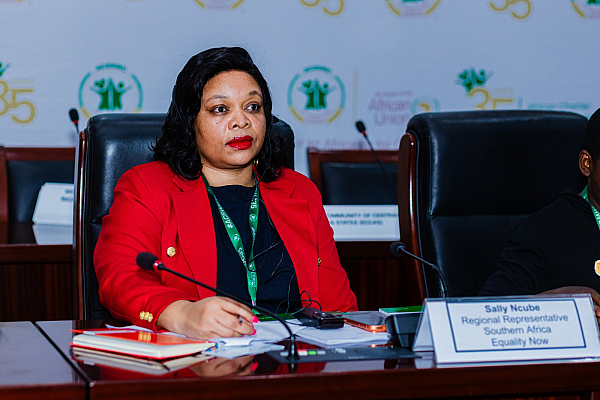
“The failure to implement and enforce the law to protect children from harmful practices is not a failure of the law alone. It is a failure of the ecosystem that requires the law to protect and support children,” explains Sally Ncube, Equality Now's regional representative for Southern Africa.
Legal loopholes, climate change and conflict fuel child marriage
Less than half of African countries, without exception, set the minimum age for marriage at 18 (https://apo-opa.co/4tLGNUC), except for legal gaps that allow child marriage under parental consent, judicial approval, or customary and religious law. Many countries also lack comprehensive legislation addressing prevention, access to justice, and survivors' rights.
Crises such as extreme weather resulting from climate change destroy economic and social structures, disrupt services and close schools, making abuses critical to monitoring and reporting. Financial constraints remain a major cause of child marriage, with families experiencing poverty sometimes turning to early marriage to reduce household expenses and in the mistaken belief that this will provide security for their daughter.
The reality is that child marriage increases a girl's chances of experiencing a range of disadvantages, including domestic violence, unwanted and early pregnancy, dropping out of education and poverty.
UNICEF said the number of children at risk of dropping out of school due to drought could triple by 2022 (https://apo-opa.co/4uhivS8) in Ethiopia, Kenya and Somalia. A 10% decrease in rainfall is associated with a 1% increase in child marriage (https://apo-opa.co/48p7SnW) rates, underscoring how environmental shocks can deepen economic pressures that push families toward early marriage as an economic survival strategy.
Drought in parts of Ethiopia caused rates of child marriage to double within a year in the most affected areas (https://apo-opa.co/4uhivS8) as families were struggling with food insecurity and poverty. FGM is often performed on girls to prepare them for marriage, and in Djibouti and Somalia, climate-related economic pressures have resulted in girls undergoing FGM at an early age to increase their “marriageability”.
In Somalia, FGM and child marriage remain deeply entrenched, particularly impacting girls in internally displaced persons camps, where protection is weak, while in Sudan, FGM was criminalized in 2020, but enforcement has been severely weakened due to war and regime breakdown.
Legal loopholes and weak enforcement undermine progress in ending FGM
Of the 27 African countries with national-level prevalence data on FGM, four (Liberia, Mali, Sierra Leone and Somalia) still lack specific national legislation banning the practice, underscoring persistent legal gaps across the region.
The medicalization of FGM and girls being transported across country borders for cutting remain under-addressed issues in many national laws. In some cases, survivors are inadvertently criminalized, and access to prevention and support services remains limited, especially in rural and crisis-affected areas.
In Egypt and Cameroon, FGM legal bans reflect progress, but shortcomings remain, such as FGM medicalization in Egypt and legal inconsistencies in Cameroon. In Nigeria, laws criminalizing FGM and setting the minimum age for marriage at 18 have weakened due to inconsistent enforcement and conflicting customary and religious law.
Increasing authoritarianism and military takeover have blocked progress toward ending harmful practices. The withdrawal of countries such as Burkina Faso, Mali and Niger from ECOWAS and other regional bodies has reduced accountability and the ability of civil society to advocate for change.
FGM laws are at risk of being rolled back in some countries
The debate about decriminalizing FGM is rising again, as seen in The Gambia (https://apo-opa.co/4sZ8FmH) (2024), where the Supreme Court is considering striking down the country's FGM ban, emphasizing the need for continued vigilance and advocacy.
Proposed anti-FGM provisions in Mali (https://apo-opa.co/4cAQQWk) was removed from the 2024 penal code after resistance from religious leaders, demonstrating how political and social pressures can block reform.
Progress towards ending child marriage and FGM
Despite challenges, progress moves forward where legal reform and community leadership align. In Malawi, reports Chief Theresa Kachindamoto (https://apo-opa.co/4n06he7), who have played a significant role in canceling thousands of child marriages, demonstrating the success of locally led action.
Another progressive example is how the Constitutional Court (https://apo-opa.co/4mYhJqx) A landmark ruling was issued in Zimbabwe, prompting amendments to the 2022 Marriage Act, setting the marriage age at 18 without exception, following a case of two young women being forced into underage marriage.
For example, Ethiopia adapted to COVID-19 restrictions by using mobile-based interactive voice recordings to reach out-of-school girls with FGM awareness materials (https://apo-opa.co/4cFYuPj), demonstrating how technology can support advocacy during a crisis.
African governments must turn legal commitments into real protections for girls
The thematic report recommends that all African governments implement strict legal provisions prohibiting harmful practices and fully incorporate international and regional human rights treaties, conventions and protocols into their domestic legal systems to ensure that these instruments bind the state. It is also important to close legal loopholes to ensure that the minimum age of marriage is set at 18 without exception and to align national, customary and religious frameworks with regional child rights standards.
“The study shows that change is possible and is indeed already happening. Progress is only possible when legislation is complemented by implementation and coordination among relevant stakeholders and promotion within the community,” said Hon. Hermine Kembo Takam Gatsing, Special Rapporteur on child marriage and other harmful practices, ACERWC
Strong political will, clear policy and coordinated national action is required. This requires collaboration between governments, civil society and communities, supported by dedicated funding, strong accountability frameworks and well-staffed systems.
Efforts must address the social and cultural norms that allow harmful practices to persist. Context-specific approaches and local ownership are essential, based on meaningful participation of survivors and community leaders. It is also important to empower girls through education and provide survivors with guaranteed access to protection, justice and support services.
To better understand the causes and scale of child marriage and FGM, governments should strengthen national data systems, including birth and marriage registration and child protection databases. Reliable, disaggregated data can help identify risks, design evidence-based responses, track progress, and hold institutions accountable.
“A law that cannot keep a girl safe in her own home is not a law; it is a broken promise. The lack of implementation is not just a failure of the law. It is a failure of the ecosystem that requires laws to be created to protect children from marriage and FGM. This report, and this moment, matter because millions of girls across Africa are waiting for the law to find them. It is not for them to find the law for them.” Sally Ncube, Equality Now Regional Representative for Southern Africa
“Equality Now and civil society organizations stand ready to continue working with ACERWC and States Parties to translate commitments into security and justice. This session could be a turning point where Africa will accelerate progress towards transforming laws on paper into real-life protection in practice. Equality Now is ready. Africa's girls are waiting,” Ncube concluded.
Distributed by APO Group on behalf of Equality Now.
For media inquiries contact:
sphiwe dlamini
Regional Communication Officer
equality now
sdlamini@equalitynow.org
T. +27 (0)711429179 (Available on WhatsApp)
For more information:
Go www.EqualityNow.org
BlueSky: Equalitynow.bsky.social: https://apo-opa.co/4tF1EZB,
Facebook: @equalitynoworg: https://apo-opa.co/4daXwL0
Instagram: @equalitynoworg https://apo-opa.co/4tI3x7V
LinkedIn: Equality Now: https://apo-opa.co/4umEB5T
About this: :
Now equality (www.EqualityNow.org) is a worldwide human rights organization dedicated to securing the legal and systemic change needed to end discrimination against all women and girls. Since its founding in 1992, it has played a role in reforming 120 discriminatory laws globally, making a positive impact on the lives of millions of women and girls, their communities and nations now and for generations to come.
Working with partners at national, regional and global levels, Equality Now uses deep legal expertise and a diverse range of social, political and cultural perspectives to advance, shape and advance the change needed to achieve lasting gender equality for the benefit of all.