Middle East and Africa Continuous Glucose Monitoring Market Forecast and Company Analysis Report 2026-2034 Including Dexcom, Medtronic, Senseonics, Abbott Diabetes Care and Glysense.
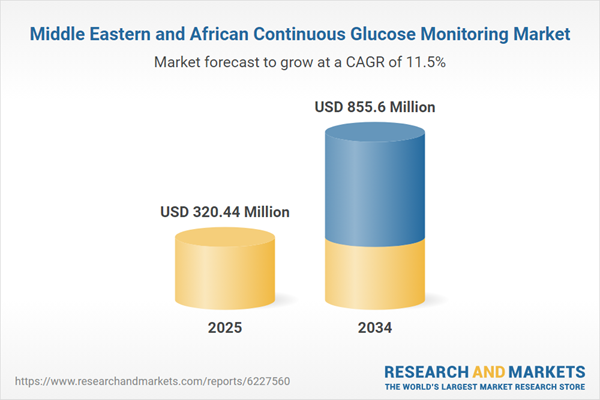
The Middle East and Africa continuous glucose monitoring (CGM) market is poised for growth due to increasing diabetes rates, technological advancements, and healthcare awareness. Projected to grow from US$320.44 million in 2025 to US$855.30 million by 2034 at a CAGR of 11.53%, this market benefits from advanced healthcare infrastructure and digital health integration. Major factors that influence CGM adoption include the high prevalence of diabetes in Saudi Arabia, South Africa, the United Arab Emirates, and Egypt. Government initiatives promoting preventive care, along with significant contributions from leading companies such as Dexcom, Medtronic and Abbott Diabetes Care, further drive the market expansion.
Middle Eastern and African Continuous Glucose Monitoring Market
Middle Eastern and African Continuous Glucose Monitoring Market ·GlobeNewswire Inc.
The continuous glucose monitoring market in the Middle East and Africa is projected to grow at a steady pace due to the increasing incidence of diabetes, increasing awareness about health care, and easy availability of innovative health care technology. The market is estimated to grow from US$320.44 million in 2025 to US$855.30 million by 2034, registering a CAGR of 11.53% over 2026-2034. This is further facilitated by the development of healthcare infrastructure and integration of technology into the digital healthcare sector.
Continuous glucose monitoring, or CGM, is an advanced medical technology in the care and management of people with diabetes, which aims to parallel glucose levels during the day and night in real time. CGM systems consist of a small sensor worn under the skin, a transmitter, and a receiver or smartphone app. The sensor continuously measures glucose levels found in the interstitial fluid, presenting real-time data, trend insights and notifications related to high or low glucose levels. It provides both the patient and the health care professional with information to make appropriate choices regarding insulin dosage, diet and lifestyle for better management of diabetes and lower risk of complications.
The Middle Eastern and African region is witnessing a rise in the adoption of CGM solutions due to the increase in the prevalence of diabetes, especially in Saudi Arabia, UAE and other African countries like South Africa and Egypt. Factors such as increasing awareness in the Middle Eastern and African region, government efforts to advance the management of diabetes patients, as well as increased smartphone usage and the need for remote monitoring solutions are driving the adoption of CGM solutions.
MENA regions have seen strong economic and urbanization growth, resulting in changes in lifestyle and diabetes prevalence. Projected data released by the IDF in 2021 showed that the MENA region recorded the largest regional spread, at 12.2%, and is expected to see an 86% increase in 2045. Qatar, which is emerging as one of the fastest growing economies, records the second highest prevalence of type 2 diabetes patients within the MENA regions, and obesity is identified as the major risk factor among patients there.
The increasing prevalence of diabetes is identified as a major contributing factor to the ever-growing Middle East and Africa continuous glucose monitoring systems market. Sedentary lifestyles, unhealthy food habits, rising obesity and increasing urbanization have collectively led to a dramatic increase in the incidence of type 1 and type 2 diabetes across the region. The Gulf Cooperation Council states have been listed among the regions that have recorded some of the highest prevalence of diabetes worldwide, thus increasing considerable interest in the more advanced monitoring systems needed to more accurately and consistently track blood sugar levels.
Upgradation in their healthcare infrastructure and increase in adoption of digital technologies in the healthcare sector are contributing to the growth of the CGM market in the MEA region. Encouraged by their respective governments, various investments are being made in upgrading hospitals and clinics, including the development of tele-health platforms. CGM technology fits closely with tele-health platforms, allowing patients and doctors to continuously monitor and share their respective data.
The integration of smartphones, cloud technology, and artificial intelligence capabilities into CGM technology has made them much easier to use and has provided many benefits to patients and doctors alike. Growing awareness about the benefits of continuous monitoring is also contributing to the growth of the CGM market in the MEA region. June 2023, SANTECHTURE, a leading technology firm, unveiled two new RCM offerings in Riyadh named THYNK and CodeMine, which use artificial intelligence technology to improve the quality of documentation, medical coding and revenue of various medical providers in Saudi Arabia, in line with the reforms of the 'Vision 2030' initiative.
Government initiatives regarding better management of diabetes and promotion of preventive health care are significantly facilitating the adoption of CGM. Countries in the Middle East have implemented several national initiatives related to diabetes, screening, and creating awareness about the increasing burden of diabetes in the region. The concept of insurance and reimbursement of costs of innovative diabetes management technology is gradually improving, especially in the developed health care setup of the region.
Health education initiatives by organizations and manufacturers are increasing patient awareness of the benefits of CGM, such as improving patient quality of life and reducing hospital visits. With the increasing focus on preventive health care, the importance of CGM technology in the long-term management of diabetes is being recognized. The Ministry of Health and Prevention of the UAE Government launched the National Unified Licensing Platform in February 2025. This platform integrates various licensing services for health professionals from different authorities in the country.
The high cost of devices is still a significant barrier to continuous glucose monitoring in the Middle Eastern and African markets. The cost of using continuous glucose monitoring solutions, such as sensors, transmitters, and software subscriptions, is also relatively high compared to the cost of traditional methods of blood glucose monitoring. The lack of consistent reimbursement practices in many of these countries makes it quite expensive and therefore hinders its adoption among many of these populations. However, penetration of continuous glucose monitoring use has been somewhat higher in the more prosperous GCC states.
There is also a lack of awareness about the need for such high levels of diabetes treatment. Many parts of the African continent and even the Middle Eastern region lack developed health facilities. This also includes shortage of professionals. Many patients rely on traditional methods for their monitoring. Many people may not even be aware of the need for such treatment. Many also lack the connectivity needed for such a device.
About ResearchandMarkets.com ResearchandMarkets.com is the world's leading source for international market research reports and market data. We provide you with the latest data on international and regional markets, key industries, top companies, new products and latest trends.
Attachment
Contact: Contact: researchandmarkets.com Laura Wood, Senior Press Manager press@researhandmarkets.com Call 1-917-300-0470 for EST office hours, call 1-917-300-0470 for US/Toll Free call 1-800-526-8630 for GMT office hours +353-1-416-8900