
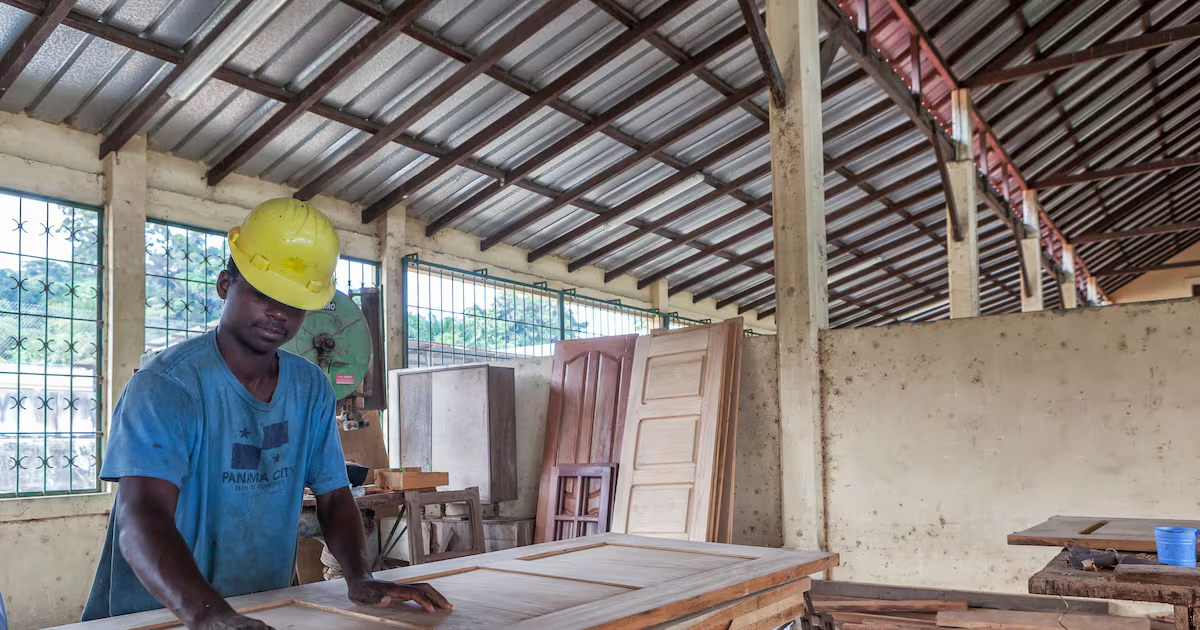
The entry of Chinese-backed companies into the wood-processing industry in South Africa has emerged as a competitive threat to domestic players following the opening of the first large-scale plywood and veneer manufacturing capacity by Asians in KwaZulu-Natal.
The major development in the province is the MSFU Wood project launched in Pietermaritzburg last year. It has a planned production of approximately 3,000 plywood boards per day (or 150,000 per month) and an eight-site expansion program of approximately R400 million capital investment.
MSFU Wood is a subsidiary of Chinese company Zoeyol. The project, which is expected to create 1,000 jobs, has attracted the attention of the state-owned South African Forestry Company (Safcol), which told parliament that its scale represents a step change in a region that historically had no large veneer or plywood mills despite large plantations.
Safcol says in its annual performance plan, “A significant feature of the Zoyol investment is the intention to source eucalyptus logs locally, clearly replacing earlier practices where core veneer and logs were exported to China for processing. This localization of Chinese processing capacity is already strengthening hardwood markets.”
“Chinese operators typically deploy low-cost machinery, high-capital intensity and export-oriented business models, allowing them to aggressively price panel products. This dynamism is evident in rising Chinese plywood imports into South Africa – up to R59-million in 2023-2024, making China the country's fastest-growing source of plywood.
“Local plywood, furniture and board producers face margin compression as Chinese-made products undercut domestic processors, creating downstream risks to Sufcol's pine customer base. Weak financial performance among local panel and sawmill customers reduces their ability to purchase logs, as evidenced by a temporary interruption in eucalyptus purchases by established buyers such as ELS Timber and York Timbers due to already overstocking and lost market share. Seen as.”
Established in 1992, Safcol was created to ensure a sustainable supply of timber while promoting economic and social development in predominantly rural communities. The state-owned entity aims to operate as a commercial forestry business – including harvesting, processing and selling timber – while supporting the government's transformation and development agenda.
The South African plywood market is a strong, competitive sector driven by local manufacturing – particularly by major supplier York Timber. The company, which is listed on the JSE-listed York Timber, where it is valued at R900 million, has been in existence since 1916.
Safcol says the competitive threat from Chinese companies extends beyond South Africa. “Chinese companies have shown increasing interest in Eswatini's eucalyptus resources, engaging informally despite the country's diplomatic ties with Taiwan,” the entity says.
“The regional activity, combined with China's agreement to finance local wood-processing plants in Mozambique, points to an expanded Chinese footprint in the southern African fiber belt. This increases the potential for future competition for fiber, labor and cross-border markets, and KwaZulu-Natal and Eswatini could be repositioned as a plywood export corridor rather than a raw-log supply zone.”
“Overall, this represents a material structural shift. China is moving from an import model from South-Africa to a process model in South-Africa. This changes competition in the midstream (log sourcing and fiber pricing) and downstream (panels, furniture and engineered wood) segments.”
Safcol says the risks it faces lie in tight fiber markets, pressure on eucalyptus pricing, weak domestic customers and potential replacement of pine products if Chinese plywood increasingly captures price-sensitive market share.
“At the same time, the scale, capital and export reach of these entrants suggests that strategic partnerships or structured supply agreements may provide opportunities to stabilize demand and secure value within developed regional timber markets.”
Safcoal's five-year strategy aims to diversify revenue streams, prioritize product diversification, increase efficiency and enhance competitiveness.
However, the company has been beset by leadership instability, with the key roles of CEO, CFO and COO all held by acting appointees.
China is South Africa's largest trading partner, with Beijing running a large trade surplus with Pretoria. The strength of China's manufacturing capabilities has been highlighted by the popularity of its vehicles in the South African market – leading to a structural shift in the market as consumers turn from expensive German cars to more affordable and feature-rich Chinese vehicles.
Business Times