
The Gauteng Education Department has expressed serious concerns about the growing overcrowding crisis in the province's schools, as the number of learners continues to exceed available capacity.
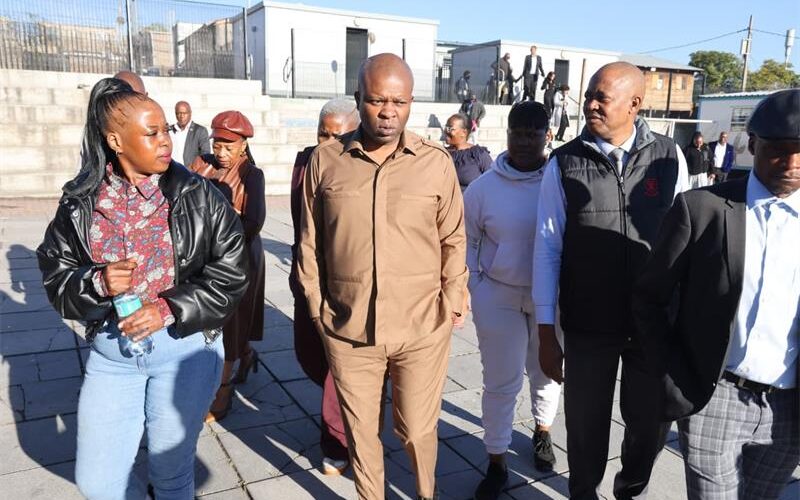
In a statement released by the department on 28 April, MEC Lebogang Mel outlined the scale of the challenge and the ongoing interventions to stabilize the system.
The department describes the education system as a reflection of the broader structural challenges facing Gauteng and South Africa due to historical inequalities, financial constraints and increasing pressure on resources required for teaching, infrastructure and curriculum development.
“Learner enrollment in Gauteng has more than doubled over the past three decades.
“In 1995, there were just over 14 lakh learners in the province, while by 2026 this number is expected to exceed 2.8 million.
“This makes Gauteng the fastest-growing education system in the country, with over 50,000 learners added each year due to migration and rapid urbanisation,” the Mail said.
There are currently 2,111 public schools in the province, including 1,417 primary schools and 694 secondary schools.
“However, almost half of these schools, 1,021 in total, are running over capacity. Overcrowding is particularly severe in secondary schools, where 64% are oversubscribed compared to 41% of primary schools.
“While primary schools have a surplus of over 54,000 places, secondary schools face a deficit of over 88,000 places,” he said.
“Overcrowding is widespread across all 15 education districts, with townships and urban areas most under pressure.”
The Mail said the imbalance between the numbers of primary and secondary schools was worsening the situation, creating barriers to learners progressing through the system.
The Department estimates that at least 83 additional secondary schools are needed to meet current demand.
“Infrastructure development has struggled to keep pace with the rapid increase in the number of learners.
“Gauteng is currently facing a backlog of at least 200 schools requiring the system to be stabilized.
He quoted, “Although the province aims to build 10 schools per year, many projects are being delayed, leading to reliance on temporary classrooms as a short-term solution.”
Financial constraints remain a major challenge.
Despite an education budget of more than R68b, a significant portion is allocated to salaries, leaving limited funds for infrastructure, maintenance and learning materials.
According to the Mail, a recent school readiness audit also highlighted a serious shortage of furniture, including thousands of desks and chairs, in both primary and secondary schools.
“While procurement processes are underway, funding limitations are delaying full delivery.
“The situation is further complicated by rapid urbanisation, population growth in townships and ongoing migration into Gauteng.
“Additional challenges include vandalism, crime, poor contractor performance and disruptions associated with community forums, which slow down infrastructure delivery and increase costs,” he said.
To deal with the crisis, the Gauteng provincial government has committed approximately R4b over the medium-term expenditure framework for new and replacement schools.
This is expected to open around 23 schools in the next few years.
The Department is also working with the Development Bank of Southern Africa on infrastructure projects in high-pressure areas and has introduced programs targeting priority development in municipalities.
Other measures include exploring public-private partnerships, reopening former schools that meet regulatory standards, and implementing a self-construction program that allows schools to build additional classrooms.
Prefabricated classrooms are also being deployed to ease immediate pressure, although these are not seen as a long-term solution.
The government has also developed a 20-year infrastructure plan in line with population growth and urban development, including plans to expand schooling in inner-city areas and high-density communities.
The Mail has called on the private sector and communities to support government efforts, particularly to protect school infrastructure from vandalism and theft.
He stressed that tackling overcrowding requires collective responsibility to ensure that limited resources are used effectively and every learner has access to a safe and functional learning environment.
At Caxton, we employ humans to generate daily breaking news, not AI intervention. Enjoyed reading!