
For millions of South Africans, using artificial intelligence in their home language often means dealing with incorrect responses, limited support or tools that don't understand the local context.
Now, a research team of University of Cape Town is trying to change this with a home-grown AI language model designed specifically for the linguistic landscape of South Africa.
Attracting attention in local tech and academic circles, the project was recently brought into the spotlight by both UCT researchers and 2OceanVibe NewsThe team is preparing to present their findings at the Language Resources and Evaluation Conference (LREC) in Mallorca, Spain.
The success focuses on MjansiLM, a multilingual AI language model trained in South Africa's 11 official written languages, and MjansiText, a new dataset selected to support those languages.
Researchers say the initiative could help bridge a long-standing gap in artificial intelligence, where African languages have historically been underrepresented in mainstream systems.
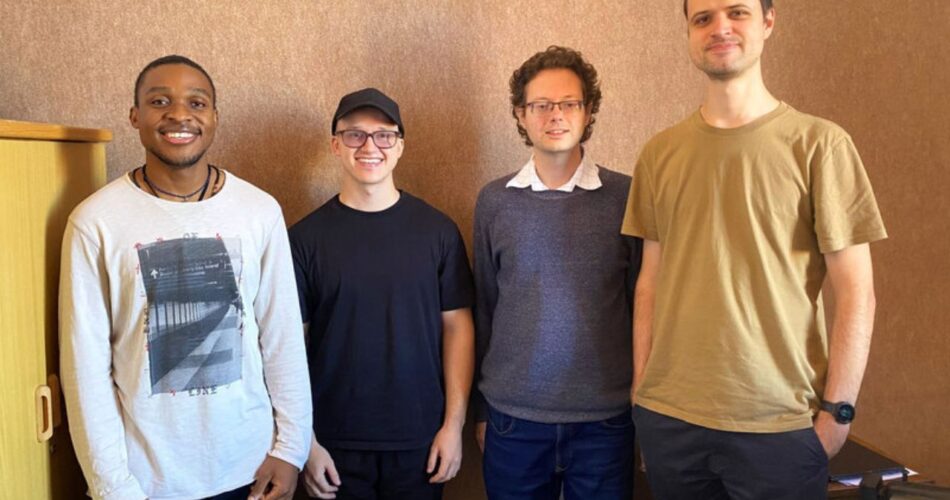
The project was led by Henri Lombard and Dr Jan Buys from UCT's Department of Computer Science, together with Dr François Meyer and a wide network of collaborators.
While AI-powered tools have become embedded in everyday life globally, many South Africans still struggle to access reliable AI support in languages other than English.
Researchers involved in the project say the problem is largely related to data availability.
'In language modeling, languages are considered low-resource, primarily because there are very few and small text datasets available in these languages for training language models,' Dr. Buse said.
According to the team, South Africa's nine official languages have been classified 'Less resources' In the AI field, that means there is limited training material available for developers building language technologies.
Although languages such as isiZulu and isiXhosa have received increasing international research attention in recent years, other languages, including isiNdebele and Sepedi, remain significantly under-represented.
It is this imbalance that MzansiLM hopes to address.
'MjansiLM is believed to be the first publicly available decoder-only language model to explicitly target all 11 languages.' The researchers noted.
Unlike commercial chatbots like ChatGPT or Cloud, MjansiLM is not designed for open-ended conversations. Instead, researchers describe it as a basic AI model that developers can customize for particular tasks.
This may include tools to summarize information, annotate data, or create services that allow users to interact digitally in their home language.
'With MjansiLM, we wanted to create a single model focused specifically on South Africa that covers all 11 official written languages, including those that are often left out.' Dr. Meyer said.
The model is relatively small compared to major commercial AI systems, with 125 million parameters. But researchers say its performance has already shown promising results in local language benchmarks.
Tests conducted by the team found that MjansiLM competed strongly against much larger open-source systems in several South African languages, particularly isiXhosa text generation tasks.
For Lombard, whose master's research helped shape the project, the work also reflects broader changes taking place in African AI development.
'One thing that stood out to me is that publicly available models only cover a subset of the South African languages we care about,' He said.
'The purpose of MazanCLM was to provide a small decoder-only baseline that future work could compare and build upon.'
South Africa currently recognizes 12 official languages, including sign language, which gained official status in 2023.
Technology experts have increasingly warned that millions of users risk being excluded from fast-growing digital services if African languages remain absent from AI development.
The UCT team says openness and collaboration will be key to stopping this.
'Bridging the gap between the capabilities now available in South African languages and English will require a sustained, collective effort,' Lombard said.
The researchers have made both MjansiText and MjansiLM publicly available in an effort to encourage further development and collaboration within the African natural language processing research community.
Be the first to know – join our WhatsApp channel for useful content! Click here to join!
Also read:
AI in education: South Africa's 2026 learning transformation
Picture: UCT