
The next frontier in financial literacy can't be another classroom worksheet, corporate social investment road show or fancy laminated budgeting pamphlet gathering dust in the school office.
This could be a game.
This is not as trivial as it seems. In a country where many young people leave school knowing more about trigonometry than compound interest, and where entrepreneurship is often sold as a means of escape without adequate practical support, gaming is beginning to look less like entertainment and more like infrastructure.
Cape Town-based Impact Games studio Sea Monster has been appointed by The King's Trust International to create a large-scale entrepreneurship game for youth in several Commonwealth countries – Jordan, Pakistan, Uganda, Tanzania, Kenya – which will take the South African game-based learning model to the global stage. The project launch in Nigeria has been pushed to the next phase.
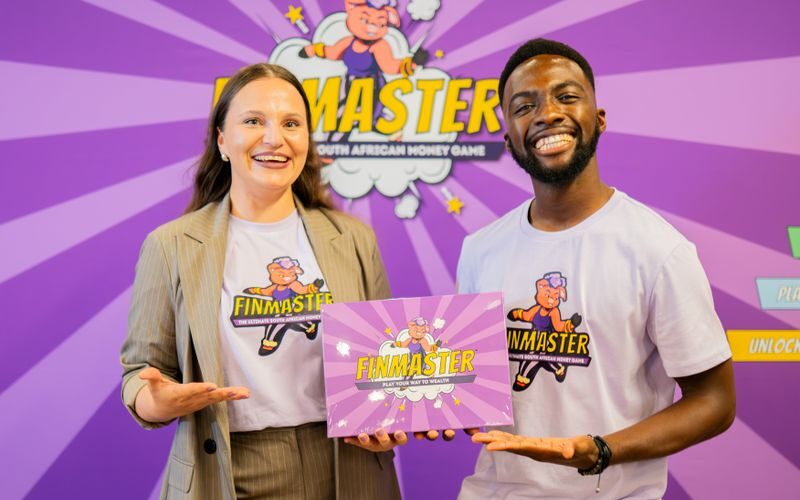
At the same time, local entrepreneurs Denny Rall and Eliza Dejan are seeing strong interest in their financial literacy board game Finmaster, which started life as a handmade pizza-box prototype and has since moved toward mainstream retail distribution, including exclusive books.
These two stories show that financial education is no longer just about teaching young people how money works, but is taking a new form as SA's growing sports industry begins to meet financial literacy needs.
games get serious
Sea Monster CEO Glenn Gillis says King's Trust's work is about entrepreneurship rather than narrow financial literacy, but the line between the two is thin. Young people have to make decisions about stocks, cash flow, pricing, reputation, debt and long-term investments, the same messy bundle that sits inside any real-world small business.
Gillis said, “The advantage that comes with game-based learning is that it reverses the typical learning model. Instead of knowing something and then applying it, players do something and then understand the theory behind it.”
It sounds simple, but this is exactly the part that traditional teaching often struggles to replicate. A child or even a young adult can easily remember the definition of cash flow. It's another thing altogether to feel nervous in making pricing decisions, to be short of cash and to realize too late that reputation, stock and customers are all part of the same living system.
Gillis says it's hard to teach entrepreneurship in isolation because so many decisions are made simultaneously. In a game, he says, “I have to manage my reputation at the same time as I have to manage my cash flow,” while also making short-term trading decisions and long-term investment calls. “It's almost impossible to teach those things in any other format, because it wouldn't be genuine. It wouldn't feel like your decisions matter.”
lived the realities
“We couldn't be happier with our collaboration with Sea Monster. From the start, they not only invested the time to understand the goals of the project and the ambition of the charity, but crucially the reality of the project is designed to empower young people. They brought creativity, momentum and real energy to the process, and we're excited to see the transformative impact this game will have when it goes live,” says Jo Parsons, Director of Delivery and Impact at King's Trust International.
The King's Trust project builds on Sea Monster's existing work with partners including the Alan Gray Orbis Foundation, Nedbank and Lemonade Day USA. The Allan Gray Entrepreneurship Challenge has reportedly reached more than 10,800 players across four countries, with a 74.4% completion rate and a 448% improvement in business valuation knowledge. The Nedbank Chow Town experience on Roblox attracted 1.5 million young South Africans and earned an 81% positive rating.
failure feels useful
One of the most powerful arguments in favor of gaming in entrepreneurship education is that it allows youth to fail without exploding in their real lives.
For a young entrepreneur in a low-income household, a failed business could mean debt, family pressure, lost savings or years of recovery, whereas in a sport, failure could mean useful data.
Gillis says that a successful player in the Allan Gray Entrepreneurship Challenge told him that he had tried several different strategies, including using AI to suggest ways to play, before adopting his approach.
He told Gillis, “I didn't fail 99 times, I did 99 experiments until I found a strategy that worked.” For Gillis, that's the point: Entrepreneurship requires “systematic failure,” knowing when to move on and when to keep moving forward.
“Failing a lot in a game is a kind of success,” he says, “because it allows players to experiment quickly and cheaply.” Deep learning is often not just about pricing or profit, but about flexibility, critical thinking and communication, “below the waterline” skills that games can track through player behavior.
/file/attachments/orphans/SeaMonstersChowTown-Auniqueonlinegamingexperiencethatwillteachchildrenvaluablelifeskillscopy_887061.jpg "Sea Monsters Chow Town – a unique online gaming experience that will teach kids valuable life skills. (Photo: Supply)")
The Sea Monster's pitch is also distinctly African. Gillis argues that entrepreneurship education cannot simply be imported from Western models and reimagined with local characters. It needs to work on low-end smartphones in data-constrained environments, with shared devices, cultural nuances, local business contexts, and the possibility of power off in the middle of a lesson.
Gillis says South African developers are accustomed to designing around constraints.
“We ask a lot of questions, we don't necessarily arrive at a preconceived idea that things are going to work,” he says, adding that this can be a strategic advantage: The design for the most limited user and the product becomes stronger everywhere else.
Origin of the pizza box
The Finmaster's origin story is a short one, but no less telling.
Raul and Degen, both industrial engineering graduates, started with the idea of an app. But when he needed something physical to showcase his idea at the school market day, he improvised. The first prototype was a pizza box with a laminated A4 page for a board, printed fake money and tokens made by breaking an abacus.
“That was literally it,” Rall recalls. He made 10 and sold four on the first market day.
That small hint developed into a long discovery process. Rall says they interviewed about 60 parents and found that about 80% wanted to teach their kids about money, but didn't feel equipped, confident, knowledgeable, or simply didn't have the time.
The comment that touched her heart was from a parent who said they hoped their daughter would “marry a rich husband”. Rael's own inspiration is personal: Her mother went through two divorces and, she says, stayed longer than she could because of money. The lesson was clear: Financial literacy isn't just about bank accounts, it's about agency.
FinMaster now teaches players not only about earning, spending, saving and sharing, but also about asset classes, event shocks and portfolio choices. Event cards can include anything from COVID-19 to artificial intelligence, tariffs, or geopolitical conflicts, showing players how the outside world affects money.
“The idea is that it's not a lesson,” Rall says. “You're playing games.” A facilitator may pause to explain a concept, but the game is designed so that players can learn by doing.
The mechanics are deceptively simple. Players build net worth through cash and assets. They can buy savings products, stocks, exchange-traded funds (ETFs), tax-free savings accounts, property, retirement assets, business assets and alternative investments. Event cards can reward or punish those choices, nudging players toward diversification without turning the board into a punishment machine.
learning takes play
The link that links Sea Monster and Finmaster is not formatted. creating digital experiences on a large scale; The other has a physical board game at its center. The common thread is that both view financial decision making as a matter of behavior rather than information.
This is important because SA has no shortage of financial literacy pamphlets, campaigns and worthy PDFs. We lack learning tools that people actually want to use over the long term to change their behavior.
Gillis is clear about the opportunity. He says that games in this context are not “pure entertainment”, but rather influential tools that can be tracked over time to understand whether players later start businesses, earn income or pursue further training. Their long-term desire is to have common functionality that allows institutions to track entrepreneurial growth over years while protecting user privacy.
He also envisions a future where a bank will look at a young entrepreneur's game profile, not just their traditional credit score, and also look for evidence of communication, critical thinking and decision making.
“I won't give you a loan based on a credit score, which is exclusionary, but based on a better understanding of the person and their likelihood of success,” he says.
That future is still a few levels away. There are obvious questions about privacy, data protection, children, profiling and whether gaming behavior should ever affect access to finance. Sea Monster says these issues are at the center of its design process, especially as young people gather in digital spaces. Gillis compares it to leaving a child in a shopping centre: the environment may be useful, but the responsibility is huge.
Still, the broader point stands. If SA wants more entrepreneurs, better money habits and young people who can navigate an economy full of shocks, financial education needs to be more practical, more engaging and more rooted in reality.
A pizza box and a game with global impact may seem very different. But both are pointing in the same direction: The lesson of money may ultimately be learning how to play. DM