
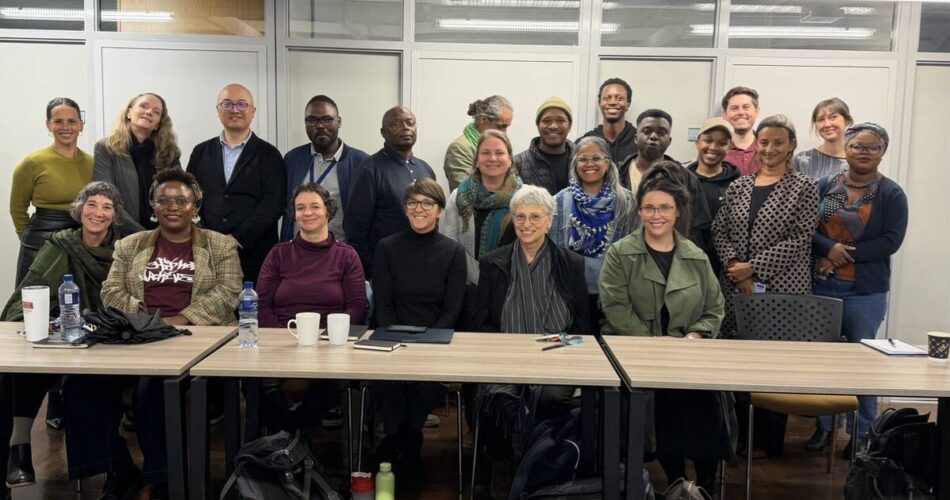
From 16 to 17 April 2026, UNESCO, in the framework of the project “Institutionalizing and strengthening capacity development to support the identification and safeguarding of cultural and natural world heritage in Africa”, carried out a contact and scoping mission to the University of Cape Town (UCT), South Africa, implemented with the generous support of the Korean Heritage Service, Republic of Korea.
The mission aims to assess UCT's current heritage-related teaching, research and postgraduate supervision and explore the possibility of enhancing these initiatives through a strengthened, updated curriculum on World Heritage within the University. Within the Africa-wide project, UCT is considered a potential Southern African node, with strong potential to contribute to world heritage curriculum development, critical heritage scholarship, public culture, urban transformation and the under-represented sector of Africa's modern heritage, thereby offering a potential pathway to the establishment of a UNESCO-supported heritage platform.
UCT's participation brought together 16 staff members from the Humanities, Engineering and Built Environment and Science Faculties, with additional university level involvement from Institutional Planning. Represented units include the departments for African Studies and Linguistics, Archaeology, Anthropology, Historical Studies, Studies of Religions, Michaelis School of Art History and Visual Culture, School of Architecture, Planning and Geomatics, Global Digital Heritage Africa, African Center for Cities, and Environmental and Geographical Sciences. 35 master's and doctoral students were also involved in the mission.
Over two days, discussions examined UCT's existing strengths in heritage teaching and research, including conservation of the built environment, urban and public-culture approaches, African studies, archeology and digital heritage documentation. The Mission confirmed that UCT already has substantial and diverse heritage expertise, while noting that this expertise is distributed across multiple departments and would benefit from a coherent, inter-disciplinary platform.
Africa's modern heritage emerged as a promising thematic anchor for future collaboration, linking architecture, planning, public culture, memory, archaeology, environmental analysis, digital documentation and African-centred knowledge production. Participants also explored possible institutional models, including a Heritage Resource Center or a research center developed in line with UCT's governance framework.
Looking ahead, UNESCO and UCT will continue to work towards a phased roadmap. Immediate steps include conducting in-depth internal mapping, preparing a joint concept note and identifying pilot activities such as seminars, curriculum mapping, student engagement and short vocational courses. If developed carefully, UCT could become an intellectually distinctive and regionally important node within the emerging UNESCO-supported network of World Heritage higher education in Africa.
For further information, please contact: Rouran Zhang, Program Coordinator, UNESCO World Heritage Centre: (email protected)