
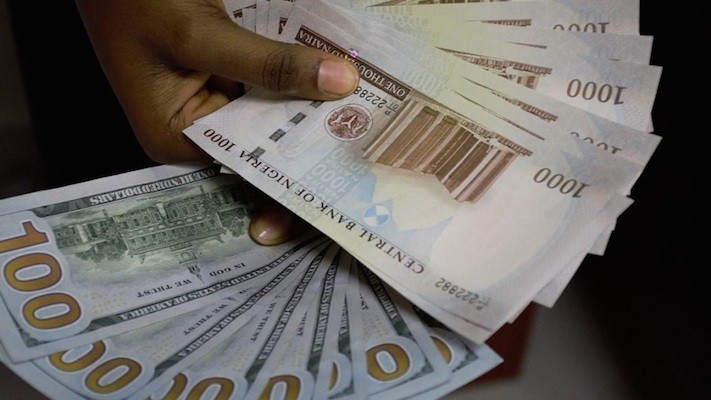
For decades, most cross-border trade involving African businesses has been heavily dependent on the US dollar, even in cases where neither party to the transaction was American. A Zambian company buying goods from Kenya may convert the local currency into dollars before the payment finally reaches its destination. This process became so common that some people questioned it.
This may be slowly starting to change…
Over the past two years, many African financial institutions, regional blocs and commercial banks have introduced systems designed to reduce the need for dollar-based settlements in some types of transactions, particularly regional trade within Africa. The broader discussion around foreign exchange access is becoming more visible beyond institutional banking sectors. Interest in countries suffering from periodic currency pressures and exchange rate fluctuations forex trading There has been an increase in services among businesses and retail participants who are looking more closely at how global currency markets affect local economies.
This change is not dramatic enough to say that the dollar is losing its global dominance. The US currency remains the center of international trade, commodities, reserves and global finance. But there is growing evidence that African policy makers and financial institutions are trying to reduce unnecessary reliance on external currencies for intra-African commerce.
One of the clearest examples came in late 2025 when the Common Market for Eastern and Southern Africa (COMESA) launched a digital retail payments platform aimed at allowing businesses and individuals to settle certain cross-border transactions directly in local currencies.
According to Reuters, the first implementation linked Zambia and Malawi, with officials arguing that small and medium-sized enterprises could benefit from lower transaction costs and faster settlement times. SMEs account for a large share of employment across the sector, making payments efficiency more than just a technical banking issue.
The Pan-African Payments and Settlement System, known as PAPSS, is pursuing a similar objective on a wider continental scale. Supported by Afreximbank and linked to the African Continental Free Trade Area, the system aims to simplify payments between African countries without routing transactions through foreign correspondent banks.
Practically, proponents argue that this could reduce delays, foreign exchange costs and pressure on dollar reserves.
The logic behind these efforts is relatively straightforward. Much of Africa's cross-border payments infrastructure was historically built around external financial centres. Even trade between neighboring African countries is often dependent on banking relationships outside the continent, usually involving conversion into dollars, euros or pounds before final settlement.
International Monetary Fund Previous research has acknowledged this issue, estimating that transaction frictions associated with currency conversion and correspondent banking structures cost African economies billions of dollars annually.
There are also macroeconomic reasons why governments and regional institutions are now paying more attention to the issue.
Many African economies continue to experience periodic dollar shortages, exchange rate volatility and rising import costs during global financial tightening. Emerging markets often face immediate downward pressure on local currencies when the Federal Reserve raises interest rates or global investors turn to safe-haven assets.
Reducing some reliance on external currencies for regional trade is therefore being seen as a way to improve resilience, particularly during periods of financial stress.
Additionally, China's growing commercial role across Africa is also beginning to influence parts of the conversation. Reuters reported earlier this year that Ecobank was discussing a yuan-based settlement mechanism with the Bank of China to facilitate trade flows between African businesses and Chinese suppliers.
Again, the objective appears to be practical rather than ideological. Businesses trading directly with Chinese manufacturers may benefit from avoiding multiple currency conversions through dollars when settling invoices.
Still, there are significant limits to how far these systems can realistically go.
The dollar remains dominant for reasons that extend far beyond payments infrastructure alone. International investors rely on the liquidity of the dollar. Major commodities are priced in dollars. Central banks have ample dollar reserves. Global trade financing systems are deeply integrated with US financial markets.
Completely changing that structure will require changes far beyond regional payments technology.
There are also domestic challenges within Africa.
Not all local currencies are equally stable or easily convertible. Some face inflationary pressures, limited liquidity or restrictions on capital movement. Businesses may hesitate to hold currencies that are difficult to protect or whose value is rapidly declining. In those cases, the dollar often continues to act as a predictor, even when transaction costs are high.
Financial infrastructure also remains uneven across the continent. Cross-border settlement systems require regulatory coordination, strong banking supervision, liquidity support, and trust between participating institutions. It is often easier to build a technical platform than to build long-term confidence in how the system operates during periods of stress.
The IMF also warned that increased reliance on domestic debt markets without sufficient market depth could create isolated financial vulnerabilities, including pressure on local banks and less lending to the private sector.
History shows that these changes rarely happen quickly.
The global financial system has experienced several attempts at regional monetary integration over the past century, from the postwar monetary settlement to the creation of the euro. In most cases, adoption depends less on political ambition and more on whether businesses and investors trust the system enough to use it consistently.
Ultimately this may become a decisive factor in the case of Africa as well.
For now, evidence suggests African institutions are not attempting to completely remove the dollar from the continent's economy. What they are building instead are select alternatives for situations where relying solely on external currencies has become unnecessarily costly, slow or inefficient.
Whether those systems will remain limited to limited experiments or evolve into something larger will likely depend on factors that go beyond technology alone, including currency stability, institutional credibility, and the willingness of businesses to slowly change their long-standing financial habits.