
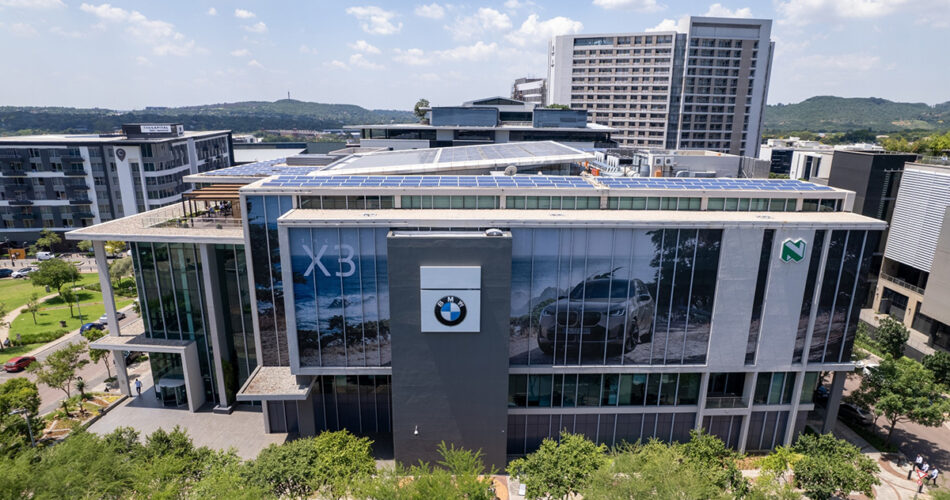
The software developed at the BMW IT Hub South Africa is live in more than 40 countries.
BMW Group's technology solutions unit based in the City of Tshwane, BMW IT Hub South AfricaWill contribute more than R4 billion to South Africa's economy by 2026.
So said John Lauter, GM Customer Brand Sales at the BMW IT Hub SA, speaking to media at the Hub's 20th anniversary celebration in Menlyn yesterday, where BMW Group South Africa brought together stakeholders, industry partners and government officials, including Gauteng Premier Panyaza Lesufi.
The opportunity included a guided tour of the Hub's facilities, a showcase of South African-developed innovations and a fireside discussion focused on the next generation of tech talent.
Recognized as the “youngest” of BMW South Africa's four business entities, the BMW IT Hub provides IT solutions and consulting services for various areas of the Group.
The four business entities include the Rosslyn plant, which marked the beginning of BMW South Africa 53 years ago; a national sales company in Midrand; financial Services; and BMW IT Hub.
See also


Peter van Binsbergen, Chairman and CEO of BMW Group South Africa, commented: “This 20-year milestone is testament to the world-class talent we have in South Africa.
“The Hub has evolved from a support center to a global innovation powerhouse, and as we grow aye And dataDriven by mobility, our Pretoria team will be at the heart of the digital future of the BMW Group.”
Thorsten Achenbach, BMW IT Hub Director, said: “This milestone reflects our commitment to transforming local potential into global innovation, ensuring that South Africa will continue to be the key architect of the BMW Group’s digital journey.”
Lauter said the BMW IT Hub South Africa, also known as ZA Hub, is the German auto maker's first IT hub.
Founded in 2006 with just 11 people as part of its staff, the hub now has a workforce of 2 600 technology professionals who manage everything from production line data to customer-facing platforms at more than 130 BMW locations worldwide, Lauter said.
It started as SAP Shared Services, he said, with the first project being to transfer SAP knowledge from the Rosslyn plant to ramp-up plants in China.
“They needed skills in a small standalone environment, production facility etc. So the head office in Munich decided that the appropriate skills would be from South Africa and transferred to China.
“BMW follows a global delivery model where the product is built in one environment and exported to the rest of the world. Like the BMW plant in Rosslyn, it makes a world model of the BMW X3 plug-in hybrid. While the Rosslyn plant builds the cars, the hub creates the software.”
According to Lauter, although it began with a focus on SAP skills, the hub has expanded over time. “We do not do in-vehicle IT development and operations, but focus primarily on the (BMW) businesses, including software across plants, dealers, platforms, sales and marketing environments and all other disciplines.
“Because we have focused on the technology side of things, we have grown. However, the key ingredient to ZA Hub's success is our collaboration. Our 'Hubsters' are also proving to be very successful global project leaders and enablers.
“The software is developed here… and goes live in more than 40 countries. We support BMW's business processes and units in every market where it is present.”
During his address, Lesufi underlined the strong partnership between BMW Group South Africa and the provincial government in advancing digital skills and innovation.
The BMW IT Hub has focused on bridging the digital skills gap through collaboration with local universities including the University of Pretoria and Stellenbosch University.
It has also set up a graduate technical academy, which has attracted 134 participants this year. These are graduates who have completed university studies who will be trained for industry.
Tumi Thabane, GM of Logistics, Shopfloor and OTD Platform at BMW IT Hub South Africa, said the hub's technical talent includes software development teams, data scientists, test analysts, cyber security, business analysts, data engineers, artificial intelligence (AI) and machine learning operations experts, software engineers and more.
Thabane said the hub absorbs about 80% of graduates to become part of the local workforce. “They engage in temporary employment services first…and even if we don't include everyone, they still leave with experience for the next company.”
According to Danny Smit, CTO of BMW IT Hub South Africa, more than 100 people are building AI solutions for the BMW Group.
These range from mobile analytics to platforms for quality production assessment, the creation of digital twins of vehicles, as well as analytics for future predictions, Smit said.
The facility also has outreach programs that have reached over 40,000 individuals through mentorship and career exposure.