
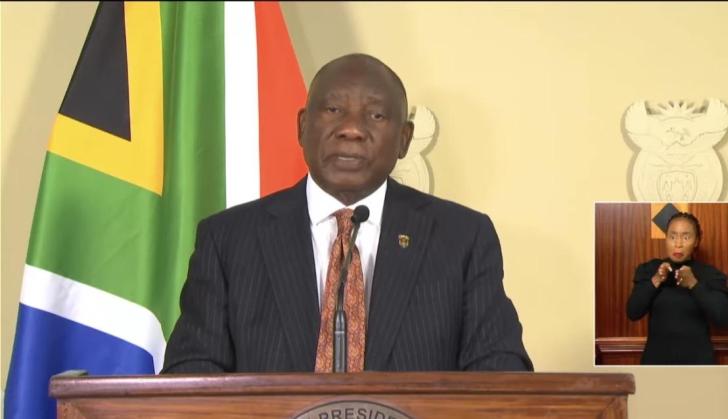
Addressing the nation from the Union Buildings in Tshwane, Ramaphosa acknowledged growing public anger over illegal immigration, unemployment, pressure on public services and rising crime concerns.
“South Africans are asking whether our borders are secure. They are concerned about jobs. They are concerned about safety, security and the rule of law,” he said.
Stressing that South Africans are “not xenophobic”, the South African leader warned that illegal immigration poses a serious national challenge that requires decisive state intervention.
Zimbabweans form one of the largest expatriate communities in South Africa, with many employed in construction, agriculture, domestic work, hospitality, mining and the informal sector. The new measures are therefore expected to cause concern among both documented and undocumented Zimbabwean migrants.
Ramaphosa announced that authorities would step up detection and deportation of undocumented migrants and strengthen workplace inspections targeting companies that illegally employ foreign nationals.
“In the last year alone, border management authorities managed to intercept and stop more than 450,000 people attempting to enter South Africa illegally,” he said.
The government also plans to set up dedicated immigration courts to fast-track deportation cases and increase penalties, including possible imprisonment, for employers found guilty of hiring undocumented workers.
The speech comes amid rising anti-immigrant sentiment in parts of South Africa, where foreign nationals are often blamed for unemployment, crime and pressure on health care and education systems.
Ramaphosa sought to balance a tough immigration message with calls for restraint and constitutionalism, warning citizens against taking the law into their own hands.
“For example, another person is not allowed to confront someone on the street to ask for proof of nationality,” he said.
He also warned against xenophobia, violence and misinformation campaigns targeting foreign nationals.
“We must not allow ourselves to be turned against foreign nationals or against each other,” he said.
For Zimbabwe, these developments are significant given the country's deep economic and social ties with South Africa. Millions of Zimbabweans depend directly or indirectly on remittances from relatives working in Limpopo.
Analysts say stricter immigration enforcement could increase economic pressure on Zimbabwean families already struggling with unemployment, inflation and limited formal job opportunities.
The South African government also announced plans to move refugee reception centers closer to border checkpoints, introduce a biometric population registration system, phase out green ID books, and tighten labor migration laws through employment quotas for foreign nationals.
Ramaphosa said South Africa would continue to engage regional bodies such as SADC and the African Union to address migration pressures across the continent.
“As South Africans, we will continue to work with our partners to build an Africa where people lead by choice, not by desperation,” he said.
Despite the tough tone, Ramaphosa said migration itself is not the enemy.
“South Africa is a better country for migration,” he said. “But it means our laws need to be strengthened and enforced more effectively.”
The address is expected to spark intense debate across Southern Africa, especially in Zimbabwe where migration to South Africa remains a vital economic lifeline for many families.