
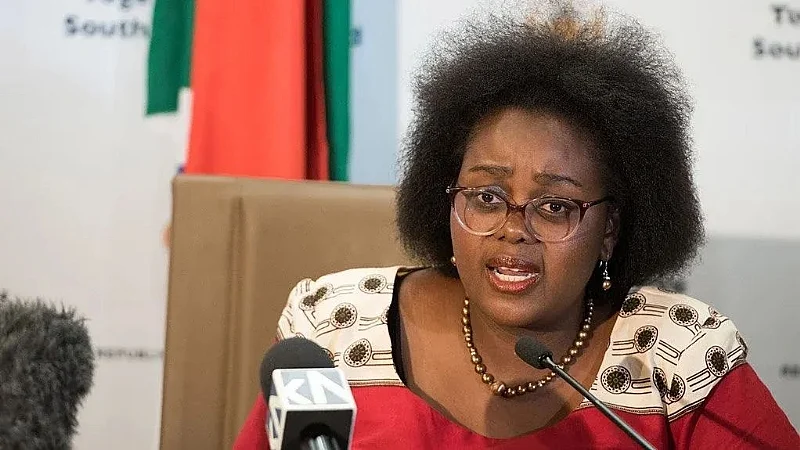
South African Justice Minister Mamamoloko Kubayi has made a confession that many governments would prefer not to make publicly: South Africa's image across Africa is being tarnished, and some of its own citizens are now paying the economic price.
His statement that South African artists are losing bookings across the continent due to perceptions of xenophobia has sparked intense debate. But how true is this? And what are the deeper questions that many people are avoiding?
Is there evidence that South African artists are losing their exposure?
The answer appears to be yes.
Kubayi revealed that one artiste informed him that all his bookings across Africa had been cancelled, while several other South African artistes were reportedly facing similar difficulties. Government officials have also acknowledged that businesses operating outside South Africa are facing increasing hostility and backlash.
Although the government has not publicly released the names of the affected musicians, there is already evidence of South African artists being distanced from cultural events. For example, organizers of the Likoma Island Festival in Malawi suspended negotiations with a South African artist specifically in response to concerns about xenophobic attacks in South Africa.
The evidence therefore supports the widespread claim that some South African artists and businesses are suffering consequences abroad.
the serious question no one wants to ask
Is this merely a perception problem, or is South Africa now experiencing the consequences of years of unresolved xenophobic violence?
For more than a decade, periodic attacks against African migrants have repeatedly made international headlines. The victims include citizens of countries such as Ghana, Nigeria, Mozambique, Zimbabwe, Ethiopia, Malawi and Somalia.
The uncomfortable question is:
How many warnings did South Africa receive before the rest of Africa began to react?
Each major outbreak sparked outrage across the continent. African leaders condemned the attacks. Civil society groups protested. Musicians and celebrities expressed concern.
Still the incidents kept repeating.
At what point does the rest of Africa stop seeing xenophobia as isolated incidents and begin to see it as a national problem?
What impact is this having on South Africa?
This damage extends far beyond entertainment.
1. Economic loss
South African companies operating elsewhere in Africa are reportedly facing backlash and reputational challenges. Government officials have acknowledged the need to support affected businesses abroad.
2. Cultural isolation
South African music, television, fashion and entertainment have long enjoyed strong support across Africa.
If audiences begin to reject South African artists because of anti-immigrant sentiment, the country risks losing one of its most powerful forms of soft power.
3. Diplomatic tension
Several African countries have reportedly evacuated or deported some citizens due to security concerns during the recent tensions. This puts pressure on diplomatic relations and regional cooperation.
4. Tourism and investment concerns
Investors and tourists often pay attention to international reputation.
A country that is repeatedly associated with violence against fellow Africans risks damaging its attractiveness as a destination for business and tourism.
What are ordinary Africans saying?
On social media and in public discussions, many Africans express a similar sentiment:
> “We supported South Africa during apartheid. Why are fellow Africans being treated this way today?”
This argument holds emotional significance because many African countries provided political, diplomatic, financial and moral support to South Africa during the anti-apartheid struggle.
The criticism is not just about immigration. For many Africans, this is about what they see as a betrayal of Pan-African solidarity. Even the Director-General of the World Health Organization described the recent violence as a “tragic betrayal” of African solidarity.
What is the South African government doing?
The government emphasizes that South Africa is not a xenophobic nation and has called on citizens to reject vigilance and violence against foreigners.
Officials say immigration concerns should be addressed through law enforcement rather than attacks on migrants. Government departments are also engaging affected businesses and attempting to improve South Africa's image abroad.
However, another difficult question remains:
If the government recognizes the damage, why has the problem persisted for so many years?
Did South Africa bring this on itself?
Many critics would argue that part of the answer is yes.
Not because every South African is xenophobic, far from it.
But because repeated outbreaks of anti-immigrant violence are often followed by outrage, promises, investigations, and then another cycle years later.
Failure to completely break that cycle has left negative perceptions deeply entrenched throughout Africa.
A single incident rarely damages a country's reputation.
It becomes damaged when similar events occur repeatedly.
What are other African countries saying?
Many African governments continue to call for peaceful and lawful treatment of migrants, emphasizing human rights and African unity.
Countries such as Ghana, Nigeria, Malawi, Zimbabwe, Mozambique and others have repeatedly expressed concern when xenophobic attacks occur.
The broader continental message appears to be this:
Africa supports South Africa's right to manage migration. Africa does not support violence against African migrants.
That distinction is important.
The biggest question of all
Perhaps the most important question is not whether South African artists today are losing their presentation.
It is this:
How much economic, diplomatic and cultural damage will South Africa suffer before xenophobia becomes a recurring feature of its international image?
If today musicians are losing contracts, businesses are facing backlash, and fellow Africans are distancing themselves from South African brands, the price of xenophobia is no longer only being paid by immigrants.
It is increasingly being paid for by South Africans themselves.
And this may be a warning the government can no longer ignore.
By:
patrick bellebang yagasori
+233240292413
(email protected)