
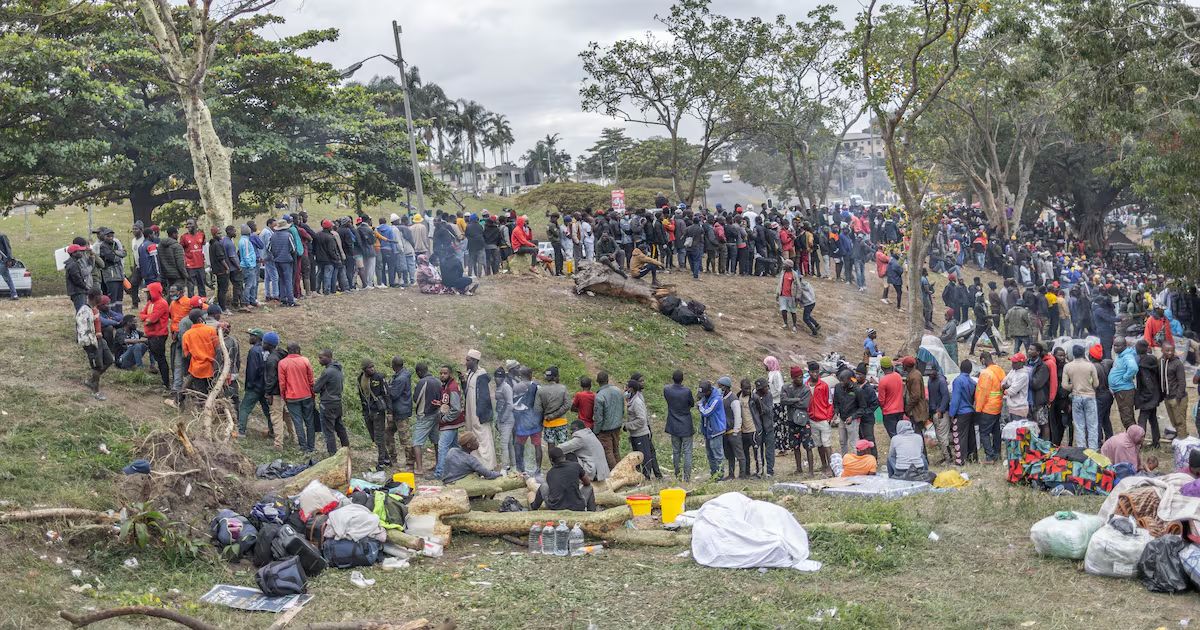
south african antiimmigration groups described as undocumented migrants from other parts of Africa Have to leave the country by the end of this month. Threats and violence against foreigners are worrying the government in Pretoria and angering its neighbours.
Scapegoating migrants in South Africa
South African police in riot gear used stun grenades and rubber bullets to repel a mob of mostly undocumented Malawian men in a Durban suburb on Wednesday who attacked them with stones and bottles. They were resisting attempts to take them to an immigration detention centre, not because they wanted to stay in South Africa but because they wanted to leave the country as quickly as possible.
Thousands of people from other parts of Africa have fled South Africa in recent weeks amid a wave of xenophobic violence and a deadline issued by anti-immigration campaigners for all undocumented foreigners to leave the country by June 30. Anti-immigration protests organized by March and March, a group led by former radio host Jacinta Ngobse-Zuma, have often resulted in attacks on migrants and the burning and looting of foreign-owned shops and businesses.
At least five people have been killed and thousands have been displaced, many of whom are hiding in rural areas or taking refuge in churches to escape the violence. President Cyril Ramaphosa warned on Tuesday against using foreigners as scapegoats for South Africa's problems, but promised to strictly enforce immigration rules.
“No South African should take any action against any individual from any of our African partner countries. This is the responsibility of the government and government officials,” he said.
“We must not allow South Africans to be deceived and misled by those who seek to promote instability in our country. We will not allow this.”
South Africa's largest trade unions have also condemned the anti-immigrant protests and warned members against taking part in anti-immigrant protests on 30 June. In a statement on Wednesday, the unions acknowledged the deep frustration felt by South Africans over unemployment, poverty, inequality, crime and deteriorating public services.
He said, “These are real and legitimate grievances. However, South Africa's economic crisis was not caused by immigrants. Its roots lie in economic stagnation, deindustrialization, mass unemployment, corruption, austerity, weak governance and a failure to create an economy that serves the majority.”
Of South Africa's total population of approximately 63 million, approximately 3 million are immigrants, mostly from other parts of Africa. Many are attracted by the country's relative wealth compared to other African countries, where GDP per capita is about $7,500 (€6,500), seven times that of Nigeria.
The South African economy is experiencing a slow recovery, growing by 1.1 percent last year, but unemployment has risen to 32.7 percent this year and the rate is much higher among youth. It is one of the most unequal societies in the world and the average white family still earns three times the average wage of black South Africans and has almost 20 times more wealth than their black counterparts.
Ramaphosa was speaking on the 50th anniversary of the Soweto uprising in 1976, when thousands of young black South Africans protested against the apartheid government's order to make Afrikaans languages compulsory alongside English as the medium of instruction in schools. As they marched towards Orlando Stadium in Soweto, they were confronted by heavily armed police, who fired tear gas and live ammunition at them.
The first person to be killed was Hector Peterson, who was 12 or 13, and by the end of the day an estimated 176 protesters were dead. Images of South African police shooting children caused worldwide outrage and helped solidify international support for the anti-apartheid movement.
The fight against apartheid was largely dependent on the support and solidarity of other parts of Africa, which the governments of Ghana, Nigeria and others reminded Pretoria in recent weeks as they brought home hundreds of their citizens fleeing anti-immigrant violence. Ghana, which welcomed 350 repatriated migrants with full ceremonial honors this month, has called on the African Union to debate the treatment of African migrants in South Africa.
There is anger across Africa over South Africa's treatment of migrants, which is worrying some of the country's biggest companies operating across the continent. Ramaphosa on Tuesday insisted that South Africans are not xenophobic, saying he wanted to work with other countries to address the economic challenges driving migration.
“We want the entire region and continent to join us in addressing this issue, so that we can address the root cause of why people would leave their country to come to what they see as an economic oasis,” he said.
Please let me know what you think and send your comments, ideas or suggestions on topics you would like to see discussed at denis.globalbriefing@irishtimes.com.