
On the morning of June 16, 1976, thousands of students in Soweto took off their shoes and walked toward a confrontation they didn't fully understand would define a nation. They were not soldiers, they were students with books, not weapons, they were angry that the government had decided to shape them in a language designed to keep their minds at the lowest ebb. 12-year-old Hector Peterson fell when police opened fire. A photo captured that moment forever. And a country, slowly but surely, started falling apart. Hector's death became a symbol of the brutality of the apartheid regime.
The Bantu Education Act of 1953 enforced racial segregation and deliberately provided low levels of schooling for black South Africans, which made not only for inequality but also for subordination. Black children were to be schooled only to serve, never to lead.
In 1974, the Bantu Department of Education mandated African languages as a compulsory medium of instruction in black schools. Teachers, parents and students protested the policy through complaints and exemption requests but without success. It was fully implemented by 1976. In response, on 16 June 1976, thousands of students from schools in Soweto held a peaceful protest against the language policy of the apartheid government. The march was to conclude with a rally at an Orlando stadium, but before reaching their destination the students encountered a heavily armed police force, who responded with tear gas and live ammunition. June 16 proved to be a turning point for the apartheid government. This resulted in unrest and mass riots throughout South Africa, emboldened anti-apartheid movements, and led to international condemnation and sanctions, increasing pressure for change.
what we found right
Following the 1976 rebellion, the right to basic education is now established as a fundamental right in terms of Section 29 of the Constitution, ensuring that no child can be denied this right because of race or background. Fragmented and racially segregated departments of education were integrated into a national system. The national matriculation pass rate continues to rise, inter-generational illiteracy has declined to less than 3.2%, about 66% of students attend fee-free schools. The National School Nutrition Program ensures daily meals for more than nine million pupils. The Department of Basic Education has emphasized mother tongue bilingual education to help basic level students learn better in the languages spoken at home.
Civil society organizations such as SECTION27 have won important legal and policy battles, achieved improvements in school infrastructure, such as the elimination of pit latrines, ensured the provision of learning and teaching materials in Limpopo, and successfully challenged the Copyright Act for its unconstitutionality to the extent that it prevented visually impaired persons from converting materials into accessible formats. These are no small victories in a country still grappling with the remnants of apartheid while seeking to provide quality education to all students. We must accept them clearly.
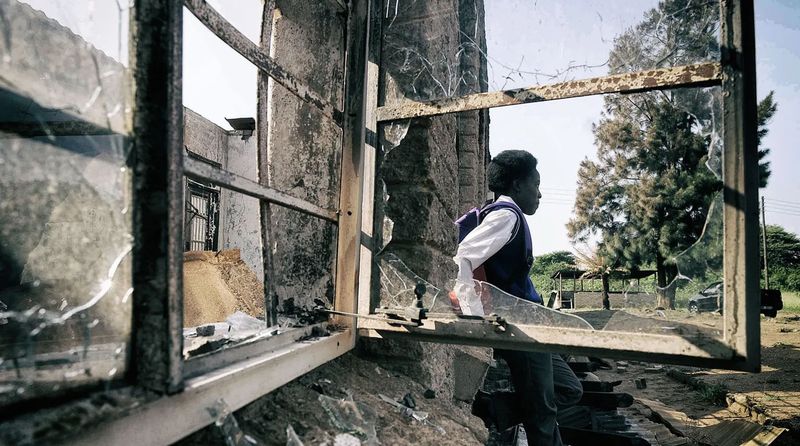
However, acceptance is not the same as satisfaction, and this is where honesty becomes uncomfortable. Fifty years later, as we remember the sacrifices made by youth to challenge an inequitable education system, has much changed? Although students today no longer live under apartheid laws, many still face systemic barriers. Fifty years later, we are left with the question: Did we keep our promise?
Today's youth are facing obstacles
Students and students face systemic barriers that are rooted in a legacy of structural inequality. These barriers include low initial literacy rates, unequal access to quality schools, overcrowded classrooms, inadequate infrastructure, lack of access to water and adequate sanitation facilities, and significant disparities between rural and urban schools. Unsafe school environments have also increased as students face bullying, sexual violence and abuse while attending school. Socioeconomic issues such as poverty, lack of reliable transportation, and food insecurity hinder students' ability to perform well and attend school. In communities where schools are overcrowded, under-resourced and struggling to meet students' basic needs, migration is often wrongly perceived as the cause of these challenges rather than a reflection of broader systemic failures.
The true test of the democratic promise made after 1976 is not whether education has become more accessible to some, but whether it can provide dignity, opportunity and inclusion for all children who walk through school doors.
While South Africa has made significant progress in increasing access to education since 1976, many of the inequalities that inspired the Soweto uprising still affect youth today. As South Africa reflects on 50 years of the rebellion, it is clear that the conflict has evolved rather than ended.
The children of 1976 sacrificed their lives so that education could become a ladder and not a cage. Fifty years later, the ladder is there but for too many young South Africans, it is missing rungs. Honoring him is not lighting candles at the Hector Pietersen memorial. It demands that a child in a rural school in Mussina or Mitchell Plain has the same fighting chance as one in Sandton.
Stress is not a cause for guilt. This is work. Fifty years after the Class of '76 changed the course of this country with their conviction, we at least owe it to them to look at what remains unfinished and resolve to do so – to finish what was started. DM
Terry Brown and Fatima Laher are legal researchers at SECTION27.