
Durban: When a vehicle carrying donated diapers pulls into a muddy open field outside a mosque in Durban, Kassim Ibrahim moves quickly and tells the driver not to take off the diapers.
Thousands of people are gathered here and supplies are less. They are worried that if diapers are distributed too quickly, there could be a stampede.
The 30-year-old tailor spends much of his day mediating disputes, translating between South African officials and frightened migrants, and constantly answering questions from people desperate to know when they will finally be allowed to leave.
“I haven't slept for days,” Ibrahim said, pointing to rows of makeshift shelters made of blankets, plastic sheeting and cardboard. “Where will I sleep?”
What started as a group of about 70 Malawians seeking asylum two weeks ago has turned into an informal camp of about 10,000 people outside a mosque in Sherwood, a suburb north of Durban. Every day more people come with bags, blankets and children.
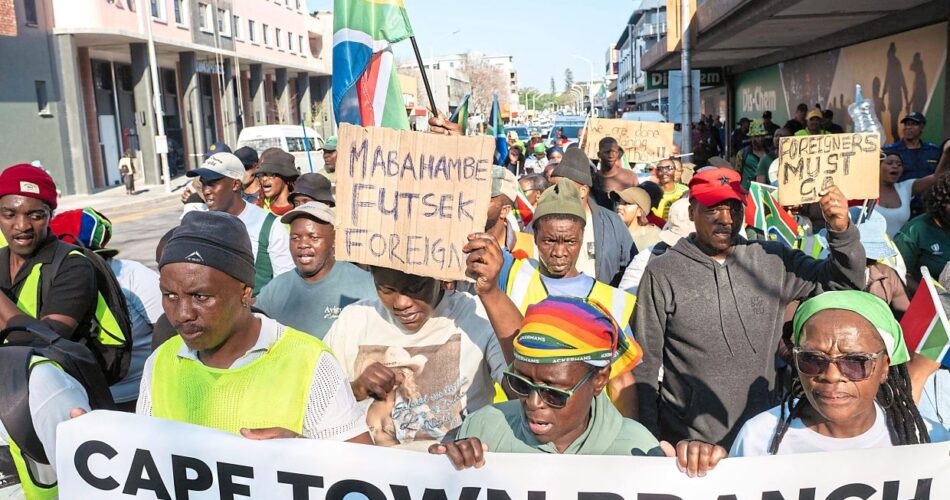
The gathering has become one of the most visible expressions yet of growing anti-immigrant sentiment in South Africa.
Led by the March and March organization, which started protests in schools and hospitals on the false premise that foreign nationals were being given preferential treatment over locals, the vigilante group has been holding daily anti-migrant protests for the past two months.
It has been demanded that all foreign citizens leave the country by June 30.
People gathered here are looking for a way out. As the end of the month approaches, tension is increasing.
False information that Malawians were being taken to a holding facility in Pretoria instead of being flown home resulted in a riot at Sherwood Camp last Wednesday, resulting in police firing rubber bullets and stun grenades into the crowd.
As the threat of violence grows, the camp also tells a larger story about the strain on South Africa's economic system.
For more than a century, South Africa served as the region's economic magnet, attracting workers from Malawi, Lesotho, Mozambique and elsewhere to its mines, factories and cities.
Labor wages earned in South Africa supported families and created migration pathways that span generations. For example, South Africa's economy is worth about US$480bn, compared to Malawi's US$18bn economy.
Yet as South Africa grapples with economic stagnation, high unemployment and failing public services, that mobility is under increasing pressure.
While the governments of Ghana, Mozambique and Nigeria have repatriated a total of about 2,500 people, many thousands of Malawians responded to their state's efforts earlier this month, creating a humanitarian crisis that neither South Africa nor Malawi appear fully capable of managing.
Malawi's government admitted this week that it has run out of money for buses to take its citizens home.
Officials said the operation was facing “unprecedented financial, logistical and humanitarian demands” and appealed for support from businesses, aid organizations and private citizens.
As Malawi's government-sponsored buses stopped arriving, South African authorities stepped in to initiate deportation proceedings.
The Home Office, Immigration Service, Justice Department and police have set up temporary offices at the Sherwood site to verify the status of migrants and put them through virtual court hearings.
So far, action has been taken against about 2,000 people. This, too, is going slowly: authorities are only able to handle about 60 people a day.
Cyril Manqwabe, home affairs manager at the camp, said, “None of these people are legal. They are all undocumented and illegal in this country.”
“This process has been tiring. I feel bad for our officers because everyone is trying their best, but it is very difficult to handle the situation here.”
Meanwhile, the situation inside the camp continues to deteriorate. Volunteers from nearby Muslim communities cook food over open fires.
There is only one portable toilet for every 1,000 people. Health workers in a single mobile clinic shuttled between families treating dehydration, exhaustion and illness.
Twenty-eight-year-old Madnitso Banda stands in line for a deportation hearing with her one-year-old child strapped to her back.
“We had to run here because we were being driven away,” he said of the camp. “They said foreigners should go back where they came from. We don't have money to go back to Malawi.”
Many people around him have similar stories. Some said landlords forced them out after threats related to the June 30 deadline.
Others fled after seeing foreign nationals being attacked during the protest. Some saw the camp as their best chance to obtain government assistance to return home.
The rise and fall of March comes as South Africa grapples with the highest unemployment rate in the world, with more than 13 million people unemployed.
Economic growth has averaged around 1% for more than a decade, while failing infrastructure, power shortages and weak growth have depressed living standards and made opportunities more difficult to find.
Joe Vere, a professor at the African Center for Migration and Society at the University of the Witwatersrand, said migrants are increasingly being blamed for problems arising from policy failures.
“Even if you expel every foreign national, that's not going to create the number of jobs needed to suddenly address unemployment,” he said.
Furthermore, foreign-born residents constitute only an estimated 5.1% of South Africa's population.
“This is not an influx and it is not particularly high compared to global standards,” said economist Duma Gcubule.
“People are making up statistics on the number of immigrants in the country and this misinformation is designed to incite xenophobia and violence.”
Ibrahim arrived in South Africa 13 years ago and found work as a tailor, earning about 5,000 rand (US$303) a month in good times. The shop where he worked is now closed due to protests.
He said that if he went to Lesotho, he could earn about US$36 per month as a herder. “I can't survive on that,” he said.
Standing among thousands of people waiting for an unclear future, Ibrahim said he hoped wealthy Malawians would help fund more buses home.
If they arrive, he will return to Malawi and attempt to rebuild his life through seasonal fishing work. If they don't do this, they're not sure what happens next. – Bloomberg