
-
Luxury brands including Tonino Lamborghini and Club Med are supporting major projects on the east coast of South Africa.
-
Developers are offering KwaZulu-Natal's north coast as an alternative to Cape Town for affluent buyers and tourists.
-
The rise of the sector reflects both growing investment opportunities and the continuing deep economic divide across South Africa.
For years, South Africa's luxury real estate and tourism markets have been defined by the wine estates of Cape Town, Sandton and the Western Cape. Now, a different area is attracting the attention of developers, investors and international hospitality brands.
Along the northern coast of KwaZulu-Natal, extending the coastline north of Durban, developers are building luxury hotels, branded residences, gated estates, golf communities and beach properties designed to attract both home owners and investors. The latest projects show that the area is emerging as one of South Africa's most sought-after high-end property markets.
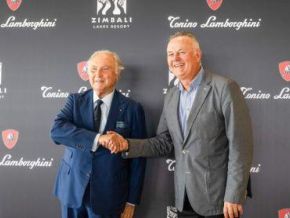
One of the clearest signs comes from Tonino Lamborghini, Italian designer and son of Ferruccio Lamborghini, founder of the iconic sports car brand. Lamborghini has partnered with the developers of Zimbali Lakes Resort, a large mixed-use residential and tourism development on Durban's North Shore, to launch a luxury hotel and branded residences.
The project will include a 200-room hotel and 73 branded residences within the development supported by Kuwait-listed IFA Hotels & Resorts. According to Bloomberg and Moneyweb, the residences could sell for up to 100,000 rand (about $6,000) per square metre, putting the potential value of the project at close to 1 billion rand.
The Zimbali Lakes are located in KwaZulu-Natal, whose largest city is Durban. The area includes sought-after coastal communities such as Ballito and Umhlanga, which benefit from proximity to King Shaka International Airport as well as major business, retail and leisure centres. Its warm climate and direct access to the Indian Ocean enhance its appeal in a country where lifestyle considerations play a key role in residential property decisions.
A new luxury corridor takes shape
The Lamborghini project is part of a broader trend. In Tinley Manor, another community on the North Coast, French hospitality group Club Med is preparing to open its first South African resort. The development, scheduled to launch in July 2026, has been described by local media as the most expensive resort ever built in the country, with an investment of more than 2 billion rand, or about $120 million.
The arrival of Club Med gives the region greater international visibility. The company brings a global marketing network and access to international travelers, particularly from Europe. This complements the already growing luxury residential market centered around private properties in Zimbali, Ballito, Umhlanga and Sibaya.
Comparisons to Cape Town have become common among property analysts. Cape Town remains South Africa's leading luxury destination, known for its coastline, vineyards and high property values. But rising prices have encouraged some buyers to look for alternatives.
KwaZulu-Natal's North Coast hopes to capture part of that demand by offering large properties, a warm climate and an extensive network of secure residential properties. These gated communities, known locally as estates, have become a defining feature of the region's property market. They combine controlled access, shared facilities, green space, high-end housing and neighborhood services. Local real estate agents say they appeal to families, investors, remote workers, South Africans returning from abroad and buyers relocating from other provinces, particularly Gauteng, the economic hub that includes Johannesburg and Pretoria.
Projects such as Ballito Life are built around a hybrid model that combines private ownership with hospitality services. Owners may live in their apartments, rent them out on a short-term basis, or place them under professional management. Other developments, including Lux Zimbali, target investors seeking rental income, particularly during the peak holiday season.
Growth opportunities and continued division
The arrival of Lamborghini, Club Med and other high-profile developments has yet to make KwaZulu-Natal's North Coast the new epicenter of South African luxury real estate. The sector's growth remains difficult to measure, and much of the current narrative is still driven by developers promoting their projects.
What is becoming clear, however, is that a region long overshadowed by Cape Town is attempting to turn its network of beaches, climate and private wealth into a competitive economic advantage. The strategy comes at a time when South Africa's tourism industry is gaining momentum. According to government data, the country welcomed 10.48 million international visitors in 2025, up 17.6% from the previous year. Tourism accounted for 8.4% of GDP in 2024 and directly employed over 950,000 people.
While new projects on the north coast could help maintain that growth, they also highlight sharp contradictions within South Africa's economy. Luxury residential enclaves continue to expand in a country struggling with high unemployment, deep inequality and strained public services.
The development has also given rise to environmental concerns. In the case of the future Club Med resort, marine conservation experts have raised questions about the potential use of shark nets and their impact on local ecosystems.
Louis-Nino Cansoun