
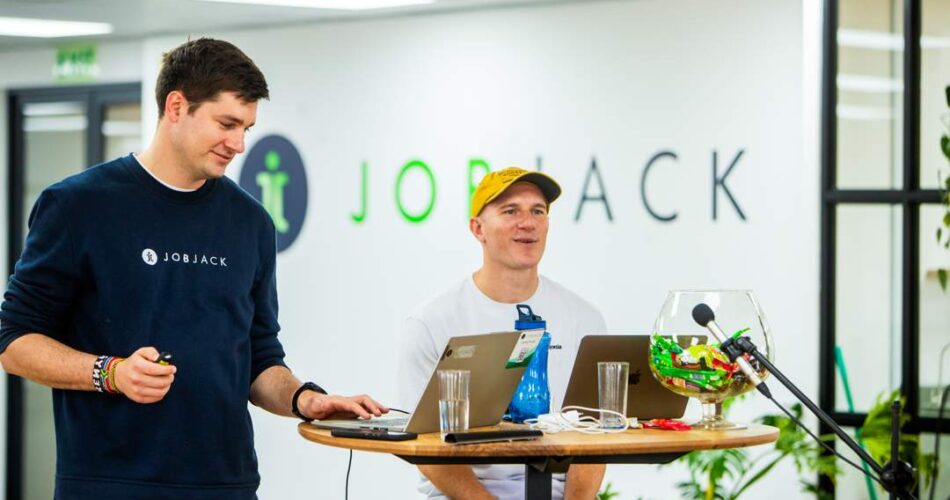
This story is part of a series SA Success Stories: Origin stories of successful brands and names, sponsored by Old Mutual Wealth.
It was November 2020, and two 20-something co-founders were a month away from running out of money for their small startup, JobJack.
Christiaan van den Bergh and Heine Bellingen saw a gap: helping South Africans and large corporates find and match the right entry-level employees at scale to stores across the country.
They developed a proof of concept, invested in a minimum viable product (MVP), and spent two years trying to onboard customers who believed in their vision.
But the runway was getting shorter, money was tight, and their early investors were signaling it was time to cut their losses.
That month was his last meeting with giant Pep, and his last chance to introduce his WhatsApp-based concept to the retailer's 15 stores.
Read | Retail jobs, hair braiding, makeshift taxi rides: Unemployed teachers find ways to survive
This will make or break the dreams of two chartered accountant clerks-turned-entrepreneurs from Paarl.
“PEP had a dream,” Van den Bergh recalled.
“It took us a while, but Bellingan brought this dream to life, and these were a few small pilots, but they believed in finding the right person for their job. They really took us under their wing and showed us gently how the business was done.”
Today, JobJack has over five million registered users and is growing by approximately 80,000 users per month.
In the past few years alone, it has placed 20,000 to 30,000 successful applicants per year on over 5,000 employer sites across South Africa.
Clients of the platform include KFC, Food Lovers Market, McDonald's, Lewis, Spar and Pick n Pay.
The great irony is that the MVP introduced for PEP so many years ago was manual, and it required real patience from the pair and their support system to prove that it would work.
'WWe wore our tiki and went door to door'
Bellingen's big pitch was that JobJack would become an automated hiring system, but to prove that the concept worked, he and van den Berg needed to go door-to-door to find signups, have a small team of trainees invite those first applicants on WhatsApp, create CVs on Canva, and then send those CVs to store managers via WhatsApp.
“I remember that for the first 15-store pilot, we couldn't get applicants at Langbaan (where the employee needed a vacancy),” Bellingan recalled.
“So, we put on our takkies and went door to door in the informal settlement and handed out flyers to every household to sign up.
“This was a tipping point because we started with gig jobs, but working with PEP, we realized this was a much bigger problem to solve in SA, so we turned to entry level jobs and narrowed down to store level jobs.”
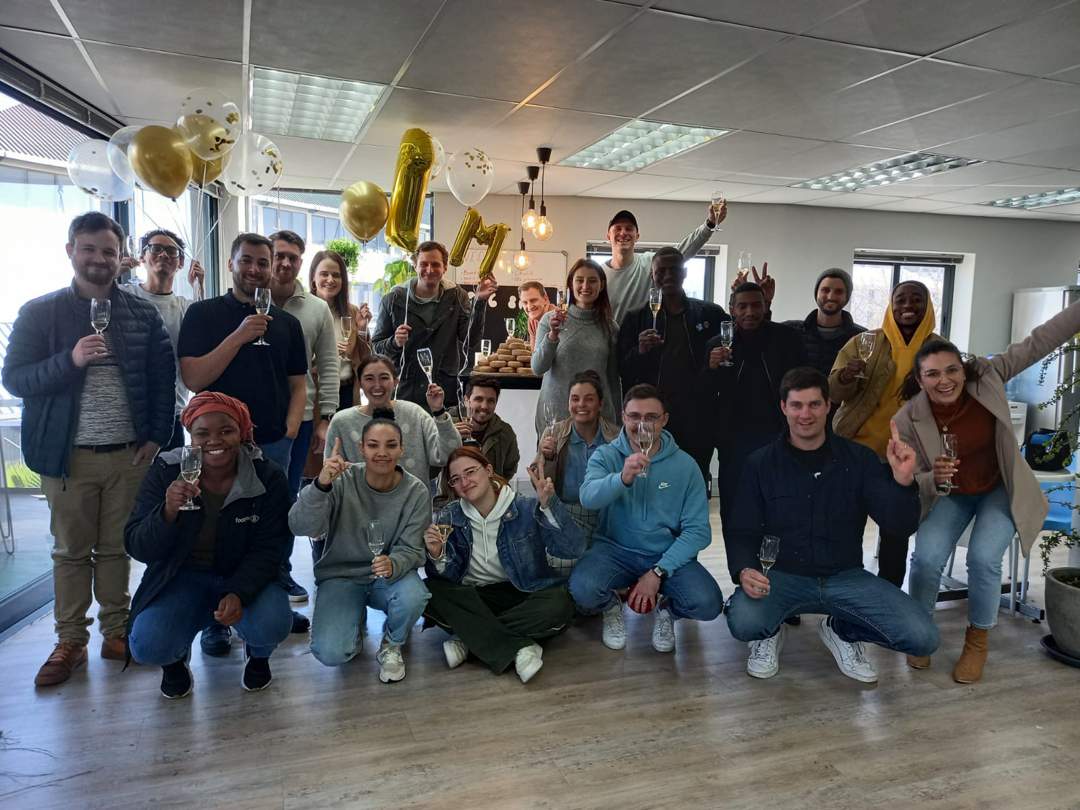
In 2022, JobJack celebrated the addition of one million users.
The success of the PEP pilot, along with the signing of Food Lovers Market the same month, ultimately enabled them to build their automated platform and raise funding through multiple seed rounds over the next 18 months.
wWhy entry level jobs?
Van den Berg remembers starting his career at a large company and watching some of his educated friends struggle to find work in their fields.
“I just felt in my heart, how is it so crooked, and what part is missing? At that time, my mother-in-law was looking for some people to do a specific job for her, and I organized some people from the university.
“After a week or two, several of their friends asked me if I had such easy jobs. I just thought of asking this question: Is there an Uber for entry-level or small jobs?”
There were no really influential players at the time, so he knew he had to bring in a partner to develop the idea – the man who sat across from him at his accounting firm, Bellingen.
“So, Heine and I came into this world of technology and HR as two articled clerks in accounting, which is very different,” Van den Bergh said with a smile.
“But if you're young and stupid enough to believe you can do something, you eventually figure it out because you ask enough questions and make enough mistakes.”
SSouth Africa's real need – more jobs, not more job seekers
Today, JobJack's offerings go from matching employees to specific store jobs.
The platform has evolved to ensure that employees are also best suited for the roles available.
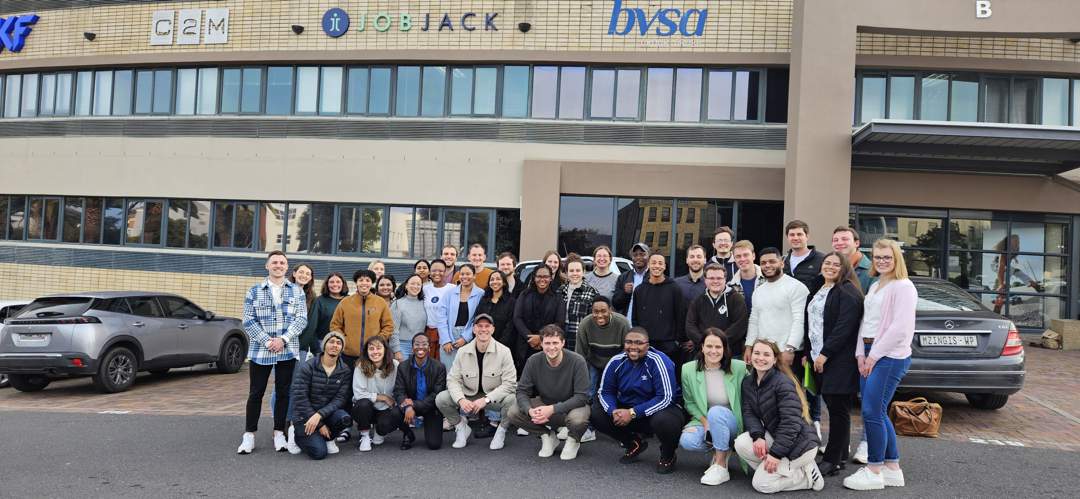
In 2023, he moved it to new offices with his name on the building.
This, in turn, has proven beneficial for turnover and career growth.
He believes this is vital to the success of South Africa, where there are now more job seekers than jobs available.
“Our worldview is that we have freely received, so we give freely,” Van den Bergh said, referring to the founders' Christian beliefs.
“The business is about serving people. During the journey, we have received a lot of requests for more high-level recruitment because that's where the margins are. But we didn't feel there was a need for that.
“If you can design something that serves the public, you can go really far. And you find the right person who is willing to go door to door in a township wearing a walkie-talkie with you…”
In fact, those statistics are also represented in Jobjack's success.
The platform has placed approximately 65,000 people in jobs since its launch, and there are still millions of South Africans looking for work on its platform.
Moving forward, JobJack aims to increase its annual hiring to 100,000 – an ambitious goal that matches its accolades.

In June, JobJack won in the Workforce and Human Capital category at the 2026 Cape Chamber Western Cape Innovation Awards.
'You can change the world if you don't care who gets the credit'
In 2025, JobJack won SA Startup of the Year, and this June, it won the Workforce and Human Capital Award at the Western Cape Economy Innovation Awards.
It's a big win for two young newcomers who started their journey in a flat, around a table, and it made Bellingan think about his early days.
“Our first office, we didn't have the money to renovate it, and Teemu wasn't a thing then. We went in on a Friday, tore everything down ourselves, took out the carpets, and on Monday we apologized to the landlord,” Bellingan joked.
“To have a business that started in a flat and is now changing lives is obviously a great pride.
With final words to inspire others, Bellingan said: “We have made many mistakes over the years, but having the right people in the right roles is the key to a startup's success.
“You're limited by everything, and you're going to make mistakes, but having the right people next to you is what makes the difference.”
For Van den Berg, being a young entrepreneur gave him confidence, and he was willing to do everything himself.
Van den Bergh said, “But ultimately, what we've seen again and again is that you can really change the world if you don't care who takes the credit.”
“If your work puts others in the driving seat, and makes an impact, it doesn't really matter (who gets the praise), someone gets rewarded for it anyway.”
This story is part of a series SA Success Stories: Origin stories of successful brands and names, sponsored by Old Mutual Wealth.