
CapitalWorks has launched its fourth South Africa-focused private equity fund targeting commitments of approximately R5.8 billion, the latest sign that investor appetite for the country's private markets is strengthening as sentiment towards South Africa improves.
The fund, called Fund IV, has already achieved a major first close in under six months, backed by a mix of local and international institutional investors. Key commitments include up to R1.3 billion from the International Finance Corporation, a remarkable endorsement at a time when global investors are reassessing the opportunities in South Africa after years of tepid enthusiasm.
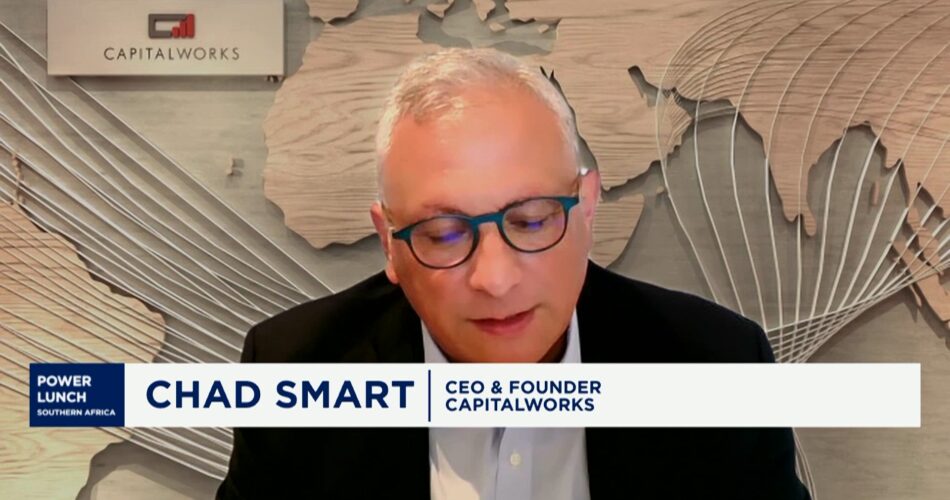
Speaking in a televised interview, Capitalworks founder and CEO Chad Smart said the pace of fundraising has been strong, especially for a 10-year private equity vehicle, and reflects a more constructive backdrop for investment in the country.
“We managed to secure this funding within six months and for a 10-year fund, which is an incredibly good pace,” Smart said. He said the company hopes to maintain momentum and reach final closing “in a short period of time.”
The launch comes as investors are increasingly looking for opportunities in South Africa's mid-market private sector, an area that CapitalWorks says remains underserved despite the depth of entrepreneurial and management talent available in the country. Smart said the company deliberately kept the size of the fund in line with the real opportunity rather than trying to scale.
CapitalWorks typically writes equity checks ranging from around R200 million to R1.5 billion into businesses, targeting mid-market companies that can grow into multi-billion-rand enterprises. According to Smart, the R5.8 billion target was achieved through a low-level assessment of the number and quality of investable companies rather than an effort to raise the largest possible pool of capital.
“We don’t pursue large fund sizes,” Smart said. “We really size the fund to meet the investment opportunity in the local market.”
This approach has been a defining feature of the company's strategy during two decades of investment in South Africa. CapitalWorks describes itself as a generalist investor, focused less on narrow sector bets and more on supporting leading management teams and businesses with proven operational track records and room for further growth.
Its previous investments include Rhodes Food Group and Peregrine, which CapitalWorks helped delist from the Johannesburg Stock Exchange. Smart also highlighted Citadel, which he described as the largest wealth management company in Africa, as an example of the type of scaled, well-run business the firm seeks to support.
While the new fund's mandate is broad, Smart said CapitalWorks has historically been active in consumer goods, retail and hospitality, and now wants to expand its exposure to opportunities involving artificial intelligence.
The fundraising success also highlights how some institutional investors are reevaluating South Africa's risk-reward profile. Smart pointed to recent ratings-related improvements and a more positive shift in market sentiment, saying IFC's return to size was particularly meaningful for the broader private equity ecosystem.
The IFC was an early catalyst for private equity in South Africa in the 1990s, and now its renewed involvement could help attract additional foreign capital to the market. Smart said Standard Bank is also a new investor in the fund, alongside existing backers, which include international institutions, banks, pension funds and local South African pension investors.
“I think the IFC is a great case,” he said. “For them to return to the market with such strength, it is an incredible sign and a very positive sign for South Africa and South African private business.”
However, private equity investors are ultimately judged by returns, and Smart argued that CapitalWorks' track record remains central to its ability to raise money globally. He said the company's most recent fund is currently tracking close to 30% in US dollar terms over a 10-year period, which he described as highly competitive by international standards.
This performance helps explain why foreign investors continue to allocate capital to South Africa, despite wide alternatives in emerging and developed markets, he said.
Smart also made the case that current conditions represent one of the more attractive entry points for South African private equity in recent years. In their view, the market combines high-quality businesses and management teams with relatively limited competition among private equity firms, allowing disciplined investors to avoid overpaying for assets.
“There are not a lot of private equity investors or investment groups operating in the South African market,” he said. “It gives us quite a unique situation.”
He said that South Africa's executive and entrepreneurial talent is one of its greatest strengths. The ability to partner with experienced management teams, founder-led businesses and family-owned companies creates opportunities to unlock value even during difficult economic cycles.
Looking ahead, CapitalWorks expects further interest from Europe as the fundraising progresses. Smart said the company is in active discussions with several European investors, though he declined to name them. He said many people were looking at South Africa as a standalone opportunity and a gateway to the rest of the continent.
This topic may prove important to the fundraising environment in the coming months. If global investors begin to view South Africa not only as a recovering domestic market but also as a strategic bridge to broader African exposure, the country's private equity sector could benefit from a deeper and more sustainable capital pool.
For now, CapitalWorks' Fund IV launch underlines the cautiously improving mood around South Africa. It also highlights growing confidence that the country's mid-market businesses – which are often overlooked in public market stories due to macroeconomic stress, politics and lack of power – can provide some of the most attractive long-term investment opportunities.
As the fundraising continues, the market will be keeping an eye on whether CapitalWorks can convert the early momentum into a full closeout and, more importantly, whether the company can deploy capital into businesses that create jobs, support growth and maintain the strong returns that have drawn investors back to South Africa's private markets.