
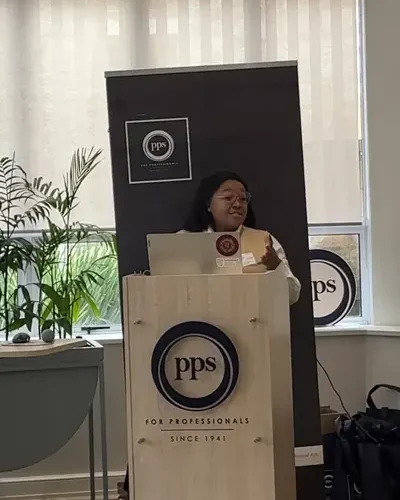
He advised aspiring entrepreneurs to take the process step by step, seek guidance from experienced professionals and take advantage of mentorship opportunities offered by professional associations.
The seminar also explored the broader structural challenges affecting the profession. Speakers argued that universities, regulatory bodies, industry and government need to work together to ensure that scientific training reflects current and future workforce needs. Better collaboration can help create clearer career paths for graduates while expanding opportunities beyond traditional laboratory settings.
Manyaka-Lesofe also called for greater recognition of medical scientists in the health care system. He said his expertise extends beyond laboratory work and can contribute to disease surveillance, diagnostics, public health programs, health technology and precision medicine.
He stressed the need for policies that support scientist-led businesses by improving access to funding, expanding business incubation programs and creating opportunities for independent practice.
Along with scientific expertise, the seminars emphasized the importance of developing business and leadership skills. As someone with an MBA in healthcare leadership, Manyaka-Lesofe said successful independent practice requires more than technical knowledge. “Scientific excellence alone is not sufficient to maintain an independent health care practice.”
Medical scientists also need skills in strategic planning, financial management, leadership and innovation to build sustainable businesses, he said. Transforming scientific expertise into successful health care enterprises required understanding budgets, cash flows, pricing models, and the broader health care environment.
Another major focus of the seminar was on the role of partnerships in supporting new independent practices. organizations, such as pps, CAT Medical, Beckman Coulter And Abbott was highlighted as an example of collaboration that can provide emerging laboratories access to funding, technology, infrastructure, mentorship and market opportunities. Manyaka-Lesofe said the partnership was essential for long-term sustainability. “Public-private partnerships are absolutely critical.”
He said collaboration between scientists, industry, academic institutions and government has strengthened healthcare by encouraging innovation, improving access to quality clinical services and helping scientific discoveries reach patients more effectively. For new independent laboratories, partnerships provided support that would be difficult to secure on their own.
As the seminar ended, one message remained consistent throughout the discussion: South African medical scientists have skills that can contribute far beyond traditional laboratory roles.
While challenges such as unemployment, regulation and limited opportunities remain, speakers said, entrepreneurship, leadership and strong partnerships can help create new pathways for the profession. For many of the young scientists attending the seminar, independent practice is being seen not only as an alternative career option but as an opportunity to shape the future of healthcare.