
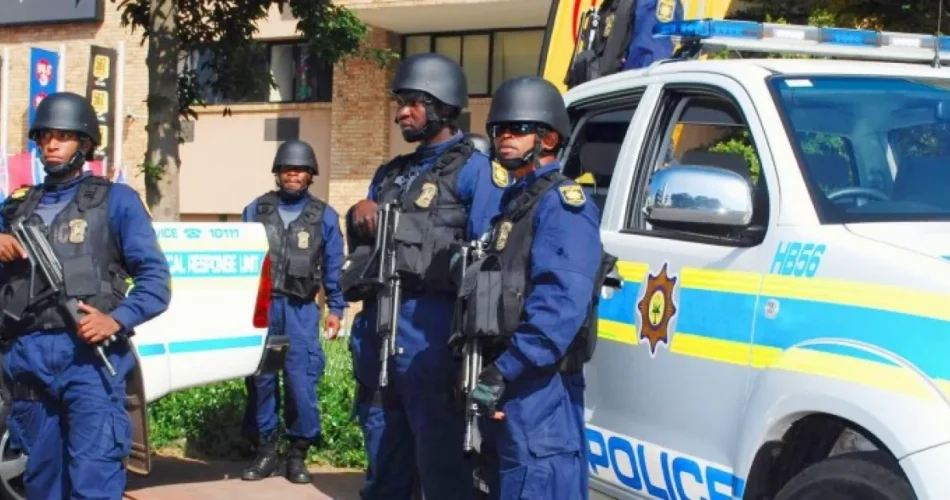
South Africa's cabinet has reaffirmed its tough stance on undocumented migration, announcing tougher border controls, widespread workplace inspections and faster deportations as the government moves to tighten immigration enforcement following recent nationwide protests.
The measures are part of the government's broader five-pillar approach to managing migration, unveiled by South African President Cyril Ramaphosa earlier this year, as authorities look to strengthen border security while emphasizing that immigration laws will be enforced by the state, not private citizens, IOL News reports.
Also read: South African police arrest more than 900 people after nationwide anti-immigrant protests
Speaking after Wednesday's Cabinet meeting, Presidential Minister Khumbudzo Ntshavweni said the government welcomed the largely peaceful demonstrations over undocumented migration and praised the national joint operational and intelligence structure for maintaining public order.
“Cabinet commends South Africans taking part in peaceful protests against irregular migration and commends NATJOINTS for ensuring peaceful protests,” Ntshwani said.
He said the government has expanded labor inspections at businesses suspected of employing undocumented foreign nationals, reopened special immigration courts in Durban, OR Tambo International Airport and Lindela Repatriation Center to expedite deportations, and continued to intercept undocumented migrants through border management authorities.
Cabinet has also turned its attention to strengthening border security, with members of the inter-ministerial committee inspecting the Beitbridge border with Zimbabwe as part of efforts to curb illegal crossings.
“We will use a combination of infrastructure upgrades and technology so that people who think they will leave our country and come back illegally again will not have the opportunity to do so,” Ntshaveni said.
Also read: Air Peace completes third evacuation from South Africa, brings home 268 Nigerians
In response to questions about the return of Malawian citizens, he said that South Africa itself was assisting neighboring countries that had requested assistance, rather than repatriating them. He said the delay was mainly due to the limited capacity of the Malawi High Commission to issue emergency travel documents.
Ntshavweni also urged communities not to take immigration enforcement into their own hands, stressing that it is the responsibility of the government to police undocumented migration.
He said, “You have no law enforcement responsibilities. You cannot continue to go door-to-door in the country asking for proof of identity of foreign nationals. The government is completely in charge of this process.”
Also read: Xenophobia in South Africa and political hatred in Nigeria: Same shade of color
The renewed enforcement measures come as South Africa faces a growing public debate over undocumented migration, with the government seeking to balance strong border management with the rule of law and orderly immigration enforcement.

