
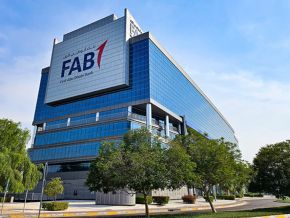
- South Africa's top appeal court has rejected FirstRand's challenge over FAB's trademark, ending a nearly ten-year dispute and clearing the way for a license bid.
- The Gulf's largest bank, with about $381 billion in assets and a new Lagos office, is setting up a Lagos-Johannesburg axis aimed at Africa-Middle East flows.
- FAB says it will apply for a South African banking license; Regulatory approval and operational launch may still take one to two years
First Abu Dhabi Bank, the largest lender in the United Arab Emirates, has taken a decisive step forward to establish itself in South Africa after the country's Supreme Court of Appeal rejected a trademark challenge that had blocked its brand for almost a decade. The decision does not yet allow the bank to do business, but it removes the main legal hurdle to a license application in Africa's most sophisticated banking market – and reinforces the pan-African strategy already underway in Nigeria.
The obstacle came from an unexpected quarter: One of the existing FABs may soon compete. First National Bank's parent company FirstRand opposed the registration of the “First Abu Dhabi Bank” and “FAB” marks, arguing that these names risked customers confusing them with its brands. After several rounds of litigation, the Supreme Court of Appeal rejected the objection. The stakes were more than symbolic: a bank could hardly build a franchise in a market where it could not legally protect its name, which is why the controversy effectively halted FAB's South African ambitions for years.
What the decision does not do is open banks. FAB has confirmed that it intends to apply for a South African banking license, with the decision dependent on the South African Reserve Bank and the Prudential Authority. Even on a favorable timetable, it could take another one to two years to acquire licenses, recruit teams, and begin operations.
However, this award is bigger than South Africa alone. The entry into Johannesburg will complete the two-anchor African platform that the bank is assembling around sub-Saharan Africa's key commercial centres: Lagos in the west and Johannesburg in the south.
In February, FAB announced the opening of a representative office in Lagos, which was presented as its springboard for expansion in sub-Saharan Africa. The Office is not a retail bank – it cannot take deposits or make loans locally. Its role is to originate transactions, service the bank's international clients and build relationships with large African corporates, governments and financial institutions.
Both cities complement each other. Lagos offers access to the continent's most populous economy, its vast infrastructure needs, and its energy and telecommunications sectors. Johannesburg brings a deep financial market, a well-structured banking system and direct access to mining, industrial and financial clusters operating in many African countries. Together, they will give FAB a platform to support capital and trade flows connecting the Emirates, Asia, the Middle East and Africa.
FAB's initial expansion is unlikely to include an extensive retail branch network. Instead, the bank is expected to focus on its core wholesale businesses, including corporate and investment banking, trade finance, syndicated loans, capital markets, liquidity management and large-project financing.
That strategy matches the scale of the group. FAB closed 2025 with assets of 1.4 trillion dirhams, about $381 billion – making it, by its own account, the largest financial institution in the Middle East and Africa by balance sheet, with its network already spanning five continents. Few African lenders can match that firepower: A balance sheet of that size dwarfs even the continent's largest banking groups, giving FAB the space to underwrite tickets that local players would otherwise have to syndicate.
The Johannesburg license will also allow FAB to support its existing Gulf-based clients as they expand across Africa. Gulf companies have invested in African ports, logistics, energy, infrastructure, telecommunications, commodities and renewable energy. With an office in Lagos and a license in Johannesburg, FAB will be well-positioned to finance these investments, process-related cross-border payments and provide foreign exchange services.
The immediate threat to South Africa's big four banks – Standard Bank, Firstrand, Absa and Nedbank – is over. They have the branch network, deposit base and market knowledge that FAB cannot quickly replicate, and many international banks have returned to South Africa after struggling to reach profitable size.
The pressure is more likely to be surgical. In the most attractive sectors – large corporates, governments, infrastructure finance, commodities and Africa – Middle East transactions – FAB can deploy a much larger balance sheet, deep relationships with Gulf investors and potentially cheaper funding than local rivals. For African borrowers, this competition may prove welcome: an additional deep-pocketed lender competing for sovereign, infrastructure and trade-finance mandates compresses pricing and broadens access to capital, even if the benefits reach the biggest names first.
In short, the court victory hasn't opened any banks; This has unlocked a project. What was a stalled ambition for years is now an executable plan, with the license application the next milestone to look forward to. Making Lagos its first sub-Saharan anchor and Johannesburg the next possible step, First Abu Dhabi Bank is beginning to explore the contours of a presence that can become truly pan-African.
Idris Linge