
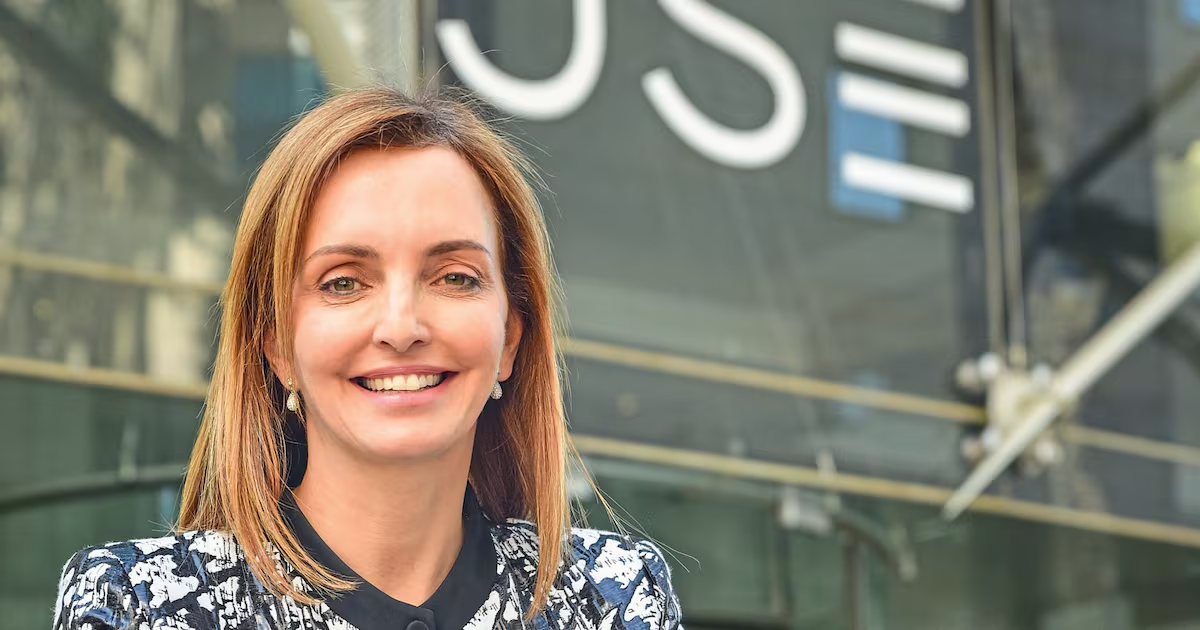
outgoing JSE CEO Leila Fourie says she is leaving the 138-year-old stock exchange on a strong footing, featuring a strong balance sheet and a digitally transformed offering.
“My legacy really revolves around transforming the Exchange into a digital, modern technology stack. I think I'm leaving the Exchange in a much healthier state than it was in 2019,” she said.
Fourie, who took over the reins from Nicky Newton-King six years ago, was bullish about the JSE, Africa's most liquid capital market, which this week made a record R1bn profit after tax.
While several companies including MultiChoice, Adcock Ingram and Patrice Motsepe's investment firm African Rainbow Capital Investments exited the market. cell c, optasia And Valterra to debut on the stock market in 2025.
Fourie said that during his tenure the JSE had removed red tape to reduce the complexity of listing requirements.
He said that going forward, South Africa could play a role in global market allocation, and the JSE is engaging with the National Treasury to consider creating a financial system to enable hard currency trading in South Africa.
If we can create a conducive environment to encourage investment by South Africans in their own country and in hard currency, and if we can also create the opportunity for internationals to start investing in hard currency opportunities, that will lead to the internationalization of the market.
in the budget last week Finance Minister Enoch Godongwana The announcement that fund managers are going to be able to manage hard currency funds in South Africa for the first time will move the dial on attracting further investment.
“Research indicates that approximately R10-trillion of South African citizens' wealth is invested overseas, and if we can create a conducive environment to encourage investment by South Africans in their home country and in hard currency, and if we can also create the opportunity for internationals to start investing in hard currency opportunities, then this will internationalize the exchange,” Fourie said.
He said the next step was expected to result in the introduction of foreign currency listings.
“This will mean that, for example, when the government wants to raise dollar denominated bonds, they don't have to go to Luxembourg or Europe to raise those bonds, they can come to the JSE, and both South Africans and internationals will come to the JSE to trade those bonds, rather than having all this activity happen offshore,” she said.
The JSE's strong financial position comes amid renewed investor confidence in emerging markets, including South Africa.
Fourie said foreign investors are seizing up local bonds, with South Africa's net foreign investment expected to hit R122bn in 2025, up from R82bn a year earlier.
He said so far this year, government bonds have almost doubled to R52bn compared with R24bn last year, with the JSE's weighting in the FTSE Emerging Markets index currently standing at around 5%.
We are about to enter our third year of primary budget surpluses, and there is a strong sentiment from investors internationally that SOEs are becoming more financially independent, making profits… all of which bode well for an economy that is starting to turn the corner
He said the JSE had seen a “remarkable” change in appetite for South African shares by international investors in recent months.
“Many investors internationally passively follow the index, and so as we get closer to the 5% mark weighted into that index, we start to see South African stocks really start to matter. Even the JSE, which is often a precursor to the economy, was up 35% in US dollar terms last year.”
A weaker dollar, South Africa's removal from the Financial Action Task Force graylist and an upgrade of South Africa's sovereign rating by S&P late last year have been in the country's favour, Faury said.
Additionally, South Africa hosted a successful G20 summit in November, and the country's fiscal credibility, as well as the progress made by the Treasury in sticking to its primary budget surplus, were commendable, he said.
“We are about to enter our third year of primary budget surpluses, and there is a strong sentiment from investors internationally that SOEs are becoming more financially independent, making profits… This all bodes well for an economy that is starting to turn the corner.”
He said a structural shift is needed to address unemployment and low economic growth, adding that sentiment changed after the International Monetary Fund (IMF) recently upgraded its outlook on South Africa, and the Reserve Bank also raised its outlook for 2026 to 1.4% from 1.2%.