
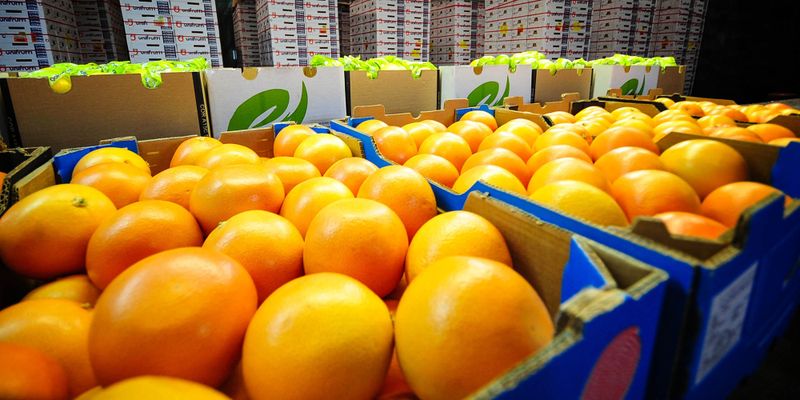
In his 2026 State of the Nation Address (SONA), President Cyril Ramaphosa offered a rare moment of national consensus when he acknowledged one of South Africa's triumphs: citrus. The recognition was deeply welcomed as MPs appreciated the fact that the country is the world's second largest citrus exporter.
However, the industry is equally, if not more, compelled by another aspect of the President's address: not a celebration of past success, but the President's new commitment to the future of logistics reform and a larger, more dynamic role for the private sector in the sector.
South Africa's citrus industry is bursting with potential. Production continues to increase continuously. Yet growth alone will not guarantee prosperity. Without a logistics system capable of moving fruit from rural orchards to global markets quickly, safely and reliably – even record harvests are at risk of going to waste.
And the truth is that, if citrus production continues its upward trend, the current logistics network – including road, rail and port facilities – will not be able to handle the increase.
That's why the President's pledge to “transform the performance of our rail system and ports” signals a moment of opportunity. Their stated commitment to advancing public-private partnerships through concession models that preserve public ownership while unlocking private expertise represents one of the most promising changes in our field.
Evidence of this development is already visible Joint venture between Transnet and ICTSI on Durban's container terminal Pier 2, Where the journey into the world of South Africa's most citrus fruits begins. The partnership is bringing expertise and stability to operations.
However, recent disruptions at the Port of Cape Town during the deciduous fruit season have reminded us how fragile supply chains can be, and how much further reforms are needed. As the Citrus Growers Association of Southern Africa (CGA), we are convinced that private participation is the way forward.
But progress has been made within Transnet port terminals. It has improved equipment availability and introduced new labor incentive systems in the past year. There were no serious problems at the ports during the last sour season.
On the rail front, citrus volumes have also increased – 1,254 containers, up from 1,064 last year – very marginally, but meaningfully. It's a far cry from renaissance, but it's a start.
possibility of rail
The real economic potential lies in what rail can become. Three decades ago, rail carried the bulk of the citrus crop. Today, it is around 5%. Yet train transport is not only more cost-effective, but also substantially greener. It is four times more fuel efficient than trucks. Rail can shift from a logistics philosophy to a competitive advantage.
While mining has long dominated rail planning and investment, citrus also offers one of the country's most attractive growth opportunities in the sector. More than 203 million 15 kg cartons of citrus were exported last season, and the industry has the potential to grow this to 260 million by 2032. Rail options – largely neglected outside the mineral corridors – could emerge as a viable route to unlocking the full promise of our region.
When the President, relatively earlier in his SONA, said that South Africa was “investing in roads, bridges, rail lines, ports, dams, wind and solar farms across our country”, he did not start this investment list with “roads”. Roads, and especially rural roads, are both the arteries and the backbone of the agricultural economy. Citrus may not reach ports in extreme conditions if they have been damaged and damaged by potholes along the way. Bad roads also cause damage to trucks and increase the cost manifold. In fact, bad roads are “stealing” progress in improving rural livelihoods.
Citrus industry remains optimistic
Recent floods in Limpopo also highlighted the importance of road connectivity in rural economies. Limpopo is the center of South Africa's citrus exports. Rural roads, as well as sections of the N11 and R36, have been damaged by flooding and require urgent repairs before the start of the export season.
The citrus industry always leans toward optimism. CGA developed a web-based GIS mapping model to document, monitor and track road conditions, rehabilitation efforts and urgent repair needs in Limpopo. All data will be shared with officials at the local, provincial and national levels, creating a transparent, coordinated system. This is a model not of complaint, but of partnership – a recognition that solving South Africa's logistics challenges requires collaboration.
Overall, these developments paint a picture of an industry at the edge of extraordinary opportunity. The citrus sector is ready to grow, ready to export more, ready to employ more South Africans.
Now it needs the logistics infrastructure to match its ambition. And for the first time in years, it feels as if government and industry are coming together more to achieve a single goal: a modern, efficient logistics system that not only supports agricultural success, but strengthens the broader economy. DM