
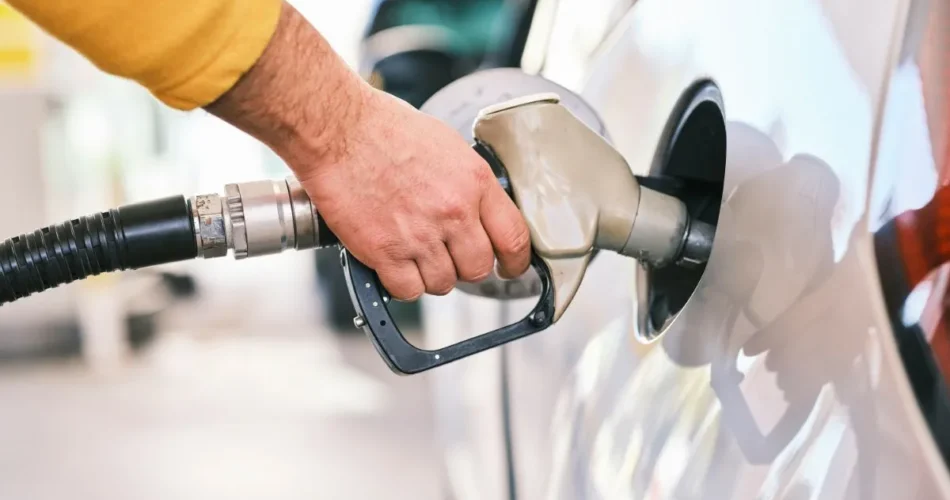
An 8.7% year-on-year decline in fuel prices in March kept South African consumer inflation low. The overall consumer inflation rate rose marginally to 3.1% in March from 3.0% year-on-year in February.
The reason fuel prices fell in March is that they mirror oil prices in February. This is because South Africa adjusts its fuel prices once a month on the first Wednesday of the month. The adjustment is based on the previous month's average price.
Other countries adjust their fuel prices daily and in rare cases even hourly.
Fuel prices will hit in April!
Fuel prices will rise in April. This will be due to higher international petroleum product prices as well as a weaker rand against the US dollar.
The rand weakened against the US dollar in April compared to March. The average rand/US dollar exchange rate for the period 27 February 2026 to 26 March 2026 was R16.6429/US$1, compared to R15.9959/US$1 during the previous period.
The average international price of petrol increased by about R5.26 per litre. The increase for diesel was about R9.36 per litre. To ease the pain of South African consumers, the Finance Minister announced a cut in the fuel levy by R3 per litre.
This reduction will continue till the next monthly price adjustment on 6 May 2026.
Without the fuel levy cut, petrol prices would have increased by 21.9% year-on-year and diesel prices would have increased by 49.6% year-on-year. Accordingly, the cut in fuel levy means petrol price increased by 8.0% year-on-year and diesel price increased by 34.1% year-on-year. This is for prices in Gauteng.
march details
data from Statistics South Africa March details painted a mixed picture.
things inflation Growth declined from 1.9% year-on-year in February, 2.7% year-on-year in January and 3.0% year-on-year in December to 1.8% year-on-year in March.
On the other hand, after remaining stable at 4.2% year-on-year in January and December, services inflation increased from 3.8% year-on-year in February to 4.2% in March.
The downward trend in meat prices continued. They declined from 12.2% year-on-year in February to 11.6% in March and rose 13.5% year-on-year in January. The relaxations should continue through the end of this year as authorities curb the spread of foot-and-mouth disease.
This is good news because consumers generally spend more on meat than on fuel. This is why meat accounts for 5.1% of the consumer price basket, while fuel accounts for 3.8%. This is why fuel prices kept overall consumer inflation calm in March.
Overall food inflation declined to 3.4% year-on-year in March from 3.7% in February after remaining stable at 4.4% year-on-year for three consecutive months.
The scaled-down average measure, which excludes volatile prices, was steady at 2.4% year-on-year in March and February, up from 2.7% year-on-year in January. Some central banks use it as their inflation targeting measure because it is less volatile. Other central banks prefer a core measure that does not include food and energy. The measure was up 3.3% year-on-year in March.