
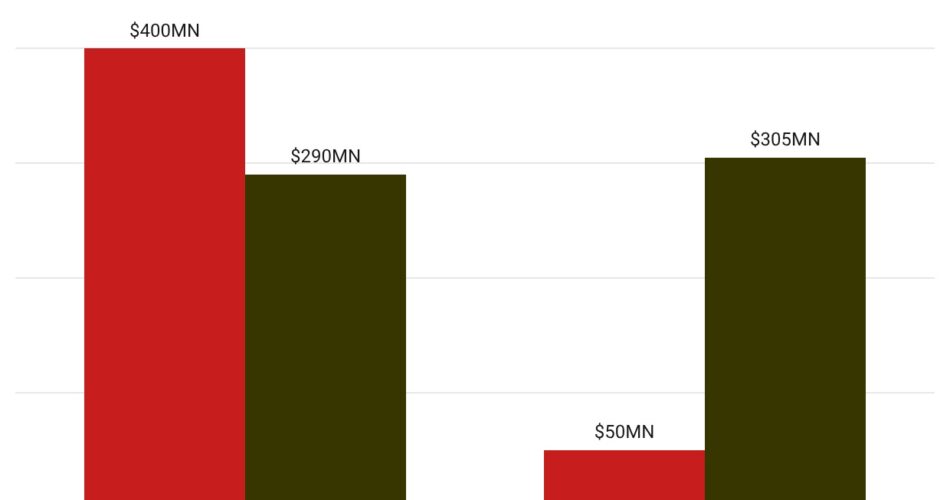
African startups raised $600 million in Q1 2026, a 27 percent increase from $470 million in Q1 2025, almost entirely driven by a dramatic surge in debt financing.
According to data from Africa: The Big Deal, debt funding increased sixfold from $50 million in Q1 2025 to $305 million in Q1 2026, while equity funding declined 27 percent from $400 million in Q1 2025 to $290 million in Q1 2026.
For the first time in recent quarters, debt has become a major force in Africa's startup funding landscape.
“At first glance the numbers look good, but the sharp decline in equity and the disappearance of smaller deals point to a more challenging environment for early-stage startups,” said Max Cuvelier Giacomelli, co-founder of Africa: The Big Deal.
The total number of deals fell 34 percent from 140 in Q1 2025 to 92 in Q1 2026. The smaller $100,000-$500,000 rounds were particularly hard hit, falling from 73 to 32.
Meanwhile, deals over $10 million increased from 14 to 18 and now represent 82 percent of total funding, up from 63 percent.
This concentration more than doubled the average deal size, from $0.5 million to $1.3 million.
Also read: Africa's start-ups turn to debt as funding shortage shapes $1.2 billion market
Dipo Alabede, CEO of Klein Company in Nigeria, said the funding landscape has fundamentally changed. “In 2020, investors were only willing to fund innovators with ideas. Today, even if you have a product that is generating revenue, investors may hold back until you can demonstrate real scale,” he said.
Alabede urged startups to explore debt financing, strategic partnerships and portfolio diversification to cope with the current funding environment.
On the positive side, exits doubled from six to 12, providing much-needed liquidity. Climate tech funding also grew by a strong 48 percent to $184 million, increasing its share from 26 percent to 31 percent despite a decline in energy deals. Fintech retained its position as the top sector.
Women founders and CEOs continue to face significant challenges. Funding for startups with at least one female founder or CEO fell 56 percent from $111 million in the first quarter of 2025 to $49 million in the first quarter of 2026, with the number of such deals falling from 46 to 20.
Also read: Tech rivals' equity-in-debt financing reaches $1 billion
Their share in total funding dropped from 24 percent to only eight percent. “Limited access to early-stage funding is hindering the pool of investable female founders,” said Daisy Leach, director of portfolio and strategy at TLCom Capital.
Geographically, the Big Four markets (Nigeria, Kenya, South Africa and Egypt) still dominate activity, although their relative share has seen a slight decline.
The data from Q1 2026 underlines a maturing African startup ecosystem where more established companies are turning to debt to fuel growth without huge downgrades, while early-stage and smaller enterprises, particularly those led by women, struggle for equity capital.

