
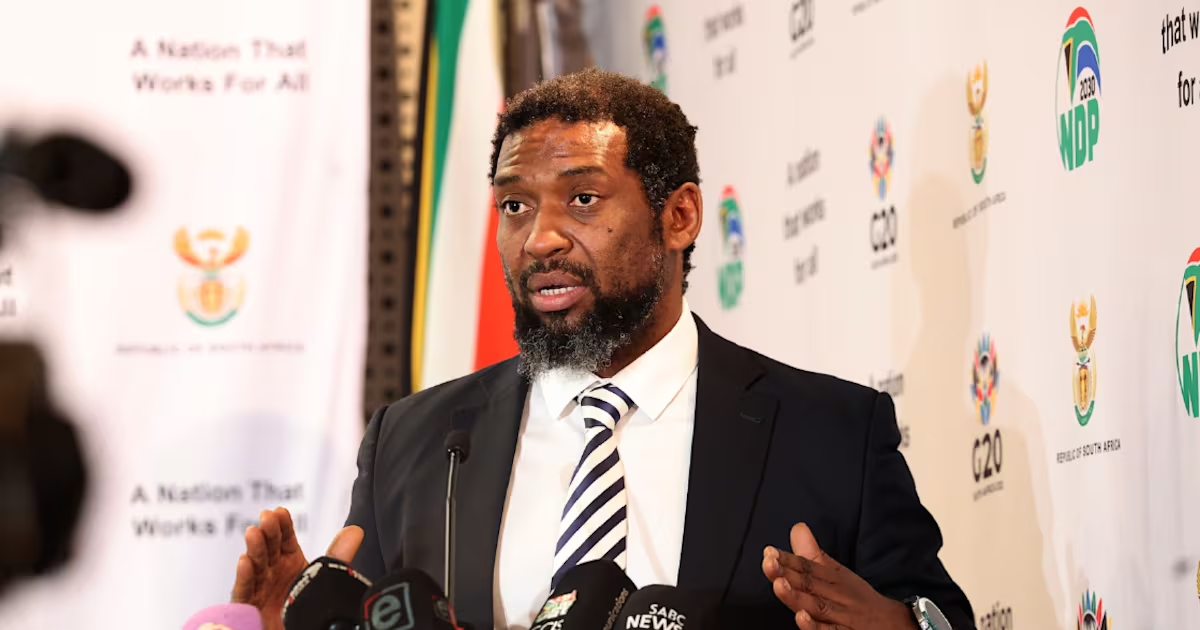
Higher Education Minister Buti Manamela has introduced a R443bn plan in Parliament aimed at overhauling South Africa's post-school education system and improving job prospects for young people.
Manmela, together with his deputy and the Director-General, on Thursday presented the Department of Higher Education and Training's 2026/27 Annual Performance Plan (APP) and budget priorities to the Portfolio Committee on Higher Education.
He said the plan marks a turning point in the way the system is run, with more focus on outcomes rather than processes.
“This APP is the operational expression of the National Skills Revolution mandate expressed by President Cyril Ramaphosa during his 2026 State of the Nation Address, and not a separate administrative document,” Manmela said.
Under the plan the department will administer R443bn over the medium term, covering universities, TVET colleges, community education and training colleges, Sector Education and Training Authorities (SETAs), the National Student Financial Aid Scheme (NSFAS) and quality councils.
Manmela said the APP represents “a decisive shift from fragmented planning and process compliance toward measurable results, accountability, and system-wide integration.”
The plan follows months of consultation across the post-school education and training sector after Manamela takes office in July 2025. At its core, the department seeks to create “an efficient and capable nation to support an inclusive economic growth path” while improving access, quality and efficiency across the system.
The APP sets clear delivery targets for the 2026/27 financial year. These include the following:
- Support for over 1.15 million university students;
- Over 520,000 TVET college enrolments;
- Over 700,000 students funded through NSFAS
- expansion of vocational qualifications and artisanal pathways;
- 91,800 workplace-based learning opportunities;
- 22,000 artisan certificates;
- Strong alignment with Just Energy Transition, Digital Economy and industrial policy priorities.
Manamela also acknowledged concerns raised by the Auditor General of South Africa (AGSA), which found weaknesses in some of the APP's performance indicators, including poorly defined targets and misalignment between planned outputs and outcomes.
“We accept the findings of the Auditor General. Preparing reports is not performance. Performance is whether students complete, whether artisans are qualified and whether graduates get work,” he said.
“We have therefore strengthened results-based indicators, improved alignment with national priorities and tightened systems of accountability and verification.”
According to the department's presentation, AGSA found “persistent weaknesses in the utility of performance indicators” and warned that gaps in planning and supporting evidence could weaken monitoring and reporting.
The department is also finalizing service level agreements with SETAS, improving tracking of infrastructure performance and standardizing data definitions across the system.
Key priorities of the plan include expanding access and improving student success; strengthening TVET colleges and artisan pathways; improving workplace-based learning and employability; Stabilizing NSFAS; and ensuring better accountability in SETAS.
Manmela said the department's work would ultimately be evaluated by whether young people are able to benefit from a system that works.
Public investment in education and training “must translate into real economic opportunity”, he said, adding that youth dependent on the system are only interested in outcomes, not processes.
Times Live