
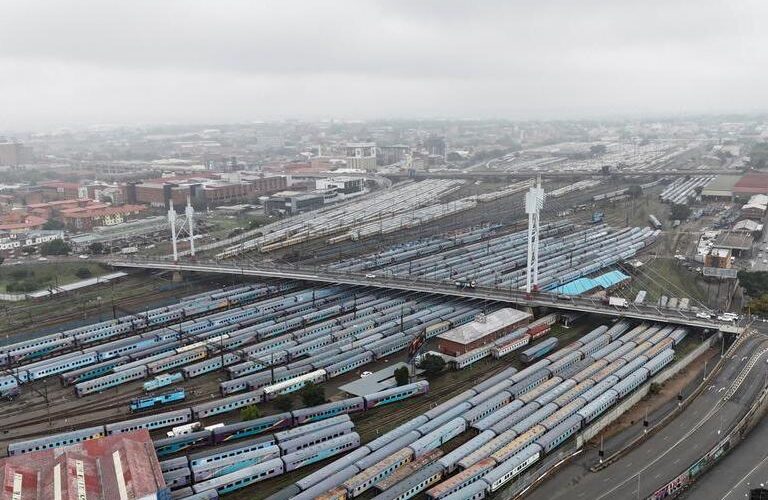
On the one hand, it remains the economic heart of South Africa; Home of the Johannesburg Stock Exchange, the headquarters of many of Africa's largest companies, and the hub of the country's transport network connecting the port of Durban, the industrial heartland and OR Tambo International Airport. Johannesburg contributes largely to 15-17% of South Africa's GDPWhereas Gauteng produces more than a third of the national output.
On the other hand, persistent infrastructure failure, rising municipal debt, deteriorating public space and proliferation of illegally occupied buildings have brought the city under increasing scrutiny.
For property investors and developers, the question is no longer whether Johannesburg faces serious challenges. Instead, it is whether the municipality can stabilize the situation and reverse years of decline in the inner city.
The City of Johannesburg believes it can. Through enforcement, incentives, public-private partnerships and infrastructure investments, the municipality is attempting to revitalize the CBD and surrounding precincts. Whether or not these initiatives are successful will not only determine the future of the city centre, but potentially also the direction of property investment in South Africa's largest metro, once known as the City of Gold.
A city under pressure: debt, infrastructure failure, and urban decay
Over the past decade, Johannesburg's deteriorating infrastructure and lack of municipal management have become hard to ignore. These challenges have contributed to the continued migration of residents migration to other provinces In search of better services and opportunities.
infrastructure failure
Infrastructure failures are most visible in electricity and water systems. Aging infrastructure and years of underinvestment have created large maintenance backlogs. Johannesburg Water warns the city faces a water infrastructure renewal backlog More than R27bnLarge parts of the network have exceeded their designed lifetime. This results in frequent pipe bursts, water disruptions and significant losses due to leaks and illegal connections.
Electricity supply has also become increasingly unstable. The city's electric utility, City Power, is estimated to Electricity theft and illegal connections cause losses of approximately R2bn annuallySeriously weakening its ability to maintain and upgrade the network.
Municipal Finance and Debt
The pressure has increased further due to debt and weak revenue collection. In its 2025 budget process, the City of Johannesburg acknowledged that falling payment rates and rising operating costs were placing pressure on municipal finances. metro introduced a table R89.4bn budget for the 2025/26 financial yearIncluding R8.7bn Capital expenditure for infrastructure renewal.
Urban decay and the inner city
Johannesburg's financial and infrastructure challenges are most visible in the inner city. Large parts of the CBD and surrounding areas have experienced urban decay over the years. Illegal occupation, informal renting and deteriorating municipal services have turned once prominent buildings into unsafe residential spaces. Provincial officials estimate that Hundreds of “hijacked” buildings exist in inner cities, many of which are without secure electricity or water connections.
The perception of crime and insecurity has further compounded the problem. Cultural sites and businesses that once helped revitalize areas like Maboneng are struggling amid security concerns and declining urban management. The result is that the city center is gradually becoming hollow. Businesses and residents have relocated northwards to areas such as Sandton, Rosebank and Fourways, leaving large parts of the CBD economically vulnerable.
Migration and why Johannesburg still matters
Despite these challenges, Johannesburg remains one of Africa's most strategically important property markets. For investors, another factor remains attractive: relative strength. Compared to many global cities – including Cape Town – Johannesburg property still offers accessible entry points and redevelopment opportunities. This compares to an increase of more than 25% in Cape Town property prices over the past five years, Johannesburg saw only a moderate increase of 12%. Coupled with private sector investment in areas such as Sandton, Rosebank and Waterfall City, the city continues to have long-term potential as both a commercial and residential market.
The question now is whether municipal reforms can unlock that potential again.
Recent data from JHB evictions, one of Most trusted moving companies in JohannesburgSuggests it could be. The number of residents who migrated three to four years ago is now increasing Relocating from Cape Town back to Johannesburg, mainly due to rising housing costs. Some analysts believe this trend This may accelerate if there is political change in the city.
Planning to visit Johannesburg?
If you are considering relocating to Johannesburg, whether returning after a sojourn or leaving for new opportunities, working with an experienced moving company can make the transition much easier.
JHB Removals is a highly rated moving company that provides local and long distance removal services throughout South Africa. They provide affordable furniture removal services, including Cost-saving shared load shifting option Between Cape Town, Johannesburg, Durban, the Garden Route and all other major cities. Packing, special wrapping, insurance and temporary storage solutions are also available.
Request a free quote from one of their branches:
johannesburg movers
pretoria movers
Centurion Movers
City Transformation Plan: Infrastructure, Participation and Urban Management
Facing increasing pressures, Johannesburg's recovery strategy combines infrastructure investment, regulatory enforcement, institutional reform and private sector collaboration. Key initiatives include:
Inner City Revitalization Program
At the heart of the strategy is the Inner-City Revitalization Programme, which focuses on restoring urban management, upgrading infrastructure and bringing abandoned buildings back into productive use.
A major component includes Rehabilitating abandoned or unsafe buildings. Rather than relying solely on enforcement, the city is using incentives and partnerships to unlock property value in the CBD. The Johannesburg Developmental Agency (JDA) is tasked with implementing targeted urban upgrading, improving the built environment and coordinating infrastructure investment in key areas.
According to JDA CEO Themba Mathibe:
“The inner city remains an important economic hub for Johannesburg. Our work focuses on upgrading public infrastructure and creating conditions that allow private investment and residential development to return to the CBD“
Private sector participation and key players
Many private sector players are already involved in the redevelopment of the inner city. These include financing partners such as Diversity Property Fund, City Property, Afco Holdings and TUHF (The Urban Housing Fund), which specializes in financing inner city residential conversions.
Diversity, backed by investors including Atterbury Property and Ninety One, has invested More than R3bn in redevelopment projects in Jewel CityMarshalltown and Maboneng are converting derelict buildings into mixed-income housing. Jewel City ComplexDeveloped by the Diversity Property Fund, it is often cited as a major regeneration project. The redevelopment involved an investment of approximately R2bn, transforming abandoned industrial buildings into a mixed-use neighborhood with over 1,500 residential units, retail space and upgraded public spaces.
Partnership models are already visible in such areas Braamfontein, Maboneng, Marshalltown and JeppestownWhere coordinated investment has improved public spaces, buildings and safety. Johannesburg's acting mayor Dada Morero has stressed the importance of collaboration:
“The revitalization of the inner city will not be achieved by the government alone. Partnerships between the city, the private sector and communities are needed to restore trust and restore Johannesburg as the economic center of South Africa“
Business-led initiatives have also begun to support urban renewal. Jozi My Jozi, a coalition supported by companies including Standard Bank, Anglo American, Nando's, Wits University and Altron, has funded clean-up campaigns, homeless interventions and the installation of over 600 solar-powered streetlights in parts of the inner city.
Enforcement and Revenue Reforms
Along with redevelopment initiatives, the municipality has also stepped up enforcement efforts. High-impact service delivery operations target illegal dumping, derelict buildings and vandalism of infrastructure throughout Area F, which includes the CBD and surrounding areas. These operations include Meter audits, law enforcement raids and disconnection of illegal electricity and water connections.. Several buildings with municipal debt reportedly worth millions of rand have been foreclosed in an effort to improve revenue collection.
The city is also attempting administrative reforms. As part of the 2025 budget cycle, the municipality said it is working to improve billing accuracy, strengthen credit-control systems and modernize revenue collection processes.
What investors should watch: Signs of a possible recovery
Despite ongoing risks, several indicators suggest the city's turnaround strategy could create new opportunities for property investors.
Residential and Mixed Use Development
Recent residential growth suggests that some investors remain confident in the city's urban property market. Developers are also converting old commercial buildings into housing. The redevelopment of the Greatermans Building on Commissioner Street is one example, creating affordable rental housing close to employment centres. Meanwhile, larger mixed-use projects such as R3bn Barlow Park development Surveys near Sandton show that demand for well-located residential accommodation in Johannesburg's economic hubs remains strong.
Complex-Based Regeneration
The inner city still contains a large stock of structurally sound but under-utilized buildings. As the municipality rehabilitates unsafe properties and leaves others for redevelopment, Investors can gain access to well-located properties at relatively low entry prices.
Premises-based regeneration also presents an opportunity. Concentrated investment in specific districts can trigger broader urban improvement. Areas such as Maboneng, Newtown, Jeppestown and Marshalltown have already demonstrated how coordinated redevelopment can transform urban districts.
transport oriented development
Transport-related development could also shape Johannesburg's property future. Long-term plans for transit-oriented corridors linked by the Gautrain and Re Via bus networks, including the Empire-Perth and Louis Botha corridors, aim to connect residential areas with economic centres.
If implemented effectively, these initiatives can reshape the way people live and work in the city while opening up new growth nodes.
city worth seeing
Johannesburg remains South Africa's economic powerhouse, but it is also undergoing a difficult transformation. Years of infrastructure neglect, financial stress and governance instability have taken their toll on the urban area. Ultimately, investors will be looking at how effectively a municipality manages its public-private partnerships. If these collaborations deliver visible improvements in infrastructure, security and service reliability, confidence in the Johannesburg property market may be restored.
For property investors with a long-term view, Johannesburg can once again become a city of opportunity. The coming years will reveal whether the City of Gold can put real muscle behind its strategy and regain some of its shine.
© 2026. Bizcommunity.com Syndigate Media Inc. Provided by (Syndigate.info).