
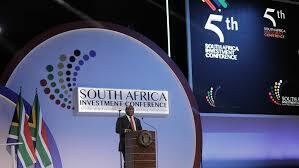
As South Africa prepares to host the sixth SA Investment Conference, government leaders and economists say global instability, including tensions in the Middle East, is unexpectedly boosting the country's appeal as a stable investment destination.
As the country prepares to host the sixth South African Investment Conference (SAIC) Next week, Minister of Trade, Industry and Competition Park Tau Is excited about the potential economic benefits, saying the gathering could help inject new momentum into the domestic economy.
Beyond government optimism, a leading expert suggests global geopolitics is changing, especially Middle East tensionsInvestor interest may unexpectedly swing towards South Africa, making the country a relatively stable and attractive destination for capital.
President Cyril Ramaphosa established SAIC in 2018 with the aim of mobilizing large-scale domestic and foreign investment and converting it into jobs, growth and opportunities for citizens. The five-year campaign has achieved R1.56 trillion in pledges, 26% more than the original target.
Tau said international delegates representing more than 31 countries were arriving on the country's shores.
“Their growing interest in attending the sixth South Africa Investment Conference exemplifies why the world sees us as the gateway to Africa – the ideal place to invest and partner with a developing country that is shaping the world we live in.
“Today our message is clear: South Africa is open and ready – the preferred investment destination. Across our nine provinces and across many sectors of our economy, significant investment has already been mobilized and implemented. We will showcase this progress province by province, sector by sector at the conference.”
The minister said the country's national strategic outlook, based on its growth and inclusion strategy and reform agenda, provided a coherent, compelling framework for investors who were serious about long-term returns in a high-potential emerging market.
History did not wait for ideal circumstances, he said. “Despite global uncertainty, despite competitive pressures, investments made today will define the South Africa of tomorrow.”
Agreeing with uncle, peter bauerAn associate professor of economics at the University of Johannesburg said it was “absolutely possible” to lure more investors to South Africa despite political economy, geopolitics and the war in the Middle East.
“There is considerable global uncertainty in the markets, mostly triggered by the economic and business challenges caused by US trade policy,” Bauer said. “The conflict in the Middle East has had a significant impact on the distribution and supply of crude and refined petroleum products, as can be seen in the impact on oil prices.”
Noting that economies considered strong are “taking pressure under changing global power dynamics”, Bauer said this is putting many global markets under significant pressure, affecting investor confidence.
“Nevertheless, investors continue to look to markets to distribute this risk through portfolio performance and investment stability,” he said.
Despite relatively low economic growth within the economy, he said, the country offered strong financial market structures and a stable monetary and fiscal policy framework.
“There is significant investment potential, including in energy, agriculture, manufacturing and mining. From a consumer market perspective, persistently high unemployment and poverty remain a concern.
“Additional investment in South Africa will contribute significantly to stabilizing and strengthening the country's growth potential, especially if it contributes
Strengthening South African business dynamism,” Bauer said.
On SA-US relations, Bauer said these are not unique to South Africa. “The challenges between South Africa and the United States are virtually as challenging as those between the rest of the world and the Americas.
“The trade policy initiated by the Trump Administration has had a significant impact
Global uncertainty. “This is during a time when emerging markets become a risk hedge, especially driven by such uncertainty. Earlier this month, crude oil was at around $87 a barrel, having risen to almost $100 a barrel.”
Some analysts estimate that the price of oil could exceed $ 100 per barrel.
In the near term, there will be a significant impact on global inflation. “This has added further uncertainty, which can be measured in proportion to the global rise in gold prices, which reached near $5,300 an ounce earlier this month.”
Boitumelo MosakoThe Chief Executive of the Development Bank of Southern Africa reiterated optimism about the upcoming SAIC, calling it an important platform for enhancing economic momentum.
He said the gathering will bring together government, business and state-owned entities with concrete opportunities to unlock growth.
“This should create much-needed jobs in our country, drive economic growth and increase gross capital formation,” he said, pointing to infrastructure development in transport, energy, digital systems, water, health and education as central pillars.
Mosaco acknowledged the uncertainty arising from global geopolitics, including tensions in the Middle East. However, he said South Africa's structural strengths, particularly its deep capital markets, made it well equipped to withstand external shocks. “This should not distract us from our aspiration to grow this economy and create jobs,” he said.
instead, Mosaco He said the key question is how global instability might affect the pace and scale of infrastructure implementation and investment flows. He said South Africa's coordinated approach led by the President, Cabinet and wider stakeholders has sent a strong signal of policy commitment to investors.
He highlighted the country's strategic role in regional integration, with improvements in energy, rail and water infrastructure opening up significant investment opportunities. “It puts us in a much stronger position far beyond this region,” he said.
However, global investor sentiment remains cautious. The attractiveness of emerging markets has diminished slightly, according to a study by Eric R. Peterson and Terry Toland of the Kearney Global Business Policy Council.
2025 Kearney FDI Confidence Index The main ranking featured only six emerging markets, two fewer than last year, with Poland and Argentina falling out of the top 25.
China tops the list, followed by UAE, Saudi Arabia, Brazil, India and Mexico. South Africa sits just outside the main index along with Poland and Argentina.
The report identified rising commodity prices and rising geopolitical tensions as key risks shaping investor behaviour.
“Thirty-eight percent of investors surveyed view rising commodity prices as the most likely development over the next year, while 35% cite increased geopolitical tensions, up seven percentage points from last year,” the authors said, highlighting growing concerns about supply chain disruptions and global uncertainty.