
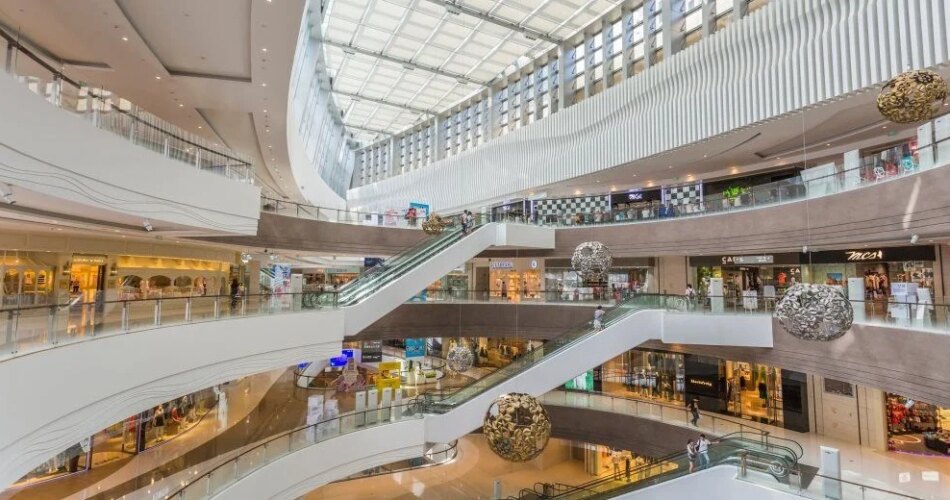
Public protest is a protected constitutional right in South Africa. However, when protest actions move from traditional public spaces to privately owned commercial environments such as shopping centers, a different set of legal and risk considerations arise.
Recent events, both locally and internationally, have drawn attention to the legal responsibilities of shopping center management when protest activity occurs within the retail premises. These developments raise important questions regarding liability, insurance risk, workplace safety and duty of care to buyers and employees.
Private commercial space vs public protest
Shopping centers are privately owned premises that are open to the public for business purposes. While members of the public are permitted to enter these spaces, such access remains subject to the control and regulation of the property owner or managing agent.
Although the right to assemble and protest is protected in law, this right does not automatically extend to privately controlled premises. Where protest activity occurs inside a shopping center without permission, or where it creates a security risk, the legal scrutiny shifts from constitutional protections to risk management and harm prevention.
Accordingly, shopping center owners and managing agents need to take appropriate steps to ensure that potential harm is not caused to persons legally present on their premises.

Madumiseni Zuma, who instigated unrest in July, was sentenced to 12 years in prison.
Regulation of assembly structure and civil liability
The Assembly Regulation Act provides the statutory framework governing the organization of protests and demonstrations. Importantly, it also creates potential civil liability where a gathering results in damage or injury.
Where so-called “riot damages” occur, organisers, convenors or participants may be held jointly and severally liable for damages. This includes not only damage to property but also injury or death to any person during the gathering.
Importantly, the statutory framework does not exclude common-law remedies. An injured party is not limited to the act itself and may file a claim against any responsible party, including property owners or security providers, where negligence and other elements can be established.
Insurance exposure: role and limitations of SSA cover
The South African Special Risks Insurance Association (SASARIA) provides cover for special risks such as riots, strikes, civil commotion and public disorder, which are generally excluded from standard commercial insurance policies. However, its application in the context of protest activity inside shopping centers is not straightforward.
Firstly, Sasriya cover is not automatic. This only applies where it has been specifically added as an extension to the underlying insurance policy. In the absence of such cover, conflict-related losses may be completely outside the scope of insurance.
Second, not all protests will qualify as insured events. A peaceful or loosely organized demonstration may not meet the threshold required for a riot or public disorder, especially where there is no significant disturbance of the public peace.
Third, and importantly, insurance policies impose an obligation on policyholders to take reasonable steps to prevent or minimize loss. Where shopping center management fails to enforce shopping center rules, neglects to deploy adequate security, or does not take action when protest-related risks were reasonably foreseeable, an insurer may rely on a breach of these obligations to limit or deny liability.
This creates a potential insurance gap in which traditional insurers may reject cover because the loss has arisen from protest-related activity, while insurers may reject cover because of inadequate preventive measures. From a risk management perspective, a passive or tolerant approach to protest activity inside shopping centers may increase risk.

Caught looting? This could cost you your job…
Employee Injuries and Application of COIDA
Employees working in retail environments are particularly vulnerable when protest activity occurs inside or immediately outside their workplace. The Compensation for Occupational Injuries and Illnesses Act (COIDA) provides compensation for injuries sustained in the course and scope of employment, including physical injuries and medically recognized psychological conditions that are related to workplace incidents.
However, the situation is more complex where the injury occurs while the employee is traveling to or returning from work. As a general rule, such injuries fall outside the scope of COIDA unless special circumstances exist, such as employer-provided transportation or where the travel itself is part of the employee's duties.
An employee who is injured while attempting to enter a store during a protest may find himself in a legally uncertain situation, depending on the facts.
With respect to psychological damage, COIDA does not compensate for general emotional distress, insult or harassment. Compensation can only be awarded where there is a medically recognized psychological condition, such as trauma-related impairment, which can be properly established through expert evidence.
Where an employee's claim falls outside the scope of COIDA, this does not necessarily mean that they should be left without recourse. Depending on the circumstances, the employee may explore other available remedies, including the establishment of delinquent claims against third parties whose negligent conduct caused the damage.
Potential liability of shopping center management
Beyond statutory and insurance considerations, shopping center management may face direct liability under the law of torts. A claimant must establish that a duty of care existed, that it was breached due to negligence, that the breach caused loss, and that loss was suffered.
Having established the duty of care, the central issue in most cases will be that of foreseeability. If management knew, or reasonably should have known, that protest activity was likely to occur inside the center and that there was a risk of injury or harm from such activity, reasonable preventive steps are expected.
These steps may include implementing access control measures, deploying adequate security, dispersing unlawful gatherings, or implementing evacuation and security protocols. Failure to take such steps may expose management to deferred liability.

How to manage key employment issues during times of unrest and looting
Practical implications for shopping center owners and managing agents
Protest activity inside shopping centers presents a layered and often complex risk environment. These include potential statutory liability under the gathering framework, uncertainty in insurance cover, workplace injury considerations and the risk of delayed claims.
From both a legal and commercial perspective, shopping center management would be advised to proactively review and enforce internal rules relating to demonstrations, assess security preparedness for protest scenarios, evaluate existing insurance policies (including Sasaria extensions) and ensure that incident response protocols are in place and operational.
conclusion
Shopping centers are more likely to be used as protest sites, particularly where commercial spaces are seen as effective platforms for public advocacy.
While the right to protest remains fundamental, it does not displace the obligation of property owners and managing agents to maintain safe premises. Where protest activity occurs inside shopping centres, the consequences extend beyond constitutional considerations and into the practical areas of liability, insurance risk and workplace safety.