
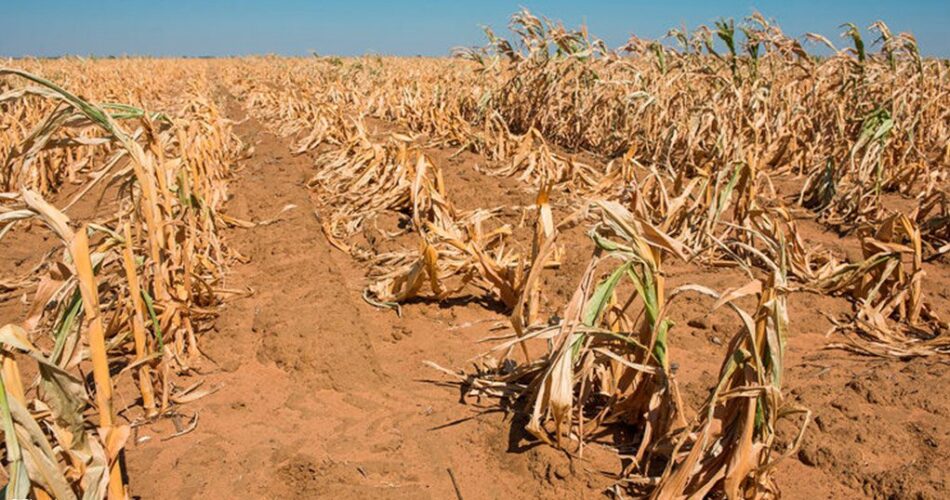
Farmers in Mozambique and Zambia are being hit by the worst drought in decades, the Assistant Secretary-General of the United Nations (UN) said. Reena ghelani He said this while meeting stakeholders to arrange food and cash assistance in countries affected by El Nino weather.
He pointed out that the Southern Africa region is facing extreme food insecurity and water scarcity amid the growing climate crisis due to the El Nino phenomenon.
“The drought is further evidence of the impact of climate change, but it is exacerbated by a weather pattern of unusually warm water over the surface of the Pacific Ocean, causing higher temperatures and less rainfall across the region.
“The event, recorded as one of the five strongest in history, also caused devastating floods in other parts of the continent,” Ghelani said. He said at least 20 million people were facing crisis levels of acute hunger due to El Nino-induced drought.
As Climate Crisis Coordinator for the UN's El Nino/La Nina response, Ghelani met representatives of the World Food Program (WFP) and African Vulnerability (ARC) to discuss the response to the drought emergency to mitigate impacts on the lives and livelihoods of the most vulnerable people.
Ghelani said many farmers will have nothing to harvest, highlighting the burden of climate change on these countries and the need for a more comprehensive and sustainable approach to recurring crises.
More than 70% of the Southern African population makes its living through agricultural activities, which is increasingly being affected.
Ahead of the start of the 2023/24 agricultural season, Malawi, Mozambique, Zambia and Zimbabwe took the important decision to participate in the ARC risk pool for drought.
Based on early estimates from ARC's season monitoring tool, all of these countries are likely to receive insurance payments, which will be confirmed at the end of the season.
ARC Director General Abraham deyoung Confirmed that the risk pools were run by ARC Group's insurance affiliate and leveraged funds to facilitate response to disaster events.
WFP Regional Director Menghestab Haley He said the drought has struck at a time when needs have long gone unmet, resulting in alarming levels of food insecurity and malnutrition, while funding shortages have halted humanitarian activities.
He said the El Nino weather phenomenon is a poignant reminder of the climate crisis and how important it is to increase investment in resilience-building activities.
“Communities must be empowered with climate adaptation skills that will enable them to adapt, mitigate and absorb the impacts of climate shocks,” Haley said.
aid efforts
As part of the ARC Replica programme, which allows humanitarian actors to take out insurance on behalf of a country, Replica partners from the four countries mentioned above, including WFP, StartNetwork and the UN Refugee Academy, are likely to receive payments.
This program not only complements countries' other response activities, but also goes a long way toward scaling up resources to reach vulnerable populations.
In preparation for the end of the agricultural season, ARC, together with in-country technical working groups in the four countries, is in the process of finalizing Final Implementation Plans, a document that clearly outlines the use of ARC payments before the end of the season.
This is part of the ARC contingency planning process initiated before the start of the season.
“(Southern Africa) is a region we have supported with significant drought payments in the past. In 2022, we paid $14.2 million to Malawi's replication partner, WFP; $5.3 million to Zambia and $1.4 million to Zimbabwe,” ARC CEO leslie Ndlovu told.
Ndlovu said the impact of disaster events went beyond immediate socio-economic costs and in the absence of tools like ARC, a disaster like drought could easily trap vulnerable populations in a permanent cycle of poverty.
“It is an honor for us to work closely with the four countries' disaster risk management structures and contribute to their resilience-building efforts. These are moments like these when we can demonstrate the real impact of our work,” Ndlovu said.
This drought crisis underlines the importance of tools like the ARC solution in building resilience and facilitating recovery efforts. It also emphasizes the value of collaboration between partners to support Africa's resilience-building efforts.
ARC, as a specialized agency of the African Union, works with Member States to strengthen their preparedness to respond to such threats.
The ARC mechanism combines four critical elements of disaster preparedness: early warning, contingency planning, risk pooling and risk transfer to create a powerful value proposition that has proven effective in strengthening government capacity to manage disaster events.