
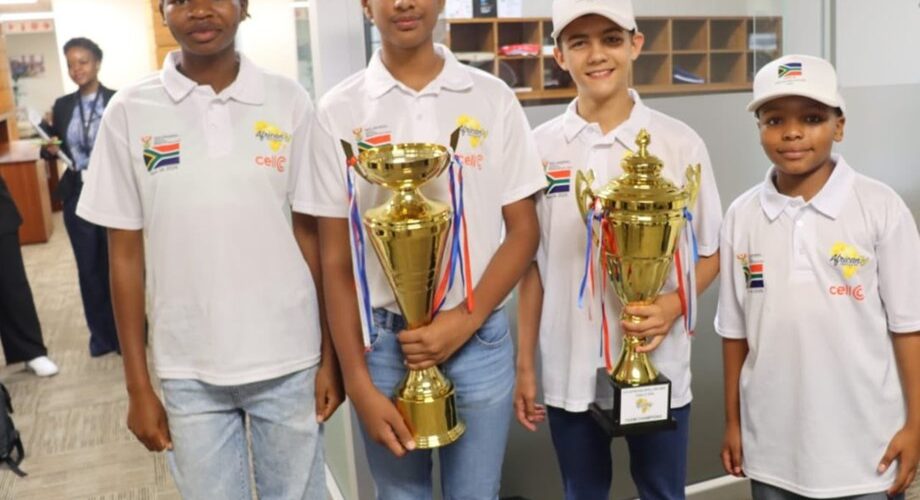
South Africa's commitment to strengthening literacy and educational excellence received a major boost as the country's top young spellers returned home victorious from the African Spelling Bee Championships, taking first place at the prestigious continental competition held in Harare, Zimbabwe.
At a celebratory ceremony, Basic Education Minister Siviwe Gwarube officially received the championship trophy from the victorious learners, marking a proud moment for the country's education sector and reinforcing the vital role of literacy in shaping future success.
The eighth edition of the African Spelling Bee, held in late March 2026, brought together top performing learners from over 30 African countries, making South Africa's overall win a significant achievement on the highly competitive continental stage.
Team South Africa not only took top national honours, but also produced an impressive individual performance, with learner Ashton Singh earning second place in the junior division – highlighting the depth of talent and academic excellence within the team.
Describing this achievement as a milestone, Minister Gwarube stressed the direct relationship between literacy development and national progress.
He said, “A reading nation is a winning nation. These learners have shown us that when we develop a strong culture of reading, we unlock the full potential of our youth.”
Education experts note that spelling bee competitions are much more than academic competitions – they are powerful tools for cognitive development, language mastery, and confidence building. Participation in such initiatives enhances vocabulary acquisition, comprehension skills, and critical thinking, which are essential for long-term academic and professional success.
Minister Gwarube highlighted that extra-curricular programs such as the African Spelling Bee play an important role in strengthening foundational literacy, especially in early education. By encouraging learners to engage deeply with language, literature and communication, these initiatives help bridge learning gaps and foster a lifelong love of reading.
South Africa's strong performance also reflects increased investment in literacy programs and educational partnerships. The Minister acknowledged the contributions of organizations such as A Better Africa and other stakeholders who continue to support reading initiatives in schools and communities.
These collaborations are essential to address literacy challenges, he said, especially in a country where improving reading proficiency remains a national priority. According to recent education assessments, strengthening reading skills in the early grades is one of the most effective ways to improve overall learning outcomes and reduce inequity in education.
Gwarube emphasized that building a reading nation requires a collective effort that extends beyond government.
“The government cannot do this alone. It requires the active participation of schools, teachers, parents and partners to ensure that every child has the opportunity to study, learn and succeed,” he said.
The Department of Basic Education has reiterated its commitment to expand literacy-focused programmes, integrate reading initiatives into school systems and promote activities that inspire curiosity and intellectual growth among learners.
The trophy presentation ceremony was not only a celebration of South Africa's continental success, but also a powerful call to action – urging all stakeholders to intensify efforts towards building a reading culture that can drive national development.
As South Africa continues to invest in education reform and youth development, the success of these young champions is testament to what can be achieved when talent, opportunity and a strong foundation of literacy come together.
Their victory sends a clear message across the continent: South Africa is not only competing, but leading, in nurturing the next generation of thinkers, leaders and innovators.