
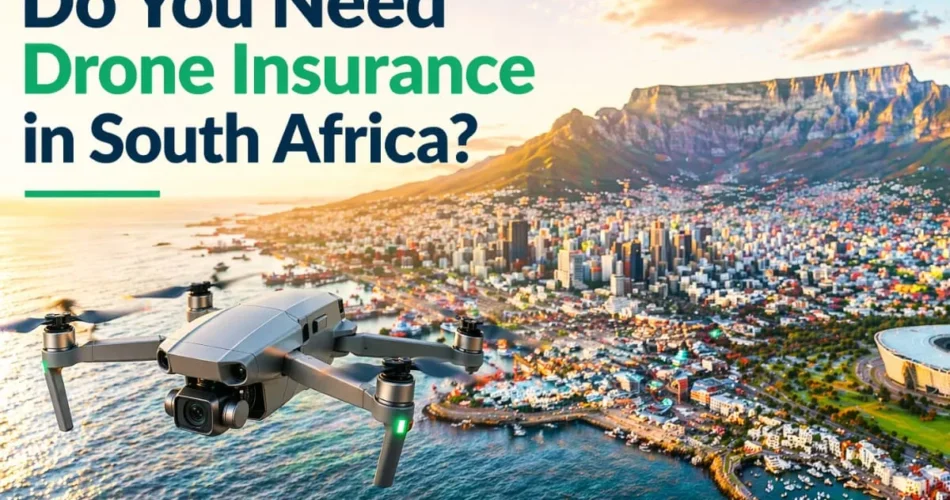
Drones have become powerful tools across South Africa, and with the business opportunity of drones comes a question that many owners overlook: what happens when something goes wrong? Understanding What you need to know to avoid going to jail for flying a drone in South Africa It is equally important to operate one safely.
Drone insurance isn't always top of mind when you first unbox your device. But as soon as your drone leaves the ground, you're dealing with real-world risks. Not only for the drone, but also for the surrounding communities and your own financial risk.
Understanding the Risks Behind Flying
Flying a drone can feel controlled and precise, especially with modern stabilization and GPS features. Yet conditions change rapidly. A sudden gust of wind or wrong decision can topple even a high-end drone.
When this happens, costs can increase. You are not only faced with the repair or replacement of your device. You may also be responsible for damages caused to vehicles and buildings or even injuries caused to bystanders. Liability claims in South Africa can be significant, particularly in urban or commercial environments.
hobbyist use vs commercial use
is required drone insurance This largely depends on how you use your drone. If you are flying casually over a field or in a remote area, your risk is low, although never zero. Accidents still happen, and replacing equipment isn't cheap.
However, once you get into commercial use, the stakes increase exponentially. If you're shooting weddings or inspecting rooftops, you're working in an environment where mistakes have financial consequences. In many cases, clients will expect you to have insurance before they will even consider working with you.
Commercial drone operators in South Africa must comply with regulations set by the South African Civil Aviation Authority. Although insurance is not always legally mandatory, it is strongly recommended and often required in professional contracts.
What does drone insurance usually cover
Drone insurance is designed to protect both your equipment and your liability. Although policies vary, they generally include protection against accidental damage, theft, as well as third party liability. In South Africa, where the South African Civil Aviation Authority is (SACAA) Regulates drone operations within the country, understanding that your risk goes beyond just flying safely – it also includes being protected financially.
This means that if your drone hits a roof or injures someone, your policy can help cover the costs. At the same time, if your drone is lost or stolen, you're not left out financially to begin with.
Some policies also extend to accessories or business interruption, making it especially valuable for commercial operators who rely on their drones for income.
real value
When you know you're covered, you fly differently, without the inherent stress that one mistake could ruin months of work or savings.
Drone insurance allows you to focus on completing surveys or providing value to your customer rather than worrying about the worst-case scenario.
So, do you really need it?
Technically, in many cases you can buy and fly a drone without insurance. In practice, it's a different story.
A well-structured policy gives you the confidence to take off and scale your operations without having to anticipate every risk. In a rapidly evolving field like drone technology, this kind of confidence is a game changer.