
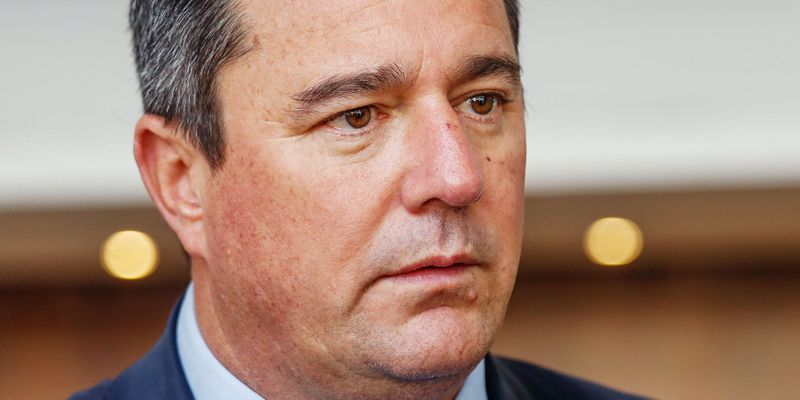
The Minister of Agriculture is John Steenhuisen are constantly talking South African fruit exports to China have increased, but it is unclear how and when Beijing's much-publicized offer to allow all exports duty-free entry into China will bear fruit for South Africa.
Trade, Industry and Competition Minister Parks Tau signed a “historic” framework agreement on Economic Partnership for Shared Prosperity with his Chinese counterpart Wang Wentao on February 6.
“This agreement will provide China with duty-free access to South African export products and increase Chinese investment in South Africa,” Tau said. He said this would provide new opportunities for South African businesses to enter the Chinese market, particularly in sectors such as agriculture, renewable energy and technology.
The broad framework agreement includes a clause on implementing China's duty-free offer to Africa, which is due to come into general effect on May 1. But the fine print shows that tariffs for many agricultural exports from SA will reduce after only 10 years, said trade analyst Donald McKay, director of XA Global Trade Advisors.
“The idea that there is duty-free access to everything in China is not factually true, or it is not readily true,” he said.
Only agricultural products are likely to benefit most from duty-free access, he said. Yet China's draft proposal under the framework agreement states that it would allow duty-free entry for many agricultural products only after 10 years.
According to the draft of the proposal, this will include: fresh oranges and orange juice, grapefruit, lemons, other citrus fruits, wine and other alcoholic beverages, peaches, nectarines, peppers, ginger, lychees, apples, fresh and frozen strawberries, fresh blackberries, raspberries, mulberries and loganberries, kiwi, cranberries, pears, grapes, melons, macadamia nuts and other nuts. Many other exports will become duty free after two years and some immediately.
“But even if we got duty-free access tomorrow on all agricultural goods, it doesn't address the far bigger problem, which is the incredibly long time it takes for any single agricultural product to be approved for export to China,” Mackay said.
“If you're busy applying for cherries to enter China, you can't apply for blueberries until cherries are approved, and it can take you five to seven years to get cherries approved.”
China demands this lengthy approval process in order to remove non-tariff barriers, such as “sanitary and phyto-sanitary” measures, ostensibly to prevent imports of animals and plants from infecting Chinese plants, animals and humans.
export progress
However, Steenhuizen seems to have sped up the process. On October 15, 2025, he and Chinese Customs Minister Sun Meijun signed an agreement business protocol in Shanghai, which first opened the Chinese market to five types of South African stone fruits: apricots, peaches, nectarines, plums and prunes.
Steenhuisen said it is the first time that China has negotiated access to multiple types of stone fruit from the same country under a single deal. This was “a major breakthrough for South African fruit growers and exporters at a time when diversification is essential to our agricultural resilience”.
This will reduce its immediate impact to some extent large tariffs The US had imposed a ban on SA exports, especially plums, in 2025.
/file/attachments/orphans/iStock-2259268463_371824.jpg "Agriculture Minister John Steenhuisen negotiated tariff-free access to huge Chinese markets for five stone fruits, while other agricultural exports could take 10 years to gain such access. (Photo: iStock)")
“The opening up of the Chinese market could generate around R400 million of profits for us over the next five years, a figure that is projected to double over the next 10 years,” Steenhuisen said.
On February 19, Steenhuisen and China's Ambassador to South Africa Wu Peng saw the first shipment of fruit shipped under the protocol, about 20,000 cartons of premium plums from the Freshness First packhouse in Franschhoek.
Steenhuisen said the opening of this Chinese market is “a fundamental requirement for South Africa's economic development”.
He said the bilateral trade agreement which gives South African produce tariff-free access to the Chinese market “significantly enhances the competitiveness of local farmers on the global stage”.
/file/attachments/orphans/ED_538941_286274.jpg "Wu Peng, China's Ambassador to South Africa. (Photo: OJ Colotti/Gallo Images)")
Then, on 10 April, Steenhuisen announced that China had agreed to reduce cold treatment requirements for exports of South African citrus to China. This means that the fruit will not have to be cooled as much as it is now to destroy insects.
He said the new measure would “consolidate our position as the largest exporter of citrus to China” by reducing costs for growers and exporters, and ensure that high-quality fruit also reaches Chinese consumers.
He said that in 2025, Southern Africa was expected to export about 204 million cartons of citrus, with South Africa contributing about 193 million cartons. Export earnings exceeded $2-billion for the first time, reaching an estimated $2.47-billion.
“The sector supports approximately 140,000 direct jobs at the farm and packhouse level, including fairly extensive employment in logistics, export services and international distribution.”
'Real Opportunity'
It is clear that agricultural exports to China are an important and growing part of the South African economy. But equally clearly, they would be much larger if China's import tariffs on all SA exports were immediately cancelled.
Mackay said SA exports to China broadly fall into three categories. The largest were minerals and precious metals, which accounted for over 70% of exports by value and which already entered China duty-free or nearly so.
“Then we send small amounts of manufactured goods. It doesn't really matter because what are we going to make that China can't make better and cheaper than us?
“The third category is agricultural products. Here, there is a real opportunity,” he said, but according to China's draft tariff proposal, this opportunity will be fully operationalized only after 10 years.early harvestNegotiations under the Framework Agreement.
/file/attachments/orphans/donald-mackay_497312.jpg "XA Global Trading Director Donald Mackay. (Photo: Freight News/Wikipedia)")
The framework agreement was negotiated last year in the broader context of China offering duty-free access to its markets for all exports from all African countries with which it has diplomatic relations – in fact, all African countries except Eswatini, which recognizes Taiwan, not China.
Because China classifies itself as a “developing” country, under World Trade Organization (WTO) rules it cannot provide non-reciprocating duty-free access to other developing countries. This means that African countries, including South Africa, that get duty-free access to the Chinese market must offer duty-free access to China in return.
However, an official from the Department of Trade, Industry and Competition (DTIC) told Daily Maverick: “China has already assured that SA can make tariff commitments that are realistic, not immaterial, and also take into account different stages of development.”
trade deficit
He said this meant SA would be allowed to exclude “sensitive” Chinese products from duty free entry into South Africa. South Africa already has a huge trade deficit with China. Last year, it was worth around R200-billion, and South African producers and workers are wary of giving it even greater access to this market.
The official said the government has drafted a tariff proposal for China, which it is now discussing with trade and labor to identify any sensitive products.
In February, Business Unity South Africa (Busa) met to consider the framework and expressed concerns about it. It questioned the legal status of the agreement and its overall economic justification, saying:
- a significant imbalance in anticipated tariff benefits;
- Limited macroeconomic impact on South Africa as a whole; And
- Concentration of profits in a small number of sectors or firms.
The minutes of the meeting said that Busa will raise its issues in the upcoming meeting. nedlac.
The DTIC official said trade and labor considerations would be included in the Early Harvest talks the government was to launch with China to give effect to the trade deal.
The overall framework also envisages subsequent negotiations on other aspects of commercial relations between the two countries, including Chinese investment in SA, more flexible supply chains and green mineral beneficiation. The target is to complete all this within five years.
Mackay said SA's tariff concessions to China were just “symbolic, trying to show that the agreement is WTO compliant, but there doesn't seem to be any substance to what SA is offering”.
He suspects that the real purpose of the framework deal with China is not to gain greater duty-free access to that market, but to make a political statement. This may be to show the US that South Africa is not as dependent on it for exports as it may think.
He suggested Pretoria may also aim to demonstrate to its domestic constituency that it is diversifying trade to reduce dependence on the hostile Trump administration. DM