
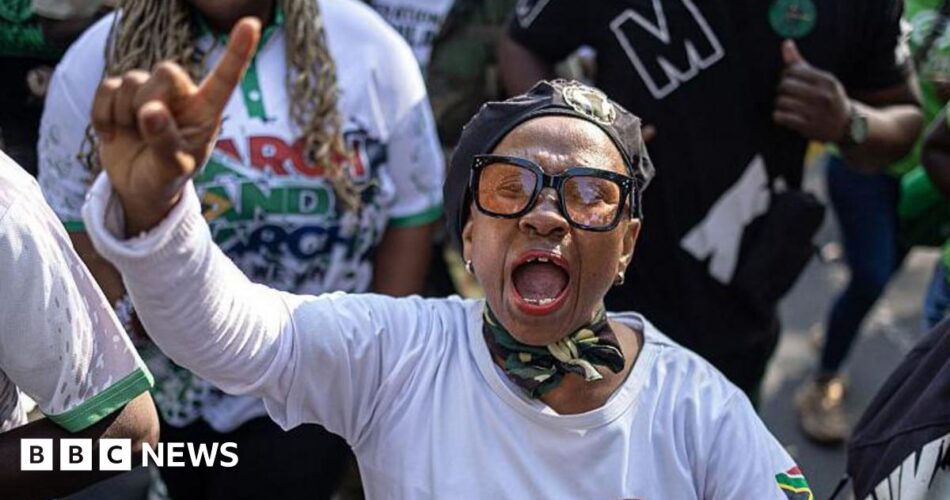
The BBC spoke to some Nigerians in Pretoria, not far from the march.
A man, who had to close his shop, said he was not happy.
“It's not okay because we're black, we're brothers…everyone comes here to survive.”
A security guard who was unable to go to work because of the protests told the BBC, “This is not what we expected as fellow Africans”.
“It is just scaring us – imagine if we are scared in our own African continent – what if we go to Europe?” he asked.
Speaking about xenophobia in South Africa, UN Secretary-General Antonio Guterres condemned what he called “criminal acts perpetrated by individuals who incite violence and exploit socio-economic conditions”.
In remarks delivered by his spokesman Stephane Dujarric on Monday, he reminded South Africans how their struggle against apartheid “was sustained through international and African solidarity”.
The UN chief said he was concerned by reports of “xenophobic attacks and acts of harassment and intimidation”, adding: “Violence, vigilantism and all forms of incitement to hatred have no place in an inclusive, democratic society.”
For more than a decade, xenophobia directed at migrants has remained a political issue, especially as the country has one of the world's highest unemployment rates, at nearly 33%.
In recent years, the rise of anti-immigrant groups such as March and March and Operation Dudula have gained notoriety for their demands to expel foreign nationals from the country.
In February, South Africa's Zulu king Msuzulu Kazwelithini used a derogatory term for foreigners and said they should all leave, 11 years after his father urged immigrants to “pack their bags”.
Additional reporting by Thuthuka Zondi and Annette Arotiba in Pretoria