
South Africa's overall leading business cycle indicator rose 0.5% in February, providing a new signal that growth conditions could improve next year, even though current activity remains slow and long-term weaknesses in the economy are weighing on momentum.
The latest data from the South African Reserve Bank pointed to cautious optimism rather than a complete turnaround. Seven out of 10 components of the key indicator moved higher, suggesting the outlook for the economy is improving over the next six to 18 months. But the lagging indicator, which tracks current economic conditions, remains weak, while the lagging indicator reflects the damage caused by years of sluggish growth.
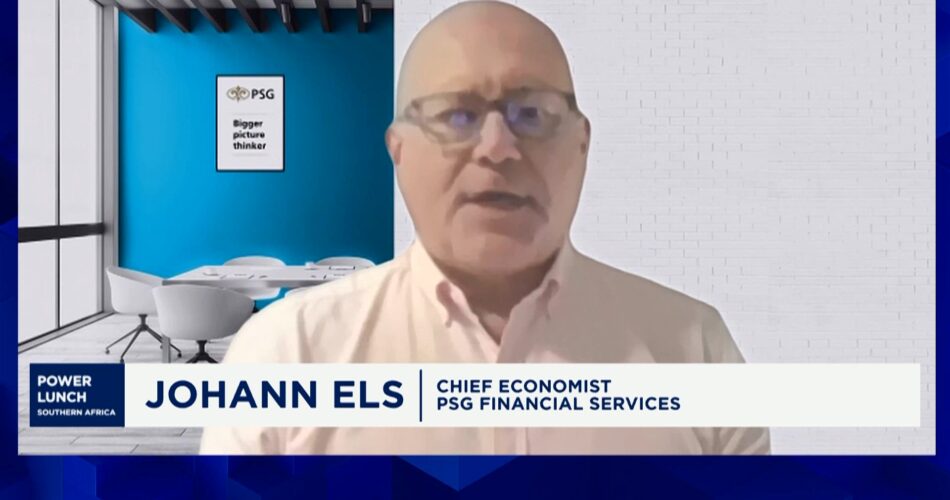
Speaking to CNBC Africa, PSG Financial Services chief economist Johan Els said the improvement in key indicators supports the view that the economy is moving in a better direction, although it does not yet signal a strong expansion.
“There has been an improving trend in the leading indicator index. This indicates better economic growth over the next 6 to 12 to 18 months. But it does not say anything about the growth rate or the pace of growth,” Ells said.
This distinction is important for investors and businesses trying to ascertain whether South Africa is at the beginning of a meaningful cyclical recovery or is merely stabilizing after a long period of underperformance. Ells noted that although forward-looking measures are improving, the economy on the ground is still operating in “low gear,” underscoring the fragile nature of the rebound.
According to Els, one of the biggest sources of support is rising commodity prices, particularly for precious metals such as gold and platinum, both of which are important South African exports. Those gains have helped strengthen external conditions, even as some instability has returned amid geopolitical uncertainty in the Middle East.
He said the recent decline in commodity prices has been limited so far, suggesting that the broader supportive trend remains intact. Additionally, domestic demand indicators have also shown some improvement, with both consumer demand and business confidence rising.
In Else's view, that combination matters. South Africa is not only benefiting from strong global conditions, including strong leading indicators among key trading partners, but also from improving internal economic dynamics. With offshore and local drivers “moving in the same direction”, the prospects for a recovery gradually improve.
An important part of that better sentiment is related to policy reforms, he said. Businesses are becoming more confident in the country's growth prospects as government efforts to ease structural bottlenecks are beginning to yield results. Else pointed in particular to Operation Vulindlela and reforms involving the National Treasury, which have made it easier for private capital to invest in the economy.
He highlighted progress in reducing power constraints, primarily through the greater role of private sector power generation, as well as regulatory efforts to support investment in the power grid. He also pointed to efforts to bring private sector participation in logistics infrastructure, including rail and ports, associated with Transnet operations.
Ells argued that those changes could have a meaningful impact on growth over the next several years by removing barriers that have long undermined productivity and business expansion.
Nevertheless, reforms are unlikely to be broad-based in all areas. On manufacturing and industrialization, Els argued in a particularly cautious tone that South Africa was unlikely to see a strong industrial revival in the near term. He said the country remained uncompetitive globally in key areas, including labor costs, and suggested that industrialization was effectively halted.
Instead, he said policymakers and business leaders should focus on service industries, which have delivered very strong growth in recent years and now account for a growing share of the economy. Tourism, computer services and financial services were among the sectors they identified as having significant potential.
This approach suggests a more practical development path for South Africa – one focused less on traditional industrial expansion and more on areas where the country has demonstrated resilience and comparative strengths.
Nevertheless, the external environment remains a major swing factor. Ells cautioned that the latest Reserve Bank indicators do not yet reflect the full impact of the conflict involving Iran and the broader Middle East, which could impact economic data in the coming months.
Else said that if the conflict prolongs and oil prices remain above $100 a barrel for a long time, the global economy could slide into recession, which would have a clear negative impact on South Africa. Such a scenario is likely to impact financial markets, currencies and trade-sensitive sectors, as well as weaken business and consumer sentiment.
At the same time, he argued that South Africa is in a somewhat better position than in previous global recessions. While the country will not be immune to the shock of recession, the hit may be less severe than during the global financial crisis or the Covid pandemic, partly because domestic fundamentals have improved and some structural reforms are beginning to take effect.
Ells said that in a severe global recession, major central banks such as the Federal Reserve and the European Central Bank would likely move toward supporting growth, potentially cutting interest rates if inflation pressures ease in response to weak demand.
For South African businesses, his message was clear: this is the time to take advantage of recovery-driven opportunities rather than remain on the sidelines. He said that even during the country's long period of average growth of about 1%, many companies managed to increase profits and improve productivity. Now that conditions are gradually improving, they see scope for further investment and opportunity creation.
So the latest business cycle indicators paint a mixed but constructive picture. South Africa is not yet in a strong recovery mode and current conditions remain soft. But growth in leading indicators, improving business confidence, strong commodity support and incremental policy progress all suggest the economy could be laying the groundwork for better growth ahead.
For now, the signal from the data is not that South Africa has completely changed, but that it may finally be moving in the right direction.