
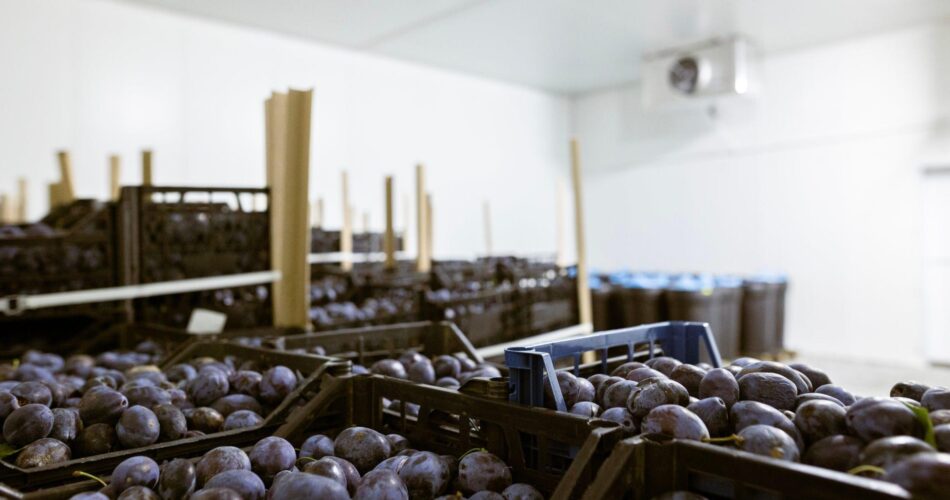
According to multiple industry reports, Africa's cold chain infrastructure is steadily expanding, but persistent gaps in electricity, transportation and rural connectivity are limiting the efficient movement of temperature-sensitive cargo.
The sector, which supports perishable commodities, pharmaceuticals and exports, is underdeveloped compared to global standards, leading to post-harvest losses of up to 40%, according to the Global Cold Chain Alliance (GCCA), an international trade association representing the temperature-controlled supply chain industry. GCCA said the market was valued at approximately $10.88 billion in 2024 and is projected to reach $14.85 billion by 2029, growing at a compound annual growth rate (CAGR) of 8.28% due to urbanization, trade and pharmaceutical demand.
Different projections indicate that the market will reach $14.45 billion in 2025 and expand to $18.29 billion by 2032, indicating continued long-term growth in cold chain demand across the continent.
Regional disparities shape development
Cold chain development remains uneven across Africa, with South Africa leading in both capacity and infrastructure.
According to International Trade Administration data, South Africa has the largest share of the continent's cold storage capacity, at about 30.55%, and provides about 13 cubic meters of capacity per 1,000 inhabitants. The country's cold chain network includes large-scale facilities with up to 37,000-pallet capacity and is supported by advanced infrastructure in major ports such as Durban, Cape Town and Johannesburg, which handle significant volumes of fruit, meat and seafood exports.
In contrast, East Africa is seeing rapid expansion driven by private sector investment and sustainability-focused projects. Kenya has emerged as a major hub, with modern cold storage facilities available, including a 15,000-pallet LEED Gold-certified site in Nairobi. Additional facilities in Tanzania, Uganda, Rwanda and Ethiopia are expected to come online between 2026 and 2027, adding capacities ranging from 8,000 to 20,000 pallets.
These developments are expected to help reduce food loss in the region by 30 to 50%, while also strengthening storage and distribution capabilities for temperature-sensitive commodities.
Meanwhile, West Africa faces critical infrastructure shortages, particularly in rural and inland areas. Despite this, investment through public-private partnerships is gaining momentum. In Senegal, a $307 million cold storage expansion project is underway to improve storage capacity and support agriculture and food supply chains. However, the region still requires further development of port-related infrastructure and Special Economic Zone-based cold storage networks.
Infrastructure and climate challenges remain
Despite increasing investment, structural challenges continue to hinder the growth of Africa's cold chain sector.
Unreliable power supply remains a major issue, forcing operators to rely on alternative energy sources, increasing operating costs. Poor road infrastructure, especially in rural areas, further limits connectivity between production areas and consumption centres. Furthermore, high costs and lack of skilled labor are affecting the efficiency and reliability of cold chain operations, according to Cold Link Africa.
Climate change is placing further pressure on the region, with sub-Saharan Africa facing adaptation costs of $30 to $50 billion annually. These costs are associated with the need for more flexible infrastructure and systems capable of maintaining temperature integrity under changing environmental conditions.
Promote business, health care demand and technology expansion
Looking ahead, trade integration and demand for healthcare are expected to play a significant role in driving the growth of cold chain across Africa.
The African Continental Free Trade Area is projected to increase intra-African trade by 45% by 2045, which will require expanded cross-border cold chain logistics, particularly for perishable food and pharmaceutical products.
Also, according to the Africa Centers for Disease Control and Prevention, investments in vaccine distribution and health care logistics are strengthening temperature-controlled supply chains across the continent. These developments are contributing to improved cold storage capacity and distribution networks for pharmaceuticals.
Technological innovations are also supporting the growth of the sector. Solar-powered cold rooms are being deployed in parts of East Africa to tackle electricity challenges, capable of reducing energy consumption by about 40%. Additionally, IoT-based monitoring systems are being used to improve visibility, tracking and compliance in cold chain operations, the GCCA said.
India is also emerging as a partner in Africa's cold chain development, with companies like Danfoss providing energy-efficient and sustainable cooling solutions to support the expansion of infrastructure.
Opportunities Amidst Structural Gaps
While Africa's cold chain sector is on a strong growth path, the gap between demand and infrastructure remains significant.
Addressing these gaps will require continued investment in storage capacity, transportation infrastructure and integrated logistics systems to ensure the safe and efficient movement of temperature-sensitive goods across the continent.