
-
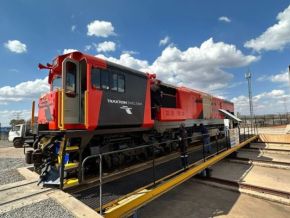
South African private rail operator Traction has secured $86 million in funding to support a comprehensive 3.4 billion rand ($208.3 million) rolling stock investment programme.
-
The company is bracing itself for growing freight demand as South Africa gradually opens its rail network to private operators.
-
If the planned rail infrastructure projects go ahead, 132,857 bulk wagons and 36,482 container wagons may be needed to support the growing intra-African trade under the African Continental Free Trade Area (AfCFTA).
Traction recently announced an $86 million fundraising round to support its rolling stock investment program. The financing is part of a broader 3.4 billion rand ($208.3 million) investment plan unveiled in December 2025.
The program involves the acquisition of 46 diesel-electric locomotives and approximately 920 railcars.
Beyond its size, the fundraising traction reflects expectations that demand for freight rail will grow as South Africa gradually liberalizes its rail sector.
For decades, the state-owned freight and logistics company Transnet dominated rail freight operations. However, Pretoria initiated reforms to progressively open access to the national rail network after operational challenges at Transnet reduced the efficiency of the system.
South African authorities have already completed the initial phase of the reform process by selecting 11 private companies to operate services on specific rail sections.
Traction did not apply for rail slots during this first phase. However, company officials told local media that they may participate in future allocation rounds if the regulator provides more clarity on the profitability of private sector investments.
As a result, Traction has opted to consolidate its fleet while monitoring the evolving regulatory framework.
The company has also formulated its strategy with expectations of improvement in rail freight activity.
Operational difficulties at Transnet have reduced rail freight volumes in recent years, particularly in mining and industrial supply chains. As a result, a significant part of cargo traffic shifted to road transport. This change increased logistics costs and placed additional pressure on South Africa's road infrastructure.
The gradual restoration of rail capacity will require substantial investment in locomotives and wagons. Therefore, operators with available rolling stock may benefit from increased demand for freight services on mining corridors and logistics routes linking ports with production centres. Traction's investment program positions the company to take advantage of the opportunities arising from this recovery.
The growth story extends beyond South Africa. Governments across Africa are increasing efforts to revitalize rail transport as part of broader strategies to improve logistics competitiveness and reduce transportation costs.
The implementation of the African Continental Free Trade Area has reinforced this trend by creating incentives for greater cross-border trade and more efficient freight networks.
According to estimates by the United Nations Economic Commission for Africa (UNECA), intra-African trade growth by 2030 will require approximately 97,614 bulk wagons and 20,668 container wagons.
If governments complete rail infrastructure projects currently under consideration across the continent, demand could rise to 132,857 bulk wagons and 36,482 container wagons.
Against this backdrop, Traction's investment represents much more than a simple fleet expansion.
The company is effectively placing a long-term bet on the transformation of Africa's rail freight market and the emergence of private operators as major players in the sector.
However, execution remains the key variable.
The development of South Africa's regulatory framework and the ability of African governments to deliver planned rail infrastructure projects will determine how much of this projected demand translates into commercially viable opportunities for private rail operators.
Henok Dosa