
The data debunks the narrative that foreign nationals are stealing South African jobs.
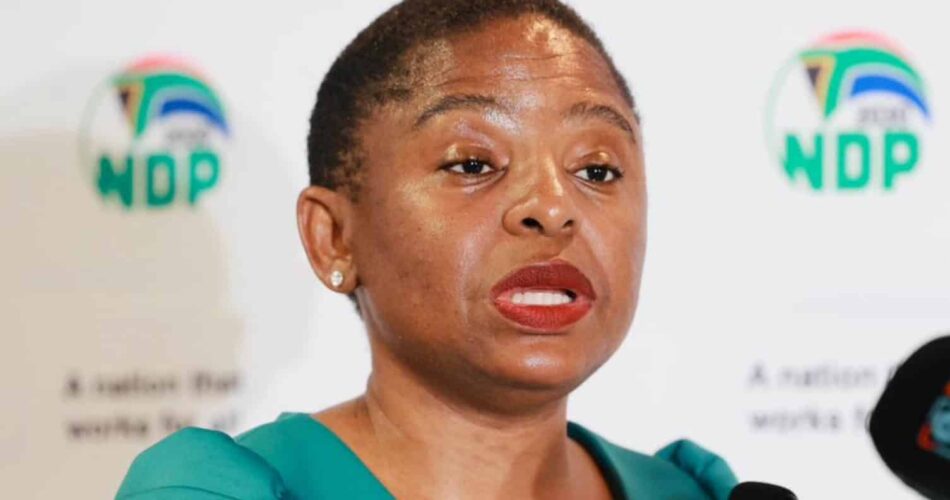
Minister of the Presidency Khumbudzo Ntshavweni presented Statistics South Africa's 2026-27 budget, revealing measurable progress in reducing poverty and inequality, although the country is still a long way from the finish line.
Statistics SA gets R2.98 billion, but minister says it's not enough
South Africa's national statistics agency has been allocated R2.98 billion for the financial year 2026-27, rising to R3.09 billion and R3.20 billion over the next two years.
This is an average growth rate of 3.9%. However, when Ntshavweni tabled Budget Vote 14 in Parliament on 13 May 2026 she was clear about the limitations of that figure.
“Let me indicate upfront that this allocation is not sufficient,” Ntshavweni told the House.
The budget covers seven program areas, with the largest share – R961.6 million – going to statistical operations and provincial coordination, followed by R842.3 million to administration.
Statistical Support and Informatics gets R343.2 million, while Economic Statistics and Population and Social Statistics are allocated R315.1 million and R304 million respectively.
The South African National Statistics System receives the smallest share of R46.1 million.
Ntshavweni framed the investment as more than a departmental line item.
“Supporting this budget vote is an investment in our ability to govern effectively in a rapidly changing world,” he said.
“As climate shocks intensify, technology accelerates, and global uncertainty increases, timely and reliable data are no longer optional – they are essential for informed decision-making and national resilience.”
Millions of people are stuck below the food poverty line
The centerpiece of the budget debate was the December 2025 Poverty Trends in South Africa report, which tracks absolute poverty between 2006 and 2023 using data from Stats SA's Income and Expenditure Survey and Living Conditions Survey.
According to the minister, the share of South Africans living below the lower poverty line is expected to fall from 57.5% in 2006 to 37.9% in 2023, meaning a decline from 27.3 million to 23.2 million people.
The number of people living in extreme poverty below the food poverty line declined from 27.4% to 17.6% over the same period, meaning 2.2 million fewer people were living in food poverty in 2023 than in 2006.
Ntshavweni acknowledged both the benefits and the differences.
“Despite significant progress in reducing the overall number of people in poverty, the number of people below the food poverty line remains very high, at 10.8 million,” he said.
He acknowledged the additional shock caused by the COVID-19 pandemic.
The minister further said that the government will continue to use the poverty line measurement “to improve the country's ability to target developmental policies and programs for intervention”.
He stressed that education is one of the most powerful tools to overcome poverty, citing the Stats SA report's findings that people with lower levels of education have consistently recorded higher poverty rates.
On this basis, he described the implementation of the Basic Education Law Amendment Act as “non-negotiable”.
He also called for the National Student Financial Aid Scheme to be expanded to include dependents of police officers, teachers, nurses and other public servants – people who often fall outside the existing aid limits despite facing real financial pressures.
“The aim is to create a more inclusive and sustainable student funding system that broadens opportunity while safeguarding the future viability of the scheme,” Ntshaveni said.
Jobs are being lost despite R1 trillion infrastructure push
Stats SA's Q1 2026 Quarterly Labor Force Survey, released a day before the budget debate, painted a grim picture of the labor market.
Employment fell by 345,000 between the fourth quarter of 2025 and the first quarter of 2026, bringing the total number of employed persons to 16.8 million.
Ntshavweni pushed back against the idea that seasonal patterns could explain the data.
“The argument of increase in unemployment due to the first quarter trend of entrants into the labor market is not valid as the country has seen a decline in the number of employed persons,” he said.
The timing is particularly troubling, he said, given that infrastructure investment is gaining momentum.
The Finance Minister recently committed R1 trillion to infrastructure development in the 2026 national budget, and the sixth South African Investment Conference generated more than R1.5 trillion in investment pledges. Yet jobs have not been created, at least not yet.
Data debunks the narrative that foreign nationals are stealing South African jobs
The labor force data speaks directly to one of the country's most politically charged debates.
Drawing on the migration module of the Quarterly Labor Force Survey, Ntshavweni used the numbers to challenge claims that foreign nationals are displacing South African workers.
As of 2022, the unemployment rate for foreign-born individuals was 18.2%, compared to 34% for locally born individuals.
The absorption rate was 64% for foreign-born individuals and 37.7% for locally born individuals, indicating that foreign-born individuals were almost twice as likely to be employed.
“The unemployment rate for foreign-born individuals is about half that of locally born individuals,” Ntshavweni said.
There were 55,190 refugees and 82,410 asylum seekers in South Africa as of 31 December 2025, and the Border Management Authority and the Department of Home Affairs are actively managing the presence of undocumented foreign nationals.
Ntshaveni said Cabinet has directed the Department of Employment and Labor to step up workplace inspections in sectors such as hospitality, farming, trucking and construction, and directed municipalities to more strictly enforce business bylaws.
Ntshavweni also called on South Africans to stop sub-leasing their business licenses to others.
On the policy front, the revised White Paper on Immigration introduces the principle of country security first, proposes to move refugee reception centers closer to borders, and includes provisions that would enable government departments to designate certain trades, occupations and professions exclusively for South African citizens and refugees.
Inequality is changing, but wealth is concentrated at the top
South Africa's Gini coefficient tells a story of mixed progress.
Statistics SA data shows that Gini projections for black Africans and colored South Africans have declined between 2011 and 2023, while those for Indians and Asians, as well as white South Africans, have increased over the same period.
The income share of the bottom 40% of earners is expected to increase from 4.4% in 2006 to 6.8% in 2023.
But as Ntshavweni said, that improvement must be read in context: “Despite the rising share of income falling below 40% in recent years, the bulk of income is still concentrated at the top of the income ladder.”
However, a structural shift is underway.
According to Stats SA's General Household Survey, the proportion of black households earning more than R75,000 per month is expected to rise to 41% in 2024, from 29% in 2012.
The number of black South Africans in the middle and upper income groups is set to quadruple from 2012 to 2024, to more than seven million.
Overall, the total number of South Africans in those income groups is expected to increase from about four million to more than 11 million between 2012 and 2024.
Official statistics protect against misinformation
Ntshavweni concluded his speech by making a clear case for the democratic value of official figures, especially in an environment of deliberate misinformation.
“Official figures replace speculation with facts and rhetoric with reality,” he told parliament.
“We live in an age of misinformation, where official data must compete with 'alternative facts', speculation and deliberately manipulated stories.”
He called for a national discussion based on verified data from South Africans broadly and members of parliament in particular.
“Let us choose evidence over noise, facts over fiction, and data over doubt,” he said. He said Stats SA's credibility “is not a luxury – they are democratic necessities.”