
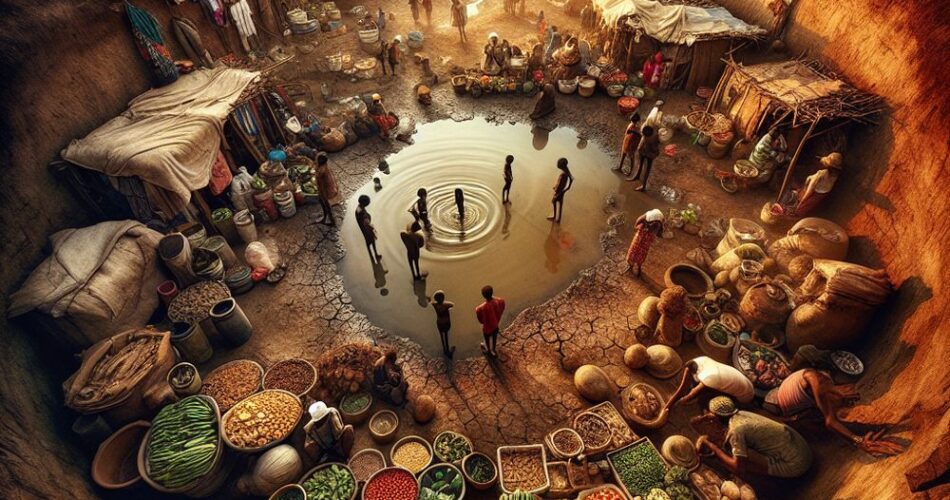
South African families are facing increasing pressure on two of life's most basic necessities: food and water.
The latest General Household Survey (GHS) 2024 released by Statistics South Africa indicates that almost one in four households reported inadequate or severely inadequate access to food during the year.
This comes as the water crisis continues across the country, with water supply disrupted to more than half of the households.
According to the survey, about 22% of households reported struggling to access adequate food.
While South Africa produces sufficient food nationally, affordability remains a challenge for many families. The data show that economic pressures, including unemployment, stagnant income growth and rising living costs, are affecting household food security.
So what is food insecurity? A common misconception is that food insecurity means households go completely without food, but this is not necessarily the case. Food insecurity refers to inconsistent or inadequate access to food to meet daily needs.
Provincial disparities remain pronounced, with poorer provinces and rural households generally more vulnerable to inadequate access.
The survey also reveals worrying trends in water reliability.
Although most households have access to an improved water source, more than 50% reported facing water interruptions.
Over the past two decades, infrastructure expansion has increased formal access to water. However, maintaining legacy systems, preventing malfunctions, and ensuring continuous supply have emerged as growing concerns.
In some areas, families have to resort to fetching water when supplies are disrupted, affecting daily routines, schooling and household productivity.
The General Household Survey measures household experience rather than administrative goals.
This means that the data reflect how residents experience food access and water reliability in practice, not just whether infrastructure is in place.
The combination of food insecurity and unreliable water supplies puts pressure on household stability. Water interruptions can also increase food insecurity, affecting cooking, sanitation and small-scale food preparation.
The findings come amid cost-of-living pressures and municipal infrastructure challenges.
While progress has been made over time in expanding housing and service access, the survey data shows that affordability and affordability are becoming central issues in the country's socio-economic landscape.
IOL