
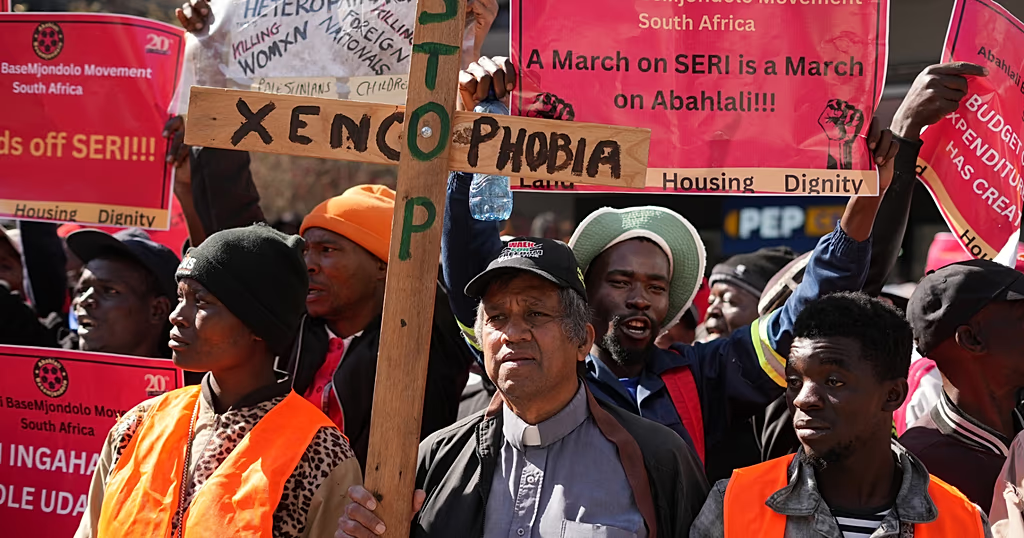
At least two people died after anti-immigrant protests turned violent in South Africa's Western Cape this weekend. Now foreign nationals in the country are taking shelter in community centres, while others are leaving the country.
Foreign nationals on the coast of South Africa's Western Cape carry their belongings overnight as they flee their homes following a weekend of anti-immigrant violence.
Angry locals set fire to 55 huts in Mossel Bay on Friday after a small protest against illegal immigrants accused of taking jobs from locals, officials said.
South African officials say two Mozambicans were killed. But Maputo claims five Many of its citizens died as a result of “xenophobic violence”.
These are the first deaths since New wave of anti-immigrant protests Started cleaning the country.
Police only confirmed that two Mozambican men, aged 27 and 43, had died following the attack in March. The circumstances are being investigated, he said, declining to confirm a link with xenophobic sentiment.
On Sunday, the body of an 18-year-old South African man, who had been stabbed and was also involved in an attempted robbery, was found in the same area, police said. He said five people have been arrested since the violence broke out, three of them on charges of public violence and possession of stolen property.
The Mozambican government said that 300 Mozambican citizens had returned home on Saturday.
“The remaining more than 500 people have since been sheltered in a safe location in the Western Cape province, and as of June 1, the process of their repatriation to Mozambique is already underway,” it said.
Mossel Bay Mayor Dirk Kotz over the weekend expressed “deep concern and dismay at the ongoing xenophobic attacks, where people have been murdered, homes burned and families displaced.”
'Many of them are afraid'
Now many displaced people are seeking shelter in community centres.
“People chased us away,” says Thomas Vincent Baloyoi, a displaced Malawian seeking asylum at a center in Kleinmond. “They didn't ask us if we had any documents. They just chased us away like dogs, which is unfair because I'm actually a human being.”
“There were Somalians, Malawians, Zimbabweans, Zambians, Congolese in the community,” says Michael Markson, who was also displaced. “Many of them are scared, others they are still living there but they are locked inside their homes.”
Grant Cohen is the Chairman of Overstrand Municipality:
“We will remain open until this is resolved. We will not kick anyone out. We want this place to be available to everyone who comes. As I say, there are still more people coming in. So we don't know how many people we will get in here. But we will remain open until this is resolved.”
ghana last week evacuated 300 of its citizens. On Tuesday, Malawi joined Nigeria in announcing repatriation for any citizens requesting assistance.
30th June 'Order'
After a citizen-led organization demanded that undocumented foreign nationals leave South Africa by June 30, there have been reports of vigilante groups checking the documents of foreign nationals and forcing small businesses run by non-South Africans to close.
This action has no official support and has been criticized by the authorities.
Last month, several hundred foreign nationals from countries including the Democratic Republic of Congo, Rwanda and Somalia sought safety in the eastern port city of Durban, saying locals were going door-to-door asking them to leave by the end of the month.
Meanwhile, several countries including Kenya, Malawi, Lesotho and Zimbabwe have urged their citizens in South Africa to exercise caution.
South Africa has experienced repeated waves of xenophobic violence over the past decades.
The latest surge comes as political parties seek support ahead of local government elections in November.
In 2008, anti-immigrant riots killed 62 people, including 21 South Africans, and displaced thousands. Further outbreaks occurred in 2015 and 2016.