
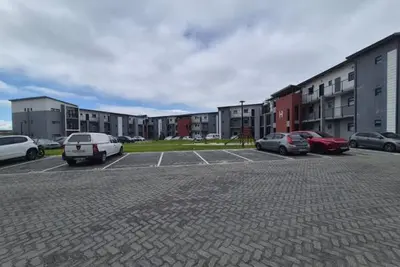
Affordable housing is at the heart of how cities function. A stable, well-located home shapes almost every part of a person's life: access to work and education, transportation costs, security, family stability, and dignity. It is also part of the urban infrastructure that enables economic participation and supports more inclusive growth.
Infrastructure is much more than the roads, rail, ports, power stations and fiber networks that we typically associate with the term. It includes the physical and social facilities that provide a viable basis for people to participate in the economy and live a quality life.
A city cannot function well if the people who work, study and make their lives in it are pushed to the periphery because of high housing costs, weak public transport links or poor quality housing. Housing including student housing close to urban centres, universities and economic hubs is an important part of the ecosystem that enables inclusive growth.
This is particularly relevant in South Africa, where the backlog and demand for quality housing remains deep, structurally and institutionally underinvested. The housing market is diverse and multidimensional and different subsectors and market segments have different investment characteristics and degrees of suitability for institutional capital. Investment in quality rental and student housing, with a primary focus on the affordable market segment, is a viable mechanism to deploy institutional capital on a commercial basis for the betterment of society.
In our two decades of experience in housing investing, this is the market segment with the strongest demand, strongest risk-return profile for institutional investors and best suitability for scalable impact. Although policy conversations often focus on homeownership, the reality is that not every family is able, ready, or willing to pursue it. Many people opt for the lower costs and greater flexibility of renting and renting is often the first step on the journey to ownership.
But affordable rental stock often sits on the urban fringes, far from employment, schools, amenities and transportation. Low fares are offset by high commuting costs, long journeys and poor access to opportunity. In contrast, well-located rental housing is either priced beyond the reach of the broader consumer market or available only in poor quality housing. Student housing tells a different version of the same story: while major hubs have attracted increasing investor attention, many university towns lack purpose-built accommodation that supports safety, study, community and student success.
This makes the investment case simple. Rental and student housing portfolios are built on tangible assets, with a revenue and cost base that can be understood, optimized and actively managed. Income is generated through occupancy and rent collection, while long-term value is supported by inflation-linked rental growth, efficient operations, disciplined asset management and active portfolio tenure.
Rental and student housing has a different risk-return profile from traditional private equity or early-stage development investments. They are not designed to have highly variable outcomes tied to a single exit. Their appeal lies in predictable, cash-producing, inflation linked assets that provide ongoing cash yields and long-term total returns with lower volatility than more sentiment-driven listed asset exposures. Paired with an embedded impact mandate, the profile is suitable for institutional investors interested in long-term liabilities and impact strategies.
This is why affordable rentals and student housing can be a strong institutional fit. It provides access to a real-economy asset class with structured, visible impact through defined mandates, clear risk limits and active asset management.
Our strategy targets CPI plus 8% returns (combined gross revenue retention), including annual cash yield, and its underlying impact mandate includes not only the provision of quality rental and student accommodation, but also the facilitation of home ownership through the controlled release of rental stock for sale to consumers at a defined cadence.
Our recently completed Summerstrand Student Village development in Gkebarha embodies this logic. The investment included the acquisition of 484 existing beds and the development of an additional 832 beds to create a scaled and economically viable 1 316-bed purpose-built property on the doorstep of Nelson Mandela University. Summerstrand Village is 100% in the affordable National Student Financial Aid Scheme market and was 100% occupied within a month of completion. This is the infrastructure thesis in practice: capital deployed to create a real asset that supports student access to quality housing, generates long-term inflation-linked yields and strengthens housing provision around a key education node.
The platform is designed to scale with initial assets of 6,300 rental units and 7,800 student beds. With 90% in the affordable market segment and an additional pipeline of R3 billion in quality assets, it is poised for growth and scalable impact.
The interest of institutional investors in investing in the well-being of society on a commercial basis is very clear, and OMRENT is designed to meet that need in a disciplined, scalable and risk-appropriate manner.
Shaila Desai heads Old Mutual Alternative Investments Residential Impact Fund