
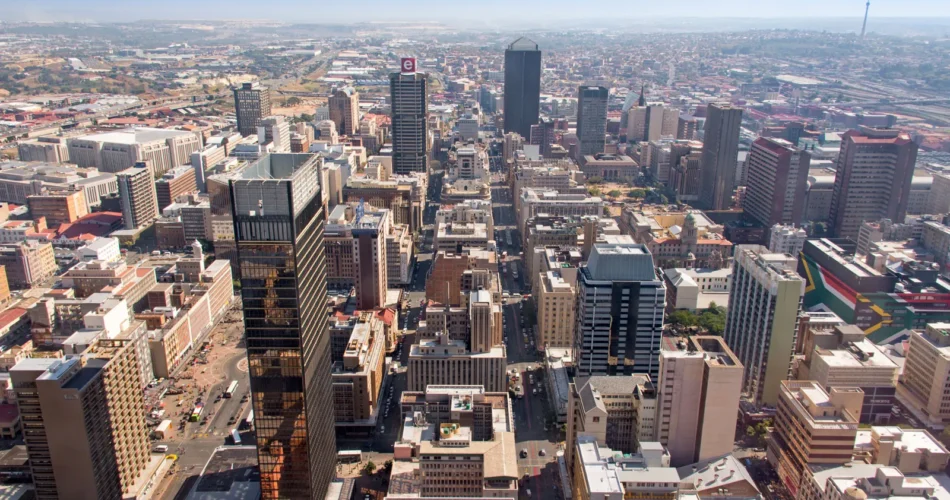
Africans with investable assets of at least $50 million are increasingly allocating capital to real estate as a strategy for wealth preservation, portfolio diversification and long-term income generation, a new wealth report says.
The report released by Standard Bank, Africa's largest lender by assets, shows that ultra-high-net-worth individuals are increasing investments in residential, commercial and industrial properties across the continent despite persistent economic and geopolitical uncertainties.
The number of residential and commercial properties purchased by the bank's ultra-wealthy clients in South Africa more than doubled in the 12 months ending September 2025 compared with the previous year, according to Chris Brown, head of wealth and investments at Standard Bank.

what is the report saying
Acquisitions increased after the South African Reserve Bank's interest rate cuts starting in 2024 led to more favorable financing conditions and improved investor sentiment.
Asset demand remains resilient even amid inflation concerns linked to geopolitical tensions, including the conflict involving Iran, raising fears of a possible return to monetary tightening.
Brown said wealthy investors often see periods of economic and market volatility as opportunities to acquire assets at attractive valuations.
- “Often, volatile micro and macro conditions provide buying opportunities that would not otherwise be available,Many of the bank's wealthy clients maintain long-term investment horizons focused on preserving and transferring wealth across generations, he said.
A look at the biggest centers of millionaires
South Africa remains the continent's largest wealth centre, with more than 41,000 individuals holding liquid investable assets of at least $1 million, according to data from Henley & Partners' Africa Wealth Report.
The country continues to attract significant property investment from high net worth individuals, particularly in the Western Cape province, where house prices have risen rapidly.
- The report revealed that the average price of residential properties purchased by wealthy South Africans increased by 38% during the review period. The Western Cape, home to Cape Town, the Cape Winelands and the Whale Coast, has emerged as one of Africa's fastest-growing millionaire regions, benefiting from strong demand for premium residential real estate.
- Apart from South Africa, wealthy investors in major African economies like Kenya and Ghana are also increasing their investments in property. Demand is particularly strong for Grade-A office developments, agricultural land and residential real estate, which are being used as hedges against currency depreciation and macroeconomic uncertainty.
According to Brown, interest rate movements have had limited impact on property acquisition decisions among wealthy investors in East Africa, where long-term capital preservation remains a key priority.
what you should Know
The report highlights that Africa's wealthy differentiate themselves through their ability to deal with currency volatility, regulatory changes and political risks while continuing to build and protect wealth.
Earlier reports by Nairametrics 2025 highlighted that South Africa, with a GDP of approximately $400 billion It was already considering expanding the scope of high-wealth taxation as part of efforts to strengthen revenue mobilization and address fiscal pressures.
At the time, the South African Revenue Service (SARS) revealed that it was reviewing the framework of its High Wealth Individual (HWI) unit, which covers taxpayers with a gross wealth of at least 75 million rand (about $4.3 million), with indications that the threshold could be lowered to broaden coverage.
The discussion took place against the broader continental backdrop of increasing wealth concentration and the rapid growth of millionaires. Africa, which has a population estimated to exceed 1.5 billion and long-term economic forecasts point to a $29 trillion economy by 2050.The creation of high net worth individuals continues at a rapid pace.