
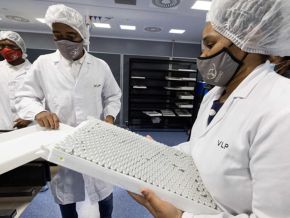
- The African Development Bank has approved up to $15 million for South Africa's Biovac to expand vaccine manufacturing capacity in a growing push to build local pharmaceutical production.
- The facility will increase Biovac's annual output to 500 million doses and become Africa's first end-to-end oral cholera vaccine manufacturing plant.
- The investment reflects a wider shift among development financials toward supporting vaccine factories, technology transfers and regional production capacity.
The African Development Bank (AfDB) has approved a loan of up to $15 million to South Africa's Biologicals and Vaccines Institute (Biovac) to support the construction of a multi-vaccine manufacturing facility in Cape Town, as Africa's vaccine production ambitions move from policy commitments toward industrial investment. The project will expand Biovac's annual manufacturing capacity to 500 million doses and establish Africa's first end-to-end oral cholera vaccine production facility, with operations expected to begin in 2028.
The facility will produce oral cholera, inactivated polio, pneumococcal and meningitis vaccines through technology-transfer partnerships with global pharmaceutical companies and research institutions, including Sanofi, the International Vaccine Institute, Biological E, EuBiologics and Bharat Biotech. The AfDB financing adds to a wider funding package involving the International Finance Corporation (IFC), the European Investment Bank, the Gates Foundation and Gavi's African Vaccine Manufacturing Accelerator (AVMA), which provides incentives for African manufacturers that achieve international quality standards and supply vaccines through global procurement systems.
The investment marks a shift in development finance support for Africa's health sector, moving beyond emergency vaccine procurement toward financing manufacturing infrastructure, technology transfer and production capabilities. Africa still imports more than 99% of the vaccines it uses despite representing nearly 18% of the global population, a gap exposed during the COVID-19 pandemic when supply shortages and export restrictions delayed access to vaccines across the continent.
The project supports the African Union's target of producing 60% of Africa's vaccine requirements locally by 2040. For Biovac, the expansion represents a transition from primarily fill-and-finish operations, where imported vaccine materials are packaged locally, to more complete manufacturing capabilities. The company has already supplied more than 450 million doses across Southern Africa since 2003.
The Biovac investment is part of a broader effort to develop regional vaccine manufacturing hubs across Africa. Rwanda is advancing BioNTech's mRNA manufacturing facility, Senegal is expanding the MADIBA vaccine manufacturing platform at Institut Pasteur de Dakar, Egypt is scaling up production through Vacsera, while South Africa continues to strengthen its pharmaceutical manufacturing base through Biovac and Aspen Pharmacare.
Development institutions are increasingly combining factory financing with mechanisms aimed at solving a major challenge for African vaccine producers: securing reliable demand after production begins. Gavi's $1.2 billion African Vaccine Manufacturing Accelerator provides milestone payments to manufacturers that achieve WHO prequalification and additional incentives linked to vaccine supply commitments, helping create a more sustainable market for locally produced vaccines.
The expansion also comes as African countries seek greater capacity to respond to recurring health emergencies, including cholera, mpox, Ebola and Marburg outbreaks. By building domestic manufacturing capacity, governments and development partners aim to reduce dependence on imported vaccines while strengthening the continent's ability to respond more quickly to future health crises.
By Cynthia Ebot Takang