
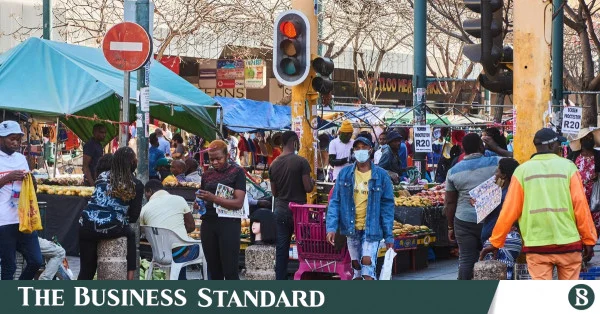
While the protests have focused primarily on immigrants who some South Africans have accused of snatching jobs and putting pressure on public services, Bangladeshi shop owners say they are also bearing the brunt of the unrest.
Shoppers walk through a market in Pretoria, South Africa. Photographer: Waldo Swigers/Bloomberg
“>
Shoppers walk through a market in Pretoria, South Africa. Photographer: Waldo Swigers/Bloomberg
Main characteristics:
- Anti-immigrant protests began in South Africa on June 30
- Fear of action against undocumented Bangladeshis
- Many Bangladeshi shops have already been looted
- More than 100,000 Bangladeshis live in the African country
Many Bangladeshis living in South Africa have been forced to temporarily close their businesses and limit their activities as anti-immigrant protests continue to stoke fear among foreign communities, despite the demonstrations mainly targeting undocumented immigrants from neighboring African countries.
While the protests have focused primarily on immigrants who some South Africans have accused of snatching jobs and putting pressure on public services, Bangladeshi shop owners say they are also bearing the brunt of the unrest.

Infographic: TBS
“>

Infographic: TBS
MD Amran, a Bangladeshi grocery shop owner in Durban, said he had to close his business for two full days from June 30 and operate only partially on several other days due to security concerns.
“Our shop usually sells goods worth about Rs 80,000 per day. Because we had to remain closed for two days and reduce business hours on other days, we suffered huge financial losses,” he told Business Standard over mobile phone.
He said that the biggest concern is about the nationwide protests on June 30, but the situation has still not returned to normal.
“Anti-immigrant activities continue. Shops owned by Bangladeshis, especially in rural areas, have often been looted. Fear persists among our community,” he said.
According to unofficial estimates, more than 100,000 Bangladeshis live in South Africa and most of them run small and medium-sized businesses such as grocery stores and convenience shops.
Many Bangladeshis evacuated their shops
Bangladeshi journalist Monirul Bhuiyan, who has lived in neighboring Botswana for more than 22 years and regularly travels to South Africa, said he recently visited Johannesburg and surrounding areas, where he saw widespread anxiety among Bangladeshi immigrants.
“Many Bangladeshis told me they have removed goods from their shops due to security fears,” he said. “He said several immigrant-owned shops have already been looted, forcing them to suspend business as a precaution.”
The protests are mainly against undocumented immigrants from neighboring countries. However, Bangladeshis are also affected as many of them are undocumented and fear being targeted, he said.
Anti-immigrant campaign intensifies
According to Al Jazeera, there have been weeks of protests against undocumented migrants in South Africa, with protesters blaming foreign workers for unemployment and pressure on public services.
The South African government has faced criticism for failing to prevent xenophobic violence, during which several foreigners have been killed and businesses owned by immigrants have been looted or set on fire, according to the media.
The southern African country of Mozambique said five of its citizens were killed in xenophobic attacks in late May, while Nigeria reported the deaths of two civilians.
Hundreds of Nigerians, along with many other foreign nationals, have reportedly left South Africa amid growing insecurity. The Ugandan High Commission in Pretoria also announced this week that another group of Ugandan citizens have voluntarily returned home.
South Africa has long struggled with violent crime, a challenge that predates the latest wave of anti-immigrant unrest.
Embassy issued security advisory
In response to the worsening situation, the Bangladesh High Commission in Pretoria has urged Bangladeshi citizens to remain vigilant and maintain close contact with missions and community leaders.
Prior to the 30 June protests, the mission had launched a dedicated emergency hotline to receive reports of security threats and assist migrants across South Africa.
The High Commission said information received through the hotline would be shared with South African police and that it would continue to coordinate with local authorities and Bangladeshi community leaders to enhance the protection of Bangladeshi citizens.