
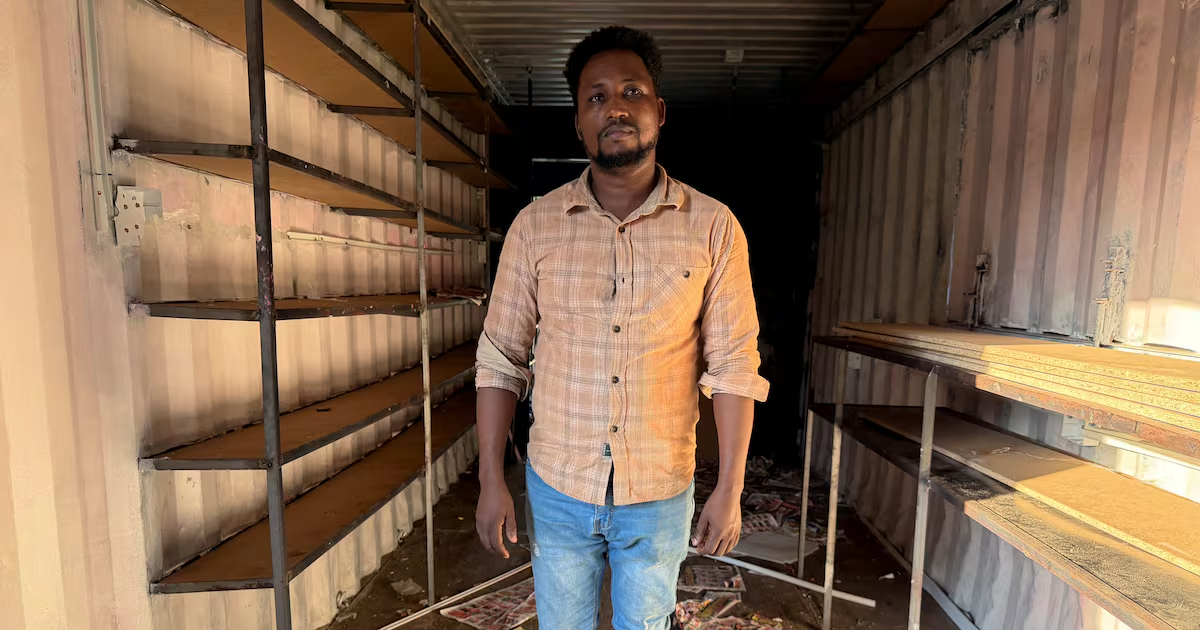
Ethiopian refugee Helena Wolde locked down her home and watched thousands of people rage on TV protesters marched This week there are calls for cities and towns to leave foreigners like him.
At the shop in the Durban CBD where he sells coffee and lentils, his wife and their three South African-born children were terrified, he said.
But having left Ethiopia 21 years ago to escape political persecution, he does not consider going back an option.
I do business here. I don't know why they are angry.
— Ethiopian refugee Helena Wolde
While thousands of immigrants packed up and left South Africa ahead of the June 30 protests, many more feel their best option is to stay, even if the country becomes hostile.
“I have no place, no property, no family in Ethiopia,” Wolde said. He said that his brothers have been put in jail there. The next morning after the protest he reopened his shop, which, unlike others, had not been looted and was hoping for the better.
Although on Tuesday nationwide march While largely peaceful, there were many areas of attacks on foreigners and looting of expatriate-owned businesses.
“We're all extra scared,” Wolde said.
According to the United Nations, South Africa hosts more than 167,000 refugees and asylum seekers – a much lower number than many African countries. According to the United Nations Refugee Agency, there are 1.8 million refugees in Uganda; There are 1.2 million in Chad and 850,000 in Kenya.
Foreign people are not taking jobs from South Africans. We are starting some small jobs here in South Africa. We are paying rent. If you want to open a shop then you have to open a shop like us
— Daniel Abide
The total immigrant population in South Africa is about 3 million or 4% of the total, and is low by global standards.
The main group behind the protests, March and March, says it only objects to illegal immigration and is not xenophobic.
This economy belongs to our people and it has been hijacked
— Jacinta Ngobse-Zuma, march and march leader
But the vigilantes often indiscriminately target foreigners, and their repeated demands that immigrants show their documents are themselves illegal – as the government has pointed out – because only the police have the authority to ask them.
Many protesters said they were genuinely troubled to see foreign-owned shops on their streets, while they were struggling to earn a living.
“This economy belongs to our people, and it has been hijacked,” the group's leader, former radio presenter Jacinta Ngobse-Zuma, said in a speech on Tuesday.
They have called for marches every Thursday until the march's demands, including mass deportations, are met.
One-third of South Africans are unemployed, and frustration with the chronic lack of public services and rampant crime has increased, although researchers say immigration is not to blame for these problems.
“Foreigners are not taking jobs away from South Africans. We are introducing some small jobs here in South Africa. We are paying rent,” said Daniel Abide, 33, whose small convenience store in Clermont, a township near Durban, was looted on Tuesday night.
“If you want to open a shop, you have to open a shop like us,” he said.
Abede came from Ethiopia a decade ago and owns two shops, one of which was not targeted. He hopes to eventually reopen the other, which was broken into and vacated by looters. He employs a South African in his small business.
Other shops looted in Clermont were run by people from Somalia and Pakistan, locals told Reuters.
Outside one, people were working to fix broken doors before nightfall, when they feared the robbers might return.
We're all extra scared.
— helana wolde
Wolde keeps a laminated stack of documents, his refugee certificate, tax and bank statements, to show anyone who questions his legal status.
Sometimes he has to show it off two or three times a day to police or other people who come to his shop, which is on a bustling street with mostly Ethiopian businesses.
“Business is not good now,” Wolde said. “Everyone is afraid to come here.”
He is angry at South Africa, but having already survived shootings in 2008 and xenophobic looting in 2015 and 2021, he plans to stay out of it anyway.
“I do business here. I don't know why they're angry.”
reuters