
-
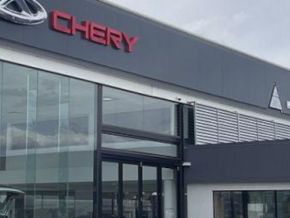
Chery finalizes acquisition of Nissan's Rosslyn plant and aims to start production by late 2027
-
South Africa's auto market booms, with sales expected to grow 15.7% in 2025
-
Chinese automakers accelerating localization strategy amid rising global trade barriers
Chery Automobile is finalizing the acquisition of Nissan's Rosslyn plant, near Pretoria, in a strategic move to strengthen its industrial footprint in Southern Africa.
The Hong Kong-listed Chinese group aims to start production at the site by the end of 2027. The company plans to complete the renovation and modernization phase lasting between 12 and 18 months. The company did not disclose the transaction price or total investment.
A South African auto market in recovery
This timing coincides with a strong boom in South Africa's automotive sector. The country recorded its best performance in more than a decade in 2025 as total new vehicle sales rose 15.7% to 596,818 units and surpassed pre-pandemic levels for the first time.
This increase was due to the sale of passenger vehicles. Sales increased 20.1% year-on-year to 422,292 units. The National Association of Automobile Manufacturers of South Africa expects a further expansion of 9% to 11% in 2026, supported by declining inflation and low interest rates.
This recovery reflects more than cyclical factors. This signals a structural shift in the leadership of Chinese brands. China's automakers have expanded nearly nine times faster than the overall market and now account for more than 17% of new passenger vehicle sales, compared with less than 5% four years ago.
Cherry strengthens local position
Chery Automobile already holds a solid position in the market. The company plans to increase sales by 26.7% to 25,304 units in 2025. The company ranked eighth among automakers in South Africa and increased its market share to 4.2%.
The company has built a network of 150 dealerships since its return four years ago. The company sells an average of 50,000 vehicles annually. This business base gives the company the scale to transition to local manufacturing.
“This investment reflects the unwavering support of our local customers and partners,” Charlie Zhang, the group's executive vice president, said on the sidelines of a conference in Johannesburg.
Electrification as an export lever
The company will not limit production at Rosslyn to internal combustion vehicles. Chery Automobile plans to position the plant as a hub for electrified vehicles, including hybrid, plug-in hybrid and fully electric models, targeting export markets in Africa and Europe.
The strategy is in line with local demand trends. Hybrid vehicles already dominate South Africa's new energy vehicle segment. They account for nearly three-quarters of NEV sales, as consumers prefer affordable options that are less dependent on charging infrastructure.
Localization as a response to trade barriers
This investment reflects broader global trends. Chinese automakers have accelerated overseas industrial expansion in response to rising trade barriers targeting exports. The industry has opened more than 15 new plants in markets including Malaysia, Brazil, Hungary and Spain from 2022.
China is expected to export more than 5.5 million vehicles in 2024, making it the world's largest exporter. Exports should exceed 7 million units in 2025, although tariff pressures are increasingly limiting net export growth and pushing manufacturers toward localization.
Chery Automobile operates 16 global production bases, including facilities in Iran and Russia, and continues to expand in Southeast Asia and Europe. The company ranked as China's top auto exporter with 548,000 units in the first half of 2025, accounting for 17.8% of total exports. The company aims to strengthen this position through local production.
An African market in structural change
South Africa remains the primary gateway for automakers targeting Sub-Saharan Africa. By securing industrial capacity in the country, Chery Automobile is structurally positioning itself for long-term growth in a region with growing vehicle demand.
The company also plans to develop a network of local suppliers around the Rosslyn site. This approach could have significant implications for South Africa's manufacturing sector and strengthen its case with regulators.
“Our commitment here is not only a step in our globalization strategy, it is also our long-term commitment to the economic and industrial development of South Africa.” Charlie Zhang said.
Fiacre E. Kakpo