
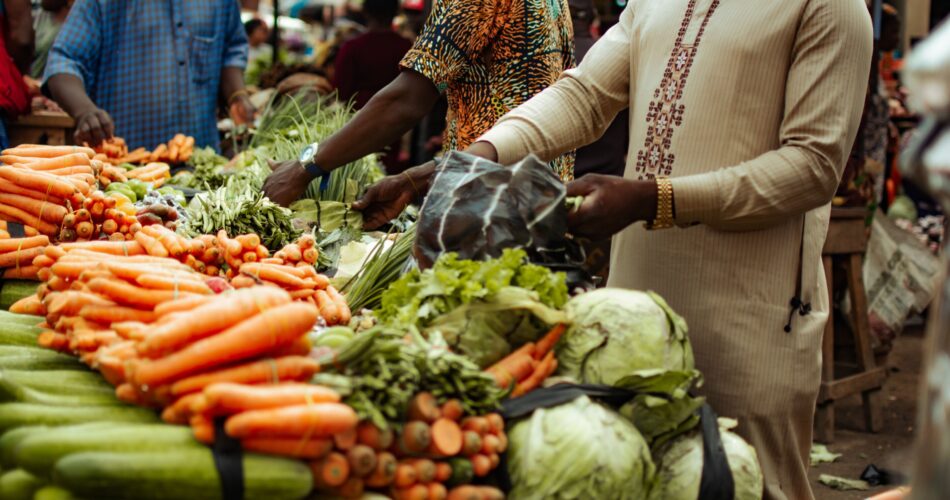
Credit: Created by Pixels from Pexels
Discussions on climate change in southern Africa often focus on farming, where the impacts of environmental shocks are most visible. Discussion center again and again On drought, floods, decline in crop productivity and heat stress affecting livestock systems. The main reason for this is that agriculture is a sector that is directly exposed to extreme weather events.
But food systems involve much more than agricultural production. Between farms and consumers lies the agro-processing sector. It is composed of businesses that transform raw agricultural commodities into consumable food products through activities such as cleaning, milling, preserving, packaging, storing, and manufacturing.
It connects agricultural production to markets, retailers and homes. In South Africa, agro-processing contributes about 25% supports national manufacturing output and more than 300,000 direct jobs.
The agro-processing sector is particularly exposed to climate risks because its operations depend on reliable supplies of agricultural raw materials (crops and livestock). This makes it vulnerable to disruptions caused by drought, floods, heat waves and other extreme weather events.
I was part of a group of researchers specializing in food systems, climate change adaptation and agro-processing. We did a study in Gauteng, South Africa's industrial heartland, to find out how businesses in the region are managing the risks of climate change and what steps they are taking to adapt.
We chose the province because it is one of the country's most important centers for food processing, logistics and distribution. The disruption in agro-processing extends far beyond the province. They affect food availability, reliability of supply, employment and household food prices across South Africa.
Our research included interviews with 113 agro-processing enterprises. We asked whether they are aware of the risks of climate change, what they can do to adapt to climate change and what is stopping them from adapting.
Our key findings Were they:
- Formal education was a strong factor in shaping climate adaptation. We found that agro-processing businesses whose owners had received a university education made better decisions and adopted climate-friendly practices.
- Most of the training available to agro-processors was of little help. This is because it has focused on production and running businesses rather than helping people understand or respond to climate risks.
We concluded from our findings that simply owning or working in agro-processing was not sufficient to promote climate change adaptation. Education played the most important role in supporting adaptation. Training, age, gender, education and entrepreneurial experience had limited influence on whether business owners adopted climate change adaptive practices (such as water conservation, energy-efficient technologies, better storage practices and sourcing their raw materials from many different suppliers).
Food businesses are feeling the heat
Agro-processing enterprises included businesses involved in grain milling, meat processing, dairy production, fruit and vegetable processing, and poultry processing. We also studied bakers and businesses that make food products.
We found that these enterprises were severely affected by climate-related disruptions because they depend on crops, livestock and other agricultural raw materials, water and energy.
These business owners told us this lack of waterRising temperatures, irregular supply of agricultural inputs and rising production costs were major problems. Some businesses have taken steps to combat climate change, such as saving water.
They also expanded the range of products they made to include longer shelf life processed foods. They optimized their operations by altering work schedules during extreme heat, improving cooling and ventilation, and using water more efficiently.
But many struggled to do more because they lacked funding, technical support and access to reliable information about climate risks.
The support agro-processors need to cope with climate shocks
our findings Suggest that Gauteng's agro-processing businesses need more support to understand climate change and prepare for its impacts. This includes improved access to information, practical training and support programmes. This will help businesses respond to growing climate risks.
It will take longer to help businesses adapt than individual companies working alone. Climate change adaptation needs to be built into the support programs that businesses already use, such as training, education and mentoring. It cannot be treated as an optional extra. This type of support is typically provided through government extension services, industry groups, and small-business programs.
Any plans for the industry and food production sector should include this type of training, especially as climate-related disruptions become more common and costly.
Access to climate-focused education, practical training and technical assistance will be particularly important. Many business owners know that climate change poses a risk. But knowing about the problem doesn't mean they know how to respond. Practical guidance, planning tools and expert advice can help businesses move from short-term reactions to long-term preparedness.
Access to funding will also be important. Adapting to climate change costs money. This could be for new equipment, infrastructure or technologies that can help businesses cope with changing conditions such as heat waves and floods.
Additionally, basic public services need to be improved. Reliable electricity, stable water supply and functioning municipal services are essential for agro-processing businesses in Gauteng. When these systems are unreliable, it is much more difficult for businesses to prepare for and respond to climate change.
our study also shows More support is needed for women-led businesses. Women have more difficulty accessing information related to finance, technology, markets and climate.
Preparing agro-processing businesses for climate change is not just an environmental issue. It is also important for securing the food supply, supporting jobs and strengthening the economy.
provided by
Conversation
Who is behind this story?

Lisa Locke
BA Art History, MA Material Culture. Former museum editor, paramedic and transplant coordinator. Editing for Science X since 2021.
Full Profile →

Andrew Zinin
Master's degree in Physics with research experience. Long time science news lover. Plays a vital role in the editorial success of ScienceX.
Full Profile →
This article is republished from Conversation Under Creative Commons license. read the original article.
Citation: Climate shocks are hitting South Africa's food businesses – study shows what they need to adapt to (2026, 13 July) Retrieved on 13 July 2026 from https://phys.org/news/2026-07-climate-south-africa-food-businesses.html
This document is subject to copyright. No part may be reproduced without written permission, except in any fair dealing for the purpose of private study or research. The content is provided for information purposes only.